
Tools
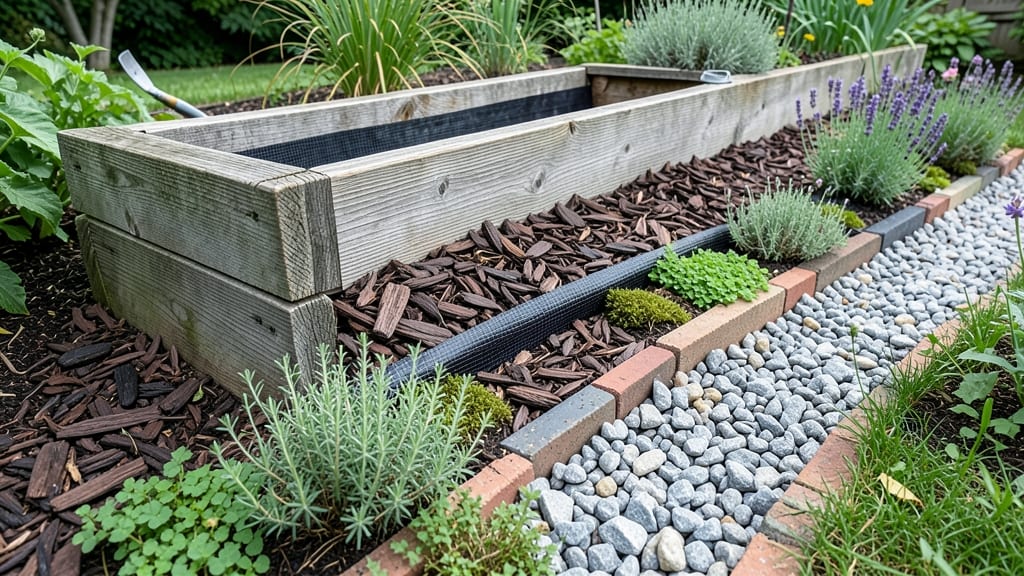
For raised garden beds, the best options to put around them are mulch, landscape fabric, or edging stones, which all help suppress weeds, lock in moisture, and protect plant roots from erosion while maintaining clean bed lines.
Mulch is my go-to because it breaks down over time, enriching the soil as it decomposes while keeping weeds at bay. Organic options like straw or wood chips work best for most gardens, but inorganic mulches like gravel can be better for hot climates.
Landscape fabric is another great choice—it blocks weeds without smothering the soil, and you can even add a layer of mulch on top for extra protection. 🌱 The key is choosing materials that match your garden's needs, whether that's moisture retention, weed suppression, or simply keeping the bed looking neat.
If you're looking for something more permanent, edging stones or bricks create a clean, defined border that lasts for years. They're especially useful for sloped gardens or high-traffic areas where mulch might wash away.
The right choice depends on your garden's layout, your maintenance preferences, and how long you want the solution to last.
💡 In This Article
- Why Mulch and Fabric Work Best for Raised Garden Bed Edging
- Best Edging Materials for Long-Term Raised Garden Bed Maintenance
Why mulch and fabric work best for raised garden bed edging
Organic mulch like straw or wood chips creates a natural barrier that blocks sunlight from weed seeds while slowly decomposing into nutrient-rich compost. This process, called decomposition, releases organic matter that improves soil structure over time.
For example, a 3-inch layer of mulch can reduce soil temperature by 10-15°F while maintaining moisture levels 20-30% higher than uncovered soil. The texture of mulch also breaks up raindrops, preventing erosion that could wash away precious topsoil from your raised beds.
Landscape fabric works differently—it physically blocks weed growth by preventing seed germination while allowing water and air to penetrate the soil below.
The fabric's weave creates tiny pores that let moisture through at a rate of about 0.1-0.2 gallons per square foot per hour, which is perfect for keeping roots hydrated without waterlogging.
Unlike mulch, fabric doesn't decompose, making it ideal for long-term solutions where you want to maintain clean bed lines without annual replacement. However, the best results come when you combine fabric with mulch on top—this creates a two-layer defense against weeds while adding organic matter to the soil.
The real magic happens in how these materials interact with your soil's ecosystem. Mulch encourages beneficial microorganisms and earthworms by providing a habitat rich in organic material, while landscape fabric suppresses competitive weeds that would otherwise steal nutrients from your plants.
Together, they create what gardeners call a microclimate—a stable environment where moisture, temperature, and nutrients are optimized for plant growth. This is especially important in raised beds, where soil can dry out faster due to the elevated position and limited ground contact.
For raised beds, the choice between mulch and fabric often comes down to your garden's specific needs. If you're growing moisture-loving plants like lettuce or spinach, mulch is ideal because it helps retain water through evaporation suppression.
For heat-sensitive crops like carrots or beets, fabric provides better temperature regulation by reducing soil temperature fluctuations. The key is to match your edging material to your plants' requirements—some crops thrive with mulch's gradual nutrient release, while others benefit from fabric's consistent moisture control.
One common misconception is that landscape fabric will suffocate the soil. In reality, high-quality fabric (with a 0.5-1.0 mm pore size) allows both water and air to circulate freely. The fabric's main job is to block weed seeds from germinating while maintaining the soil's natural aeration.
Think of it like a selective filter—it keeps out unwanted plants while letting essential elements through. This is why many professional gardeners use fabric as a base layer before adding mulch on top for both weed control and aesthetic appeal.
For the best results, consider these practical tips when implementing your edging strategy. First, always cut fabric to fit snugly around your bed edges to prevent weeds from growing up through the sides.
Second, refresh your mulch layer annually to maintain its effectiveness—over time, mulch compresses and loses its moisture-retaining properties.
Finally, if you notice water pooling on top of fabric, it's a sign you need to create small drainage holes or add a layer of coarse material like pebbles beneath the fabric to improve water flow.