
Planting
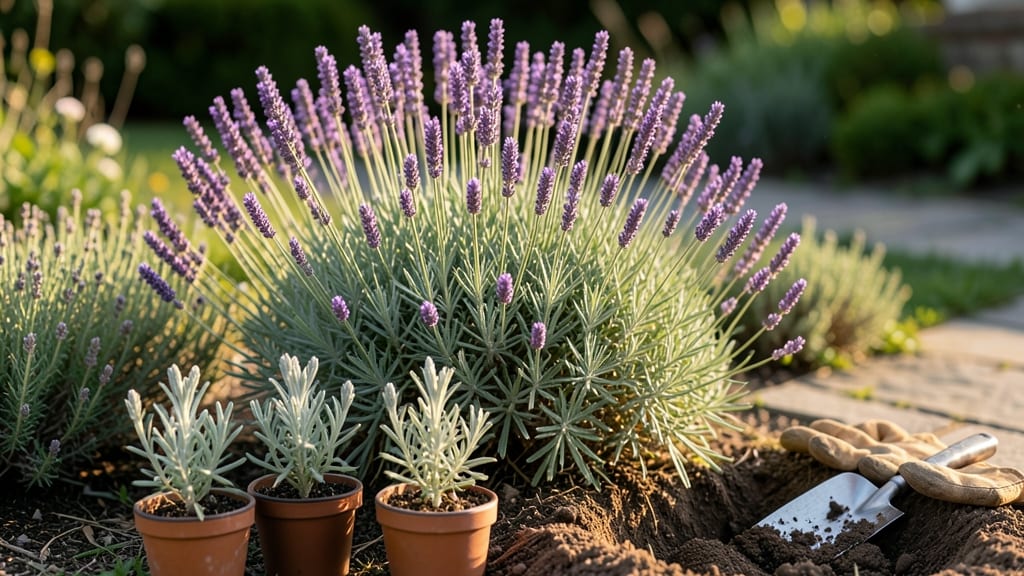
To plant lavender in a vegetable garden, choose sunny border areas or dedicated herb sections with well-draining soil to prevent root competition with vegetables. Space plants 12-24 inches apart for proper airflow and growth.
Lavender thrives in full sun because its Mediterranean roots evolved to maximize photosynthesis under intense light, making it drought-resistant once established. 🌞 The key is avoiding heavy, moisture-retentive soil—lavender hates soggy roots, so amend clay soil with sand or gravel if needed.
I always test drainage by digging a hole, filling it with water, and checking if it drains within an hour.
For placement, create a sunny perimeter along your garden's edge or dedicate a small raised bed to herbs. This keeps lavender's strong roots from competing with vegetables while maximizing its fragrance and pest-repellent benefits. Just avoid planting near brassicas or mint—they'll smother lavender's growth.
💡 In This Article
- Lavender Sunlight and Soil Requirements Explained
- Best Companion Planting Strategies for Lavender in Gardens
Lavender sunlight and soil requirements explained
Lavender's love for full sun isn't just preference—it's evolutionary survival. Native to Mediterranean climates, lavender developed C3 photosynthesis, which thrives under intense sunlight (6+ hours daily). This adaptation creates drought-resistant plants that store water efficiently in their woody stems.
Without adequate light, lavender becomes leggy and produces fewer fragrant oils, losing its signature purple hue and therapeutic properties. 🌞
The soil story is equally critical. Lavender's roots evolved in rocky, nutrient-poor soils where water drains rapidly. In gardens, this means avoiding rich compost or clay—both trap moisture and cause root rot.
Test drainage by digging a 6-inch hole, filling it with water, and timing how long it takes to drain.
If water remains after 1 hour, amend with 20-30% coarse sand or gravel by volume. pH should be neutral to slightly alkaline (7.0-8.0), which you can verify with a simple soil test kit.
What most gardeners miss is how lavender's root system competes with vegetables. Its deep, fibrous roots can reach 3-5 feet downward, while most vegetables max out at 1-2 feet. This competition for water and nutrients is why placing lavender in borders or separate beds makes sense.
The trade-off? You gain a natural pest deterrent—lavender's scent repels aphids, flea beetles, and even mosquitoes, protecting nearby veggies without chemicals. ✨
For small gardens, consider raised beds with 50% sand mix—this creates ideal conditions while keeping lavender contained. In larger spaces, create a sunny herb perimeter where lavender can thrive without encroaching on vegetable rows.
The key is spacing: 12-18 inches apart for dwarf varieties (like 'Hidcote') or 24 inches for standard types ('English Lavender'). This spacing ensures airflow that prevents fungal diseases while maximizing fragrance.
One common mistake is assuming all lavender has the same needs. Spanish lavender (Lavandula stoechas) tolerates slightly more shade (4-6 hours sun) than English varieties, while French lavender (Lavandula x intermedia) needs the most sun (8+ hours) for optimal oil production.
Match your variety to your garden's light conditions—this small adjustment can mean the difference between thriving plants and struggling survivors. 💫
Pro tip: Mulch lavender with gravel or pebbles (not organic mulch) to improve drainage and suppress weeds. The reflective stones also help regulate soil temperature—critical in hot climates where lavender can scorch.
This simple technique mimics the rocky Mediterranean soils where lavender naturally grows, giving your garden plants a head start toward success. 🌿