
Light Requirements
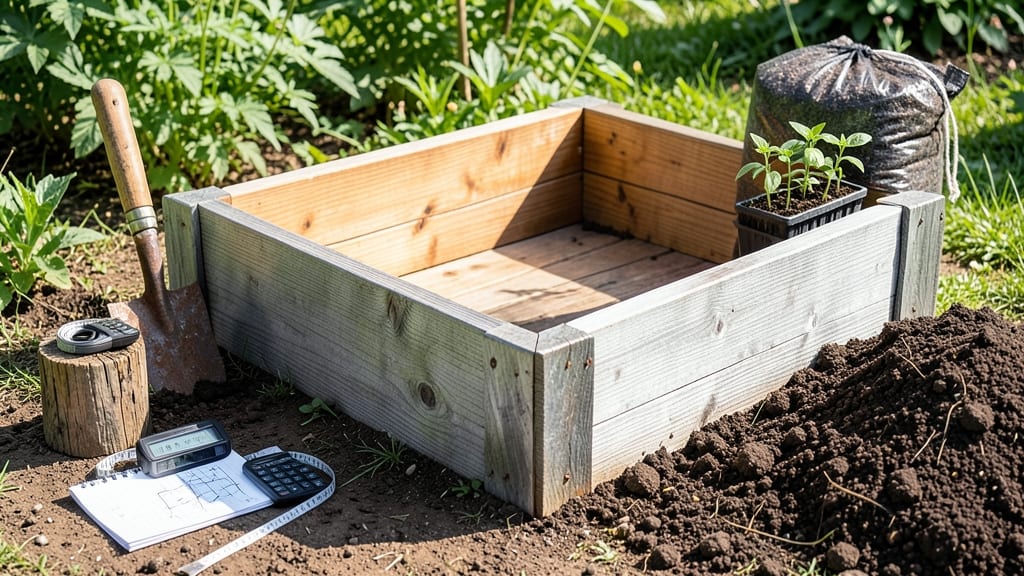
To determine how much dirt you need for your raised garden, multiply the bed's length × width × depth (in feet), then increase the total by 10% to account for settling. A standard 4×8-foot bed filled to a 12-inch depth will need roughly 3.2 cubic yards of high-quality garden soil blend.
This formula works because garden soil naturally compacts over time, especially after watering and planting. 🌱 For example, a 4×4-foot bed with 18-inch depth would require about 1.6 cubic yards, while larger beds like 8×12 feet at 12 inches need nearly 10 cubic yards.
Always use a quality garden mix rather than topsoil alone—it provides better drainage and nutrient balance for your plants.
Pro tip: Buy 5-10% extra soil to account for any uneven bed frames or future top-ups. Many garden centers sell soil by the cubic yard, so knowing your exact needs prevents waste or running short mid-project.
💡 In This Article
- Calculating Raised Garden Soil Volume by Dimensions
- Best Soil Mix for Raised Garden Beds: Quantity and Blend Tips
Calculating raised garden soil volume by dimensions
The core calculation for garden soil volume uses simple geometry: multiply your bed's length × width × depth (all measured in feet). For example, a 4×8-foot bed filled to 1-foot depth needs 32 cubic feet of soil.
However, most gardeners aim for 12-inch (1-foot) depth to accommodate root systems—especially for vegetables like tomatoes or peppers that need 18-24 inches of depth for optimal growth. 🌱
Frame thickness matters too—standard cedar or redwood frames are typically 2-4 inches thick on each side. This means your usable soil space is slightly smaller than the outer dimensions. For precise measurements, subtract twice the frame thickness from both length and width before calculating.
A 4×8-foot frame with 2-inch thick sides gives you 3.67×7.67 feet of usable soil space at the top, which affects your final cubic yard estimate.
Depth directly impacts plant success. Shallow beds (6 inches) work for herbs or shallow-rooted greens, but most vegetables need at least 12 inches—deep enough for roots to establish without hitting the frame.
The 10% compaction buffer accounts for soil settling after watering and planting, which can reduce volume by up to 15-20% in clay-heavy mixes. This is why pros recommend buying 5-10% extra soil to avoid shortages.
Real-world examples show how dimensions scale:
- 4×4-foot bed at 12 inches: ~1.3 cubic yards
- 4×8-foot bed at 12 inches: ~3.2 cubic yards
- 8×12-foot bed at 18 inches: ~9.6 cubic yards
Pro tip: Use a soil calculator (available online) to input your exact dimensions and get an instant cubic yard estimate. Many suppliers sell soil in 0.5-yard increments, so rounding up saves you from multiple trips.
For instance, a 6×6-foot bed at 18 inches needs 4.5 cubic yards—order 5 cubic yards to ensure you have enough for adjustments or future top-ups. ✨
Why depth matters beyond calculations: Deeper soil retains moisture better, regulates temperature extremes, and reduces competition from weeds. The extra 6-12 inches of depth in larger beds also supports perennial plants like asparagus or rhubarb, which need 18+ inches of root space to thrive.
This is why many experienced gardeners opt for 24-inch deep beds when possible—it future-proofs your garden for a wider variety of crops.
One common mistake is using topsoil alone instead of a quality garden mix. Topsoil compacts easily and may lack the organic matter needed for raised beds. A proper blend (typically 60% topsoil, 30% compost, 10% perlite/sand) improves drainage and aeration while preventing soil from becoming too dense.
For a 4×8-foot bed, that means mixing about 1.9 cubic yards of topsoil with 0.95 cubic yards of compost and 0.3 cubic yards of amendments for optimal results. 💫