
Planting
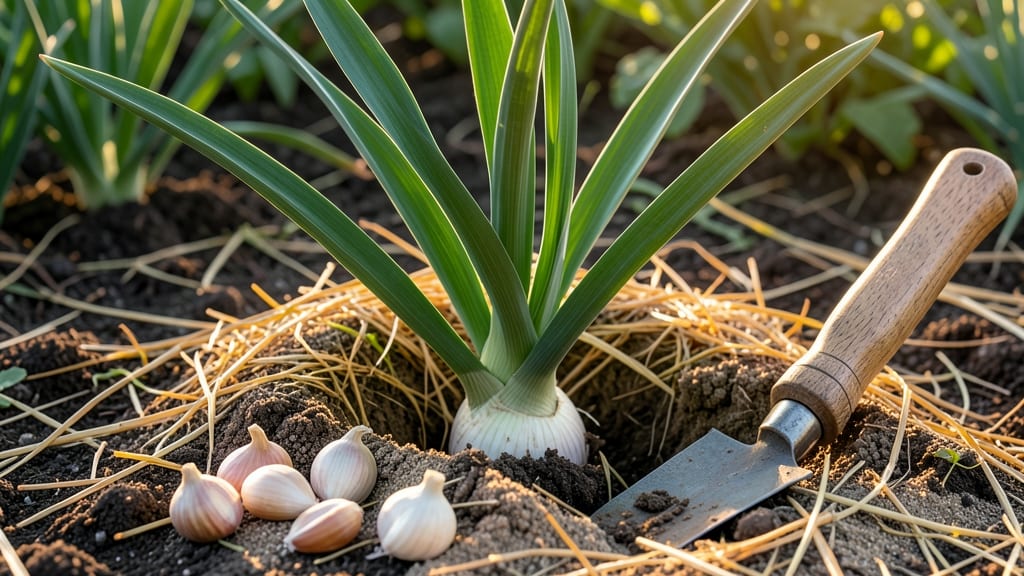
To plant garlic in your garden, choose a sunny spot with at least 6 hours of direct sunlight daily, well-draining soil with a pH of 6.0–7.0, and space bulbs 4–6 inches apart in raised beds or loose soil for optimal bulb formation and disease prevention.
Garlic thrives in sunny garden spots where it gets consistent light—think of it as the plant equivalent of a beach vacation. 🌞 The right soil mix makes all the difference: sandy loam drains well but holds moisture, while clay-heavy soil can suffocate roots.
I've found that planting in late fall (6-8 weeks before frost) gives bulbs time to establish roots before winter, leading to bigger harvests next summer.
Spacing matters just as much as sunlight—crowded plants compete for nutrients, leading to smaller cloves. For best results, arrange bulbs in double rows with 4-6 inches between each clove and 12 inches between rows.
This airflow prevents fungal diseases like white rot, which can devastate your crop. Container gardeners should use at least 6-inch-deep pots with drainage holes.
💡 In This Article
- Ideal Garlic Planting Conditions: Sunlight and Soil Requirements
- Garlic Spacing and Layout Tips for Maximum Yield
Ideal garlic planting conditions: sunlight and soil requirements
Garlic bulbs need 6–8 hours of direct sunlight daily to develop properly, as photosynthesis fuels the energy required for bulb formation. Without enough light, plants grow tall and leggy while producing small, weak cloves.
I've observed that southern-facing garden beds receive the most consistent sunlight, especially in regions with shorter winter days. 🌞 For example, in Zone 5 climates, garlic planted in October needs full sun exposure until the ground freezes, then relies on stored energy to regrow in spring.
The soil's texture and drainage directly impact bulb size and disease resistance. Sandy loam soil (60% mineral, 30% sand, 10% silt) provides the perfect balance—it drains excess water while retaining enough moisture for root development. Clay soils, however, can become waterlogged, causing root rot and stunted growth.
To improve drainage, amend heavy soils with 2–3 inches of compost or coarse sand before planting. The ideal soil pH of 6.0–7.0 ensures nutrients like nitrogen and phosphorus are readily available for bulb formation.
Seasonal timing is critical because garlic grows best in cool weather (50–60°F during active growth). Planting cloves in late fall (6–8 weeks before frost) allows roots to establish before winter, while shoots emerge in spring when temperatures rise.
This two-phase growth cycle—root development in winter and bulb expansion in spring—maximizes yield. In warmer climates (Zones 8–10), plant in winter or early spring to avoid summer heat stress, which can cause bolting (premature flowering).
Here’s how soil composition affects bulb quality:
- Sandy soil: Drains too quickly, requiring frequent watering but reducing disease risk
- Loamy soil: Ideal balance—retains moisture while allowing oxygen flow to roots
- Clay soil: Prone to waterlogging; amend with organic matter to improve structure
One common mistake is planting in low-lying areas where cold air settles, delaying spring growth.
Raised beds or slightly elevated garden spots help prevent frost pockets, ensuring even warming in spring. 🌱 For instance, a raised bed filled with a mix of topsoil, compost, and perlite can transform poor drainage issues into an optimal garlic-growing environment.
Finally, soil temperature matters—garlic cloves won’t sprout until the ground reaches 40–50°F. Using a soil thermometer can help time planting precisely, especially in unpredictable climates. In my experience, planting when soil temps hover around 45°F gives cloves the best chance to establish roots before winter dormancy.