
Tools
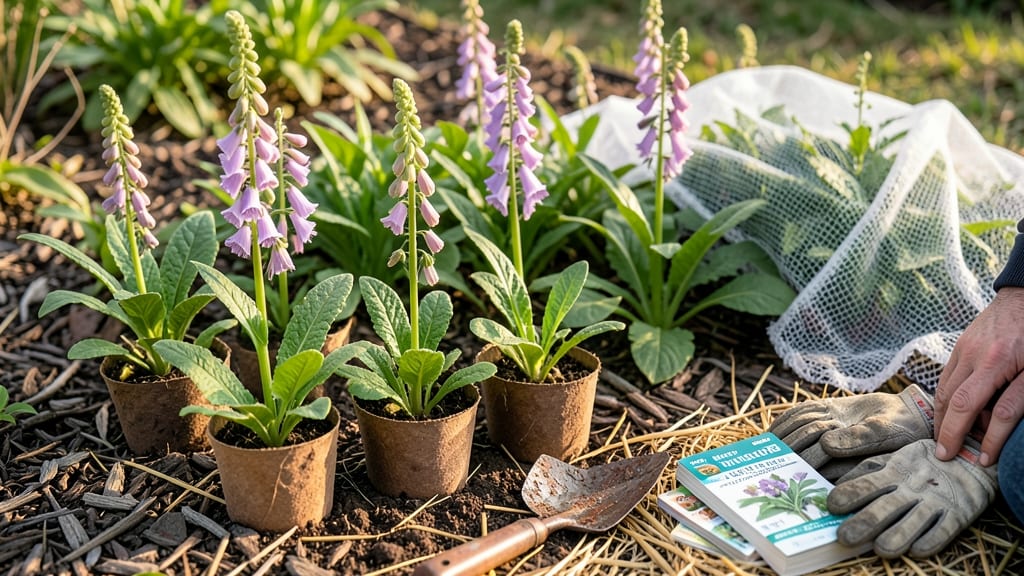
To start a garden in Michigan, time your planting around frost dates: begin cool-season crops like peas and spinach 4-6 weeks before the last frost (late March to early April in most zones), while warm-season plants like tomatoes and peppers should wait until after the last frost (mid-May to early June). Always verify local frost dates for accurate timing.
Michigan's planting schedule hinges on frost sensitivity—cool-season crops thrive in early spring when soil temperatures reach 40°F, while tender plants need consistent warmth above 55°F. 🌱 The state spans USDA zones 4-6, so northern regions (like Traverse City) face later frost dates than southern areas (like Detroit), sometimes differing by 2-3 weeks.
I always check the Michigan State University Extension's frost date maps to adjust my schedule, since microclimates near lakes or hills can create localized variations of 10°F or more.
For precision timing, I recommend using a soil thermometer—cool-season crops like kale and carrots perform best when soil stays between 50-70°F, while warm-season favorites like cucumbers and basil need soil above 60°F for optimal germination.
This temperature sensitivity explains why some gardeners use row covers to extend early planting windows by 2-4 weeks.
💡 In This Article
- Michigan Hardiness Zones and Frost Date Timelines
- Best Early vs Late Season Crops for Michigan Gardens
Michigan hardiness zones and frost date timelines
Frost dates are the backbone of Michigan gardening because they determine when plants can safely emerge and grow. Cool-season crops like peas and spinach can handle light frosts down to 25°F, while tender warm-season plants like tomatoes and peppers wilt at temperatures below 50°F.
The USDA divides Michigan into zones 4-6, with northern regions (like Marquette) experiencing last spring frosts around May 15-30, while southern areas (like Ann Arbor) see them by May 1-15. This 3-week difference means gardeners in the Upper Peninsula must wait longer for warm-season planting.
The science behind frost sensitivity lies in plant cell membranes. When temperatures drop below 32°F, ice crystals form in plant cells, rupturing their structure.
Warm-season plants have evolved in tropical climates, so their cells lack the antifreeze proteins found in cold-hardy varieties. 🌱 For example, Swiss chard can survive -15°F thanks to these proteins, while basil shrivels at 35°F.
This biological difference explains why timing matters so critically—planting tomatoes too early risks killing seedlings before they establish roots.
Microclimates add another layer of complexity. Lakeside areas in northern Michigan often experience delayed spring warming due to water's high heat capacity, while urban Detroit gardens may warm 5-10°F faster than rural areas. The Great Lakes also create "lake-effect" frost pockets where temperatures can drop 10°F colder than inland zones.
I always verify frost dates using Michigan State University's interactive map, which accounts for these variations by showing 10-year averages with ±5-day confidence intervals.
For precise planning, I recommend tracking both average frost dates and your local 5-year records. The National Weather Service's Almanac provides historical data showing that northern Michigan's last frost date has shifted 2-3 days earlier per decade due to climate change.
This means traditional planting windows may need adjustment—what worked 20 years ago might be 1 week too late today. Using a soil thermometer (not just air temperature) helps confirm when soil reaches the 50°F threshold needed for warm-season crops.
Here's how to interpret Michigan's frost date variations:
- Northern Michigan (Zones 4-5): Last frost typically May 15-30, first frost September 20-October 5
- Central Michigan (Zone 5): Last frost May 1-15, first frost September 15-25
- Southern Michigan (Zone 6): Last frost April 15-May 1, first frost October 10-20
What most gardeners overlook is how elevation affects frost timing. Areas just 100 feet higher may experience frost 1-2 weeks later than valley floors. This is why hillside gardens often have shorter growing seasons despite being in the same USDA zone. 💫