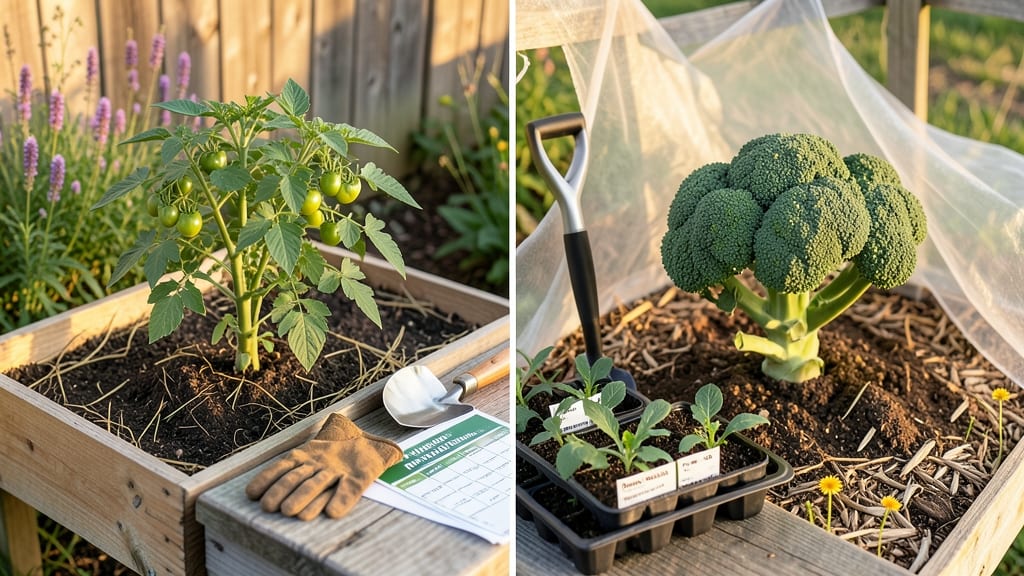
Planting your garden in Michigan after the last frost date is the key to avoiding those heartbreaking late-spring freezes that turn tender seedlings into sad, crispy memories.
Michigan gardeners know timing is everything—plant too early and risk frost damage, too late and miss peak harvests. But with Michigan’s diverse zones (4a to 6b), figuring out the perfect planting window can feel like solving a puzzle.
Most of the state falls in USDA zones 4a through 6b, meaning frost dates vary wildly from late April in southern Michigan to mid-June in the Upper Peninsula. That’s why a one-size-fits-all approach never works here.
In this guide, I’ll break down the exact frost-free dates by zone, show you how to use a frost calculator to time your plantings, and share the top 5 mistakes Michigan gardeners make that cost them half their harvest.
Jan
❄️
Feb
❄️
Mar
🌱
Apr
🌱
May
🌱
Jun
🌱
Jul
☀️
Aug
☀️
Sep
🍂
Oct
🍂
Nov
🍂
Dec
❄️
Michigan’s frost-free dates by USDA zone: when to plant vegetables
Michigan’s climate varies dramatically from its northernmost zone (4a) to its southernmost (6b), making frost dates the most critical factor for successful vegetable gardening.
The last spring frost typically arrives between April 15 in the north and May 15 in the south, while first fall frosts range from September 15 to October 15. Understanding these windows helps you avoid frost damage to tender plants like tomatoes and peppers.
Cool-season crops like lettuce, spinach, and peas thrive in Michigan’s cooler spring and fall temperatures, while warm-season plants such as tomatoes, peppers, and cucumbers need the soil to reach at least 60°F (15°C) before planting.
Below, I’ve broken down the frost-free dates and planting windows for each zone, so you can plan your garden like a pro.
| USDA Zone |
Last Spring Frost |
First Fall Frost |
Cool-Season Planting |
Warm-Season Planting |
| 4a (Northern MI) |
May 1-15 |
September 15-30 |
April 15-May 15 |
June 1-June 15 |
| 4b (Upper Peninsula) |
May 1-10 |
September 10-20 |
April 1-April 30 |
May 25-June 10 |
| 5a (Central MI) |
April 25-May 10 |
October 1-10 |
April 1-April 20 |
May 10-May 25 |
| 5b (Mid-Michigan) |
April 15-April 30 |
October 5-15 |
March 25-April 15 |
May 1-May 15 |
| 6a (Southern MI) |
April 1-April 15 |
October 15-25 |
March 15-April 1 |
April 25-May 10 |
How to use a frost-free date calculator for Michigan gardens
Michigan’s unpredictable spring frosts and short growing season make timing critical. A frost-free date calculator simplifies the process by accounting for your USDA zone and local weather patterns. I rely on Michigan State University’s free tool to pinpoint my last frost dates and avoid costly mistakes.
Start by entering your zip code into the calculator. This pulls up your local frost dates, which vary dramatically across Michigan’s zones—from May 15 in northern areas to April 15 in southern regions.
The calculator also shows your first fall frost, essential for planning fall crops like kale or spinach.
Next, adjust for soil temperature. Warm-season crops like tomatoes and peppers need soil at 60°F+. Use a soil thermometer to confirm readiness—planting too early can stunt growth. The calculator often includes soil warming tips tailored to Michigan’s climate.
🌱 Step-by-Step: Using Michigan’s Frost-Free Calculator
- 📍 Enter your zip code to access zone-specific frost dates.
- 🌡️ Check soil temperature—wait until it reaches 50°F+ for cool crops and 60°F+ for warm crops.
- 📅 Add 2–4 weeks to frost dates for seed-starting indoors (e.g., peppers need 8–10 weeks before transplanting).
- 🌿 Plan succession plantings every 2–3 weeks for continuous harvests (e.g., lettuce every 3 weeks).
- 📝 Note your first fall frost to schedule cool-season crops (like broccoli) 6–8 weeks before frost.
For succession plantings, divide your growing season into 2–3 week intervals. For example, if your last frost is May 15, plant bush beans on May 15, June 1, and June 15 to extend harvests. The calculator’s “planting windows” feature helps visualize these intervals clearly.
Don’t overlook microclimates. South-facing slopes warm faster than shaded areas, so adjust your frost dates by 1–2 weeks if your garden sits in full sun. I’ve added row covers in past years to push spring plantings even earlier, buying an extra 2–3 weeks of growth.
Finally, bookmark the calculator and check it annually—frost dates shift with climate changes. By mastering this tool, you’ll transform guesswork into a predictable, bountiful harvest, no matter your Michigan zone. Happy planting! 🌱
★★★★★5.0(2 reviews)
|