
Container Gardens
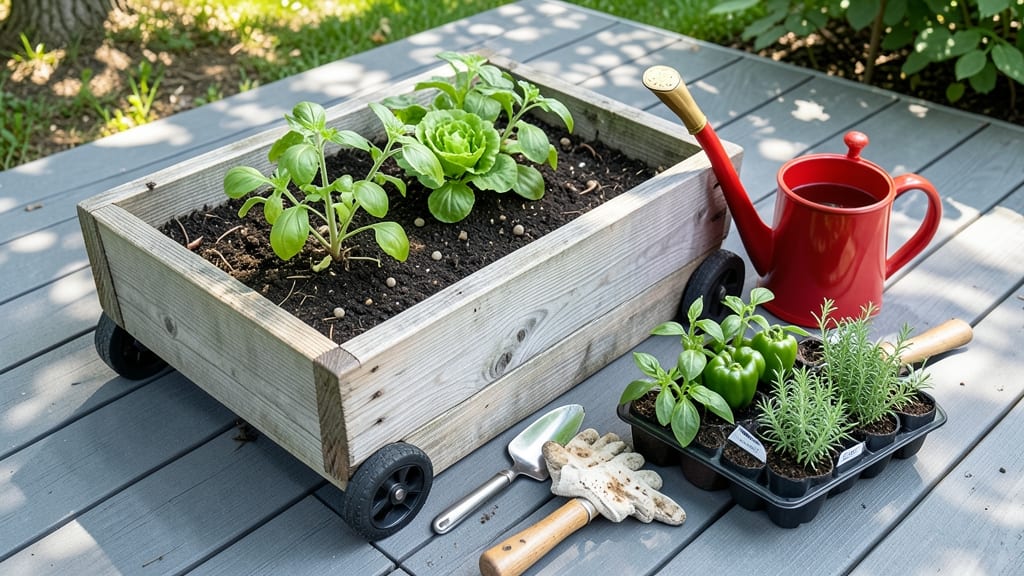
Portable raised garden beds transform even the tiniest balcony into a thriving harvest hub 🌱—no permanent installation or heavy lifting required.
Small spaces shouldn’t limit your gardening dreams, and these modular beds let you grow more food in less room while making plant care easier than ever before.
Whether you’re a city dweller with a patio or a suburban gardener craving flexibility, these lightweight, customizable containers adapt to your space—and your schedule.
From material choices to layout hacks, I’ll show you how to build, arrange, or buy portable beds that maximize yields without sacrificing mobility or style.
How modular portable raised garden beds maximize space and productivity
If you’ve ever struggled to grow a bountiful garden in a small yard or balcony, modular portable raised beds might be your game-changer. These innovative systems use vertical stacking and foldable designs to transform tight spaces into high-yield growing zones.
By stacking beds or arranging them in compact grids, you can double—or even triple—your planting capacity without sacrificing accessibility or soil quality.
One of the biggest advantages of these systems is their adaptability. Unlike traditional in-ground gardens, portable beds let you rotate crops seasonally, move them to optimize sunlight, or even bring them indoors during harsh weather.
Gardeners in urban areas have used them to grow 40% more tomatoes in the same footprint as conventional beds, simply by stacking two layers vertically.
But how exactly do these designs work? The key lies in their modular components, which allow you to mix and match bed sizes, heights, and configurations.
For example, a 2-foot-wide bed can fit between patio chairs, while a 4-foot-long bed can be stacked with another to create a tiered garden. This flexibility is especially useful for small-space gardeners who want to grow everything from leafy greens to bush beans without overcrowding.
The science behind their efficiency comes down to optimized root zones and improved drainage. Raised beds naturally warm up faster in spring, giving plants a head start.
Plus, their portability means you can reposition them to follow the sun’s arc throughout the day, maximizing light exposure for shade-sensitive crops like basil or lettuce.
Here’s how three popular modular systems compare in terms of space utilization and productivity:
Take the story of Maria from Chicago, who transformed her 6x8-foot patio into a thriving garden using a vertical stacking system. By placing two 2-foot-tall beds on top of each other, she grew 24 tomato plants in the space where she could previously fit only 8.
The top bed housed cherry tomatoes, while the bottom bed supported heirloom varieties. She also added a foldable grid system along the patio’s edge for herbs and lettuce, making the most of every inch.
Another creative solution is the modular tray system, which uses shallow, interlocking trays that can be arranged in grids or stacked. These are perfect for succession planting, where you replace harvested crops with new seedlings every few weeks.
For example, you could plant radishes in early spring, swap them for bush beans in summer, and then grow spinach in fall—all in the same tray.
For renters or gardeners who need flexibility, foldable systems are a game-changer. These beds can be collapsed into a flat, wall-mounted unit when not in use, freeing up space for entertaining or seasonal storage. One popular design, the Fold-N-Grow system, lets users switch between growing configurations in minutes.
Imagine folding away your garden in the morning and setting up a picnic table in the afternoon—that’s the power of modularity.
To get the most out of your portable raised beds, focus on crop placement and light optimization. Tall plants like pepper plants or trellised cucumbers should go in the back or on the bottom layer, while shade-tolerant greens like kale or arugula can thrive in the top layers.
Rotate beds every few weeks to ensure even sunlight exposure, and use reflective surfaces like white walls or mirrors to bounce extra light onto shaded areas.
With the right setup, you can turn even the tiniest space into a high-productivity garden.
Whether you’re growing food for your family, selling at a farmer’s market, or just enjoying the therapeutic benefits of gardening, modular portable raised beds make it easier than ever to grow more with less. 🌱
Top 5 materials for durable and lightweight portable raised beds
Choosing the right material for your portable raised garden beds is critical—you need something that balances durability, lightweight mobility, and weather resistance. Heavy cedar may last decades but becomes cumbersome to move, while flimsy plastic might not hold up to pests or heavy rains.
Let’s break down the top 5 materials to help you decide what works best for your needs and space.
My first recommendation is cedar, a classic choice known for its natural resistance to rot and insects. It’s heavier than other options but offers unmatched longevity—15-20 years with proper care.
However, its weight can make mobility challenging, especially for larger beds. For those who prioritize aesthetics and durability over portability, cedar is a winner.
Next, consider composite lumber, a synthetic blend of wood fibers and recycled plastic. It mimics the look of cedar but weighs significantly less, making it ideal for easy repositioning.
Composite beds resist moisture, pests, and warping, lasting 10-15 years without needing paint or sealant. The downside? It can be pricier upfront, but the low maintenance often pays off long-term.
For the most lightweight and budget-friendly option, recycled plastic lumber is a game-changer. It’s waterproof, pest-proof, and won’t splinter or crack under UV exposure. While it lacks the natural beauty of wood, its 50-pound weight savings per 4x8-foot bed makes it perfect for balconies or patios.
Just watch out for potential fading over time.
If you’re looking for ultimate mobility, aluminum or galvanized steel frames are unbeatable. They’re corrosion-resistant, lightweight, and often come with modular designs for easy assembly. The trade-off?
Metal beds can heat up in direct sun, which may affect root temperatures. Pairing them with insulated liners or planting heat-tolerant crops can mitigate this issue.
Finally, bamboo offers a sustainable, lightweight alternative with natural pest resistance. It’s eco-friendly and grows quickly, but it requires regular sealing to prevent moisture damage. Bamboo beds are best for short-term use or climates with mild winters, as they may not last as long as cedar or composite.
🌱 Material Comparison: Pros & Cons
- ✅ Natural rot/pest resistance
- ✅ Long lifespan (15-20 years)
- ✅ Aesthetic appeal
- ❌ Heavy (hard to move)
- ❌ Requires sealing
- ❌ Expensive upfront
- ✅ Lightweight yet durable
- ✅ No sealing needed
- ✅ Pest/moisture resistant
- ❌ Higher cost
- ❌ Less eco-friendly
- ❌ Can fade over time
- ✅ Ultra-lightweight
- ✅ Waterproof & pest-proof
- ✅ Low maintenance
- ❌ Less attractive
- ❌ May fade in sun
- ❌ Limited customization
- ✅ Extremely lightweight
- ✅ Corrosion-resistant
- ✅ Modular designs available
- ❌ Can heat up in sun
- ❌ Less insulating
- ❌ Less aesthetic
- ✅ Sustainable & lightweight
- ✅ Natural pest resistance
- ✅ Affordable
- ❌ Short lifespan (5-10 years)
- ❌ Needs sealing
- ❌ Less durable in wet climates