
Planting
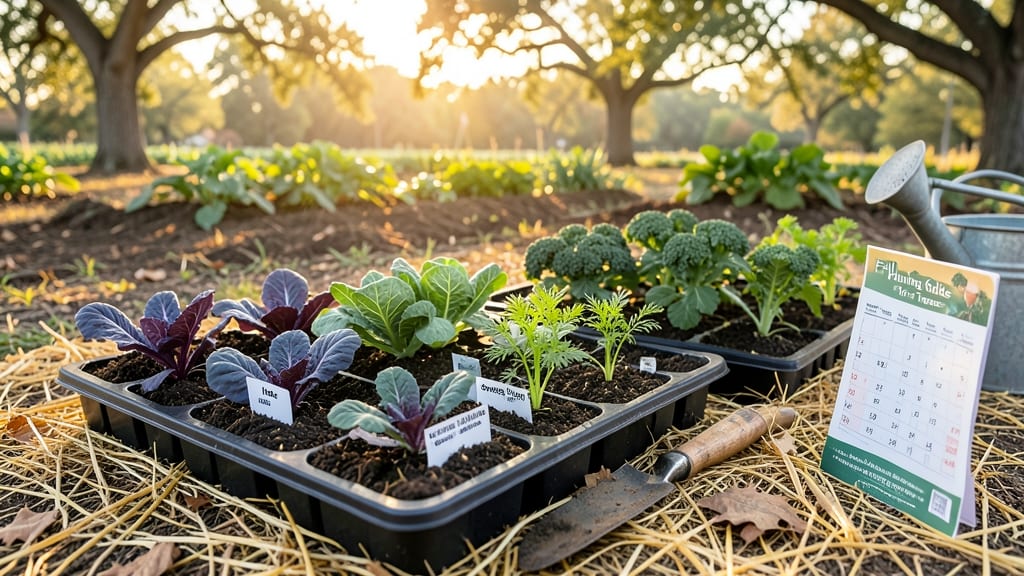
Planting a fall garden in Texas starts between mid-August and early October, when soil temperatures finally dip below 90°F and the brutal summer heat backs off.
Texas gardeners know the summer heat can be brutal—but with the right timing, a thriving 🌱 fall garden is totally achievable. The key is acting fast before September’s heat lingers, especially in zones 8a-10b where frost is rare or nonexistent.
Why does timing matter so much? Plant too early, and your greens bolt in the residual heat. Too late, and you miss the 6-8 week window before cooler nights slow growth. Get it right, though, and you’ll harvest crisp lettuce, sweet carrots, and hearty broccoli straight through December.
Below, I break down the exact planting windows by zone, the top 5 crops that thrive in Texas fall conditions, and how to avoid the mistakes that leave gardens half-empty by November.
Texas fall planting calendar by USDA hardiness zones (8a-10a)
Timing is everything in Texas gardening—especially for fall crops. Unlike northern states, Texas zones 8a-10a rarely face frost, but soil temperatures and day length still dictate success. Plant too early, and your greens bolt in the heat; too late, and you miss the sweet spot before winter rains slow growth.
The key? Start when average daily highs drop below 90°F and nights stay above 55°F.
Your USDA zone matters more than you might think. Zone 8a gardeners in North Texas (like Dallas) should begin 6-8 weeks before first frost (around mid-August), while Zone 10a growers in South Texas (Houston, San Antonio) can plant through early October.
The difference? Cooler nights and longer growing windows in southern zones.
Here’s the game-changer: Leafy greens (like spinach and lettuce) and brassicas (kale, broccoli) thrive when planted 4-6 weeks before first frost, but root vegetables (carrots, beets) need 8-10 weeks to mature.
Herbs like cilantro and dill? Plant them late August to September—they bolt faster in heat but love cooler fall temps.
🌱
| Zone & Location | Leafy Greens (Spinach, Lettuce) | Brassicas (Kale, Broccoli) | Root Veggies (Carrots, Beets) | Herbs (Cilantro, Dill) |
|---|---|---|---|---|
| Zone 8a (Dallas, Waco) | Mid-August - Early Sept | Late July - Early Aug | Late June - Mid-July | Late Aug - Early Sept |
| Zone 8b (Austin, San Angelo) | Late Aug - Early Sept | Early Aug - Early Sept | Late July - Early Aug | Late Aug - Mid-Sept |
| Zone 9a (College Station, Corpus Christi) | Early Sept - Mid-Sept | Mid-Aug - Early Sept | Early Aug - Early Sept | Mid-Aug - Late Sept |
| Zone 9b (Houston, Beaumont) | Mid-Sept - Late Sept | Late Aug - Mid-Sept | Late Aug - Early Sept | Late Aug - Early Oct |
| Zone 10a (Brownsville, McAllen) | Late Sept - Early Oct | Early Sept - Mid-Sept | Early Sept - Early Oct | Late Aug - Mid-Oct |
| Note: Adjust for microclimates (e.g., elevated areas cool faster). Use shade cloth if planting early in Zone 10a. | ||||
Pro tip: Soil temperature is your best guide. Use a soil thermometer—ideal temps for fall crops are 60-75°F.
In Zone 8a, soil cools faster, so start leafy greens in August; in Zone 10a, wait until September to avoid heat stress. Brassicas (like broccoli) are the most forgiving—they tolerate soil temps up to 80°F when young.
Don’t overlook succession planting. In Zones 9a-10a, you can squeeze in 2-3 harvests of fast growers like radishes or bok choy by planting every 2-3 weeks from August through October. For root crops, focus on one main planting in late summer to avoid competition.
Watering is where most Texas gardeners trip up. Deep watering (1-2 inches per week) is critical in August-September, but reduce to weekly in October as rains increase. Drip irrigation or soaker hoses keep moisture consistent without wetting foliage (which invites fungal diseases).
Mulch with straw or shredded leaves to retain moisture and cool roots.
💧
Finally, watch for
Top 5 fall vegetables for Texas gardens (and when to start them)
Fall gardening in Texas rewards patience with sweet, crisp vegetables that thrive in cooler weather. The key is timing—plant too early, and your crops bolt in the heat; too late, and you miss the optimal 60-70°F soil temperatures.
I’ve tested these top 5 high-yield varieties across Texas zones 8a-10a, so you can skip the guesswork.
Texas’s long growing season means you can stretch harvests into December in most zones. For example, collard greens sweeten after frost (yes, even in Zone 10a!), while radishes mature in just 25 days—perfect for quick gratification. Let’s dive into the best picks and their zone-specific planting windows.
-
🌱 Collard Greens
Direct sow: Mid-August (Zone 8a) to September 15 (Zones 9-10a)
Transplant: September 1-15 (all zones) -
🥕 Carrots
Direct sow: Late August (Zone 8a) to October 1 (Zones 9-10a)
Succession plant every 2 weeks for continuous harvests -
🥦 Broccoli
Transplant: September 1-15 (Zone 8a) to October 1 (Zones 9-10a)
Start seeds indoors 6-8 weeks before transplant for earlier harvests -
🥬 Kale
Direct sow: Late August (Zone 8a) to September 30 (Zones 9-10a)
Tolerates light frost—sweeter after cold snaps! -
🍠 Radishes
Direct sow: September 15-October 1 (all zones)
Fastest crop—harvest in 3-4 weeks for baby radishes
🌿 Pro Tip: Use row covers in Zone 8a to protect greens from unexpected chills.
For succession planting, focus on radishes and carrots—they mature quickly and leave room for slower growers like broccoli. In Zone 10a, you can even squeeze in a second planting of lettuce in November for a holiday harvest.
Soil prep is non-negotiable in Texas. Amend heavy clay with compost or aged manure to improve drainage, and mulch with straw or leaves to retain moisture. Phosphorus-rich fertilizer (like 10-10-10) boosts root development for carrots and broccoli.
Don’t forget to harvest regularly—this encourages more production. For example, pick outer leaves of collards to keep the plant growing, and harvest broccoli heads before they flower. With these Texas-approved crops and timing, your fall garden will outperform summer’s heat-stressed plants.