
Container Gardens
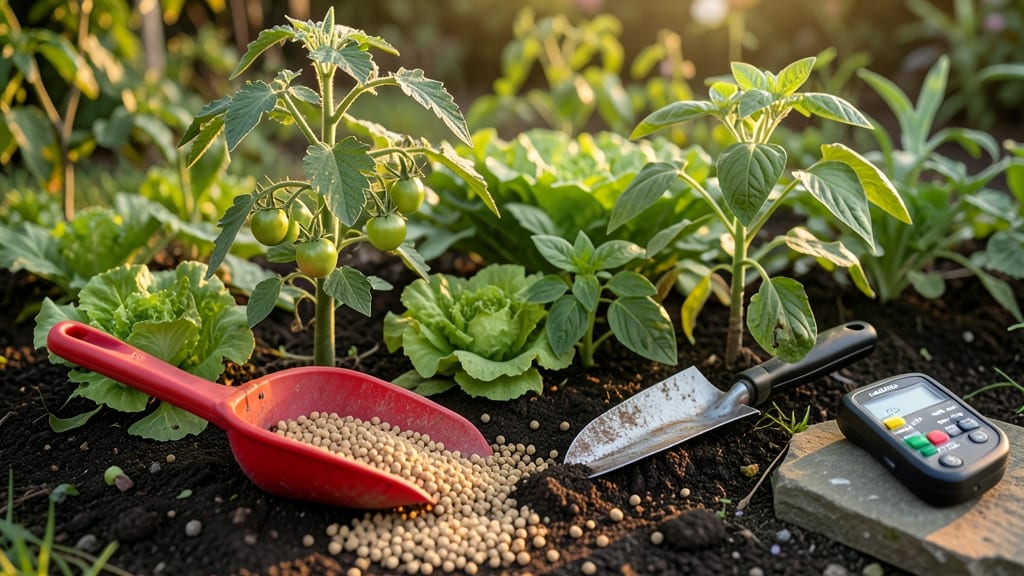
To fertilize your garden properly, time it with your plants' growth cycles: use slow-release fertilizer in early spring for perennials and vegetables, apply another dose mid-season for flowering plants, and skip fall fertilization for most plants—except for bulbs or cool-season crops like lettuce.
Timing matters because plants absorb nutrients most efficiently during active growth phases. 🌱 In early spring, when roots establish themselves and shoots emerge, your garden soaks up fertilizer like a sponge. Mid-season feeding supports blooming plants by replenishing nutrients they've used up producing flowers and fruit.
The key is matching fertilizer application to what your plants need most—whether it's leafy greens in spring or vibrant blooms in summer.
Over-fertilizing in fall can encourage tender new growth that won't survive winter, while bulbs and cool-season crops actually benefit from late-season nutrients to store energy for next year's growth.
For vegetables like tomatoes, I recommend a balanced fertilizer at planting time, followed by a nitrogen boost when vines start running. Flowering plants such as roses thrive with phosphorus-rich fertilizer when buds form, while lawns benefit from slow-release nitrogen every 6-8 weeks during growing season.
Always check soil moisture before applying—dry soil can burn roots, while saturated soil washes away nutrients before plants can use them.
💡 In This Article
- Seasonal Fertilizer Timing for Different Plant Types
- Plant-Specific Fertilization Schedule for Vegetables, Flowers, and Lawns
Seasonal fertilizer timing for different plant types
Plants have natural growth cycles that dictate when they can best utilize fertilizer. In early spring, when soil temperatures rise above 50°F, roots become metabolically active and begin absorbing water and nutrients.
This is why early spring is ideal for applying slow-release fertilizer—it provides a steady nutrient supply as plants transition from dormancy to active growth.
The key here is timing: applying fertilizer too early when soil is still cold (45°F or below) can lead to nutrient leaching, where rain washes away valuable nitrogen before plants can use it.
Mid-season fertilization targets plants that are in their most demanding growth phase. Flowering plants, for example, deplete soil phosphorus rapidly as they develop blooms, while fruiting vegetables like tomatoes need consistent potassium to prevent blossom-end rot.
The science behind this is that plants prioritize energy toward reproductive structures (flowers, fruit) during summer months, which creates a natural nutrient deficit.
A balanced 10-10-10 fertilizer applied at this stage can provide the perfect boost, but timing matters—most plants benefit from mid-season feeding when they've already established a strong root system (typically 4-6 weeks after planting).
Fall fertilization works differently because most plants enter dormancy as temperatures drop below 60°F. During this period, roots continue to grow but at a reduced rate, and any excess nitrogen can lead to tender new growth that's vulnerable to frost damage.
However, bulbs like tulips and daffodils are an exception—they need nutrients in fall to build energy reserves for spring blooming. Similarly, cool-season crops like lettuce and spinach actually thrive with light fertilization in late summer to prepare for fall harvests.
This is why soil temperature probes (around $20) become invaluable—they help you determine when to pause or adjust fertilization based on real-time growing conditions.
Temperature isn't the only factor—soil moisture plays a crucial role in nutrient availability. Dry soil can create a "fertilizer desert" where nutrients become concentrated at the surface, while saturated soil causes leaching.
The ideal scenario is applying fertilizer when soil moisture is moderate (about 40-60% capacity), which allows roots to access nutrients without competition from water displacement.
This is why many gardeners use the "finger test": if the top 2 inches of soil feel dry, it's safe to fertilize; if it's soggy, wait until conditions improve.
Over-fertilizing in the wrong season can have dramatic consequences. For instance, applying high-nitrogen fertilizer in late summer can cause "fall flush" growth that's susceptible to fungal diseases like powdery mildew. The plant's energy is diverted toward leafy growth instead of root development, leaving it weakened for winter.
Conversely, withholding fertilizer from bulbs in fall means they'll produce smaller, weaker blooms the following spring. Understanding these seasonal patterns helps you become a more strategic gardener—matching inputs to the plant's natural rhythms rather than following a one-size-fits-all schedule.
Consider this real-world example: My neighbor's roses bloomed beautifully until late summer, when the flowers became sparse and weak. After testing the soil, we discovered the phosphorus levels were depleted—a classic sign of mid-season nutrient exhaustion.
By applying a bone meal fertilizer (3-15-0) when buds began forming, we restored bloom quality within 6 weeks. The lesson? Pay attention to your plants' visual cues—they often tell you exactly when they need that next nutrient boost.