
Vegetables
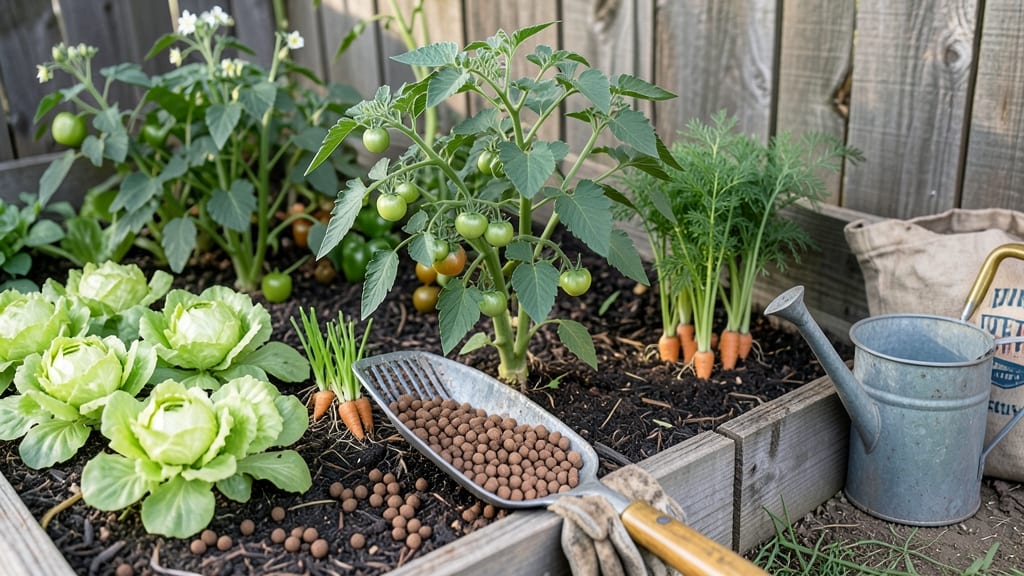
To fertilize a vegetable garden, time applications based on soil tests and plant needs: feed with organic or balanced fertilizer in early spring before planting, then add side dressings to leafy greens mid-season, and use slow-release options for root vegetables. Avoid heavy nitrogen feeds for tomatoes late in the season.
Timing your garden's nutrient boosts isn't just about throwing fertilizer on the dirt—it's about matching plant growth stages with what they actually need. 🌱 A soil test reveals whether your garden is nitrogen-starved (great for leafy greens) or phosphorus-deficient (ideal for fruiting plants like tomatoes).
For example, I always test my soil in late winter so I can adjust my spring feeding plan before seeds even hit the ground.
Leafy greens like spinach and kale love a mid-season nitrogen kick to keep producing, while root crops like carrots prefer slow-release fertilizers that won't burn their delicate growth.
What often trips up gardeners is the late-season nitrogen trap—pumping tomatoes with high-nitrogen fertilizer when they're already flowering can actually reduce fruit production. Instead, I switch to a balanced or phosphorus-heavy feed during flowering to support those sweet red orbs growing on the vine.
The key is reading your plants: wilted leaves might mean too much salt from fertilizer, while pale stems could signal a micronutrient deficiency that a simple foliar spray can fix.
💡 In This Article
- How Soil Test Results Determine Fertilizer Timing
- Plant-Specific Fertilizer Schedules for Common Vegetables
How soil test results determine fertilizer timing
Soil tests reveal three critical numbers that dictate your fertilizer timing: nitrogen (N), phosphorus (P), and potassium (K) ratios. These values show whether your soil is deficient, balanced, or overloaded for specific plant needs.
For example, a soil test showing low nitrogen (N < 20 ppm) signals your garden needs early spring applications for leafy greens like lettuce, while high phosphorus (P > 50 ppm) means you should delay fruiting plant fertilizers until flowering begins.
The pH level also matters—most vegetables thrive at 6.0-7.0, but brassicas (like broccoli) prefer slightly acidic soil (5.8-6.2).
Timing applications based on these results prevents nutrient waste and plant stress. If your test shows low potassium (K < 150 ppm), for instance, apply a potassium-rich fertilizer like greensand 4-6 weeks before harvest to strengthen root crops against disease.
Micronutrient deficiencies (like zinc or iron) often appear as yellowing leaves, and soil tests identify these so you can use foliar sprays mid-season instead of overloading the soil.
I once had a garden where a soil test revealed excess phosphorus, which locked out zinc—adding compost tea with zinc sulfate fixed the issue within 3 weeks of application.
The science behind this involves how plants uptake nutrients at different growth stages. Seedlings need readily available nitrogen for leaf growth, while flowering plants require phosphorus for fruit development. Root crops like carrots benefit from slow-release fertilizers applied 6-8 weeks before harvest to avoid nutrient spikes that cause forking.
Soil tests also help you avoid over-fertilizing—excess nitrogen late in the season can cause tomatoes to produce more leaves than fruit, a common mistake gardeners make when they don't check their soil first.
Consider these key factors when interpreting your soil test:
- Nitrogen (N): Apply in early spring for leafy greens, but reduce for fruiting plants after flowering begins
- Phosphorus (P): Use during planting and flowering—never late in the season for root crops
- Potassium (K): Add 4-6 weeks before harvest to improve disease resistance
- pH adjustments: Lime raises pH, sulfur lowers it—make these changes 3-6 months before planting
What most people don't realize is how soil organic matter levels affect fertilizer timing. High organic matter (>5%) means nutrients release slowly, so you can space applications further apart. Low organic matter (<2%) requires more frequent, lighter feedings. For instance, my sandy soil tests low in organic matter, so I use compost tea every 4-6 weeks instead of relying on granular fertilizers. This approach keeps nutrients available without overwhelming the plants.
Finally, seasonal timing matters beyond just spring planting. In warm climates, you might need to fertilize twice a year—once in early spring and again after summer rains leach nutrients. In cooler regions, a single spring application with slow-release fertilizers often suffices.
Always re-test your soil 2-3 years after initial testing to track changes—this helps you refine your timing strategy over time. 🌱