
Tools
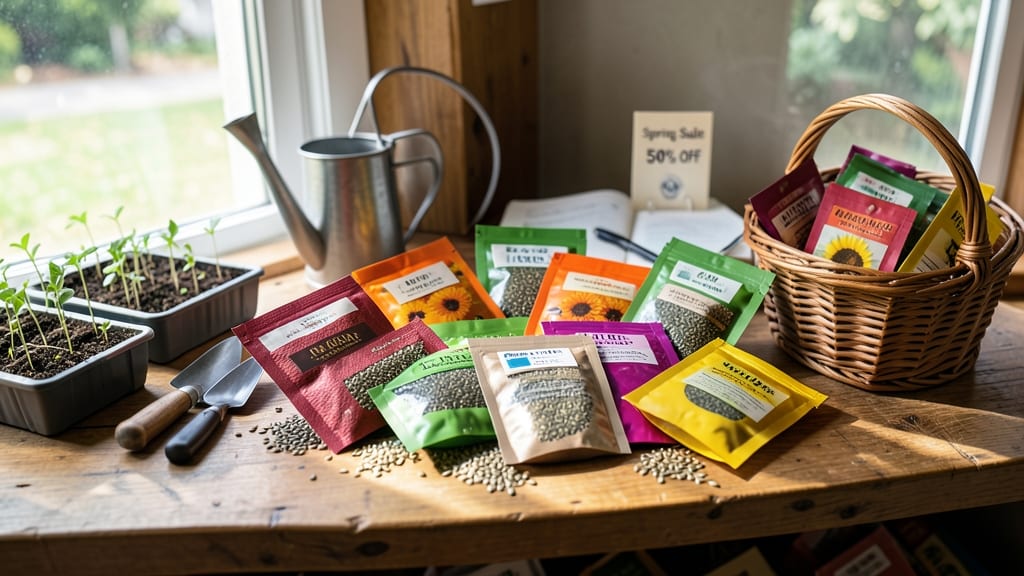
Where to buy garden seeds depends on your needs: reputable online stores like Burpee, Baker Creek Heirloom Seeds, and Etsy specialize in heirloom and organic options, while local nurseries or big-box retailers (Home Depot, Lowe’s) offer convenience for everyday gardening essentials. For rare varieties, specialty seed banks are your best bet.
Your seed-buying strategy should match your gardening goals. 🌱 Online retailers excel at rare heirloom varieties and organic certifications, often with detailed growing guides included. Local options, however, let you examine seeds firsthand and get expert advice tailored to your region's climate.
I always recommend checking seed-saving organizations for open-pollinated varieties that you can replant year after year—it's both cost-effective and sustainable.
For specialty seeds like drought-resistant or pollinator-friendly varieties, niche suppliers often provide exactly what mainstream stores lack. The key is balancing convenience with quality—whether that means ordering online for unique varieties or visiting your local nursery for immediate access to common favorites.
💡 In This Article
- Best Online Seed Retailers for Quality and Variety
- Local vs Online Seed Purchases: Pros and Cons
Best online seed retailers for quality and variety
Online seed retailers stand out for their vast catalogs and specialized offerings that local stores simply can't match. Take Baker Creek Heirloom Seeds, for example—they specialize in over 1,800 heirloom varieties, including rare tomatoes like 'Black Krim' or peppers like 'Aji Charapita,' which you'd struggle to find elsewhere.
Their seeds are non-GMO and open-pollinated, meaning you can save seeds from your harvest for next year—a feature that appeals to sustainability-focused gardeners. 🌿 What sets them apart is their detailed growing guides, which include historical context about each variety's origins.
For organic certification, Burpee remains a trusted name, offering USDA Organic seeds across vegetables, herbs, and flowers. Their 'Organic Seed Collection' includes staples like 'Early Girl' tomatoes and 'Red Sails' lettuce, all tested to ensure they meet strict organic farming standards.
Shipping speed is another advantage—most orders arrive within 3-5 business days, with some expedited options for urgent gardeners. Their website also includes a handy 'Planting Calendar' that adjusts based on your ZIP code, helping you time your plantings perfectly for your local climate.
Etsy serves as a marketplace for independent seed sellers, where you'll find everything from drought-resistant heirlooms to pollinator-friendly blends. Sellers often provide unique packaging, like seed paper embedded with wildflower seeds or recycled materials. The downside?
Quality varies widely—always check seller ratings (aim for 4.8+ stars) and read recent reviews mentioning germination rates. I've found some Etsy shops offer 'seed swaps' or bulk discounts for repeat customers, making it a cost-effective option for large gardens or seed libraries.
Specialty seed banks like Seed Savers Exchange cater to preservationists with their 25,000+ rare and endangered varieties. Their 'Year of the Seed' program even helps you track which varieties need saving most urgently.
For urban gardeners, Victory Seeds focuses on compact, high-yield varieties perfect for small spaces, while High Mowing Seeds specializes in organic, non-GMO seeds with a strong emphasis on research-backed performance data. Each of these retailers addresses specific gardening needs—whether it's climate adaptation, space constraints, or conservation goals.
What most people overlook is the importance of seed certification labels. Look for terms like 'Foundation Seed' (the highest quality, used by breeders) or 'Registered Seed' (certified for genetic purity). Online retailers often provide these details in product descriptions, whereas local stores may not.
This certification ensures you're getting seeds that will grow true to type, saving you from disappointment with mixed or inferior plants. 🌱
Consider this comparison when choosing: mainstream retailers like Home Depot offer convenience and price points (often $1.50-$3 per packet), but lack specialty varieties. In contrast, Baker Creek charges $2.50-$4 per packet for heirlooms, but includes growing guides and seed-saving instructions worth their weight in gold.
For most gardeners, the sweet spot lies in combining online orders for unique seeds with local purchases for immediate needs.