
Picking
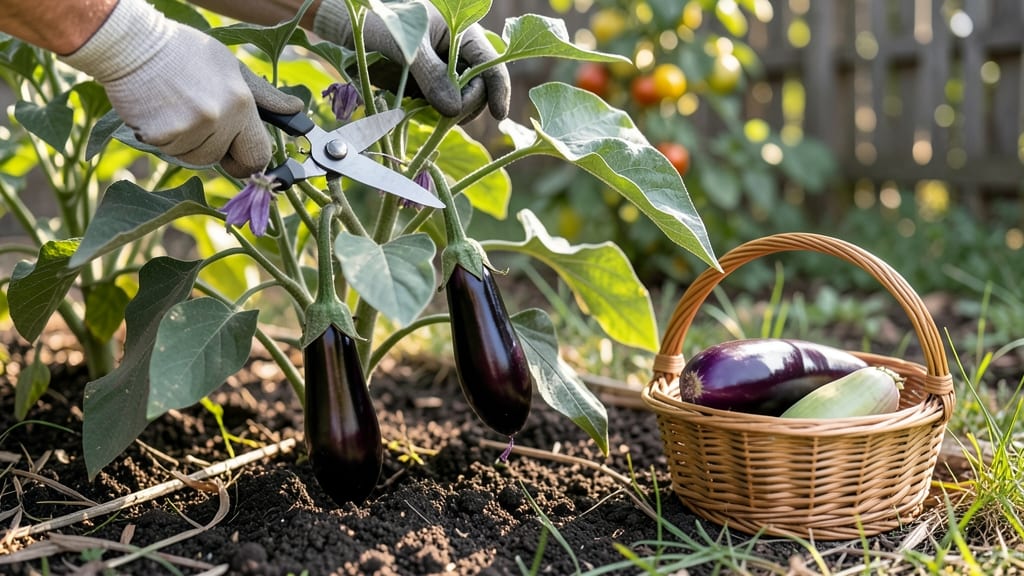
Picking eggplant at the right time ensures you get the best flavor and texture from your garden 🍆 — and the key is watching for that perfect color shift and firmness.
Harvesting too early means tough, underdeveloped fruit, while waiting too long turns them bitter and seedy. I’ve made both mistakes, and trust me, the difference in taste is night and day.
For most varieties, eggplant is ready to pick when it reaches 6 to 8 inches in diameter and the skin turns deep purple, black, or white, depending on the type. But don’t rely on size alone—firmness and glossy skin are just as important.
In this guide, I’ll walk you through the best ways to test for ripeness, including the finger test, color cues, and how climate affects timing. By the end, you’ll know exactly when to pluck your eggplant for the best results.
How to tell when eggplant is ready to harvest by color and size
Eggplant ripeness is all about visual cues and understanding your variety's maturity. The most reliable signs focus on color depth, skin texture, and fruit diameter.
Different varieties—like purple Black Beauty, white Casper, or striped Italian—have distinct markers, but the core principles remain the same. Sunlight exposure also plays a surprising role in how quickly these indicators develop.
For most standard eggplant varieties, look for a 6-8 inch diameter at the widest point. Smaller fruits (under 5 inches) are usually underripe, while oversized ones (over 10 inches) may become bitter or seedy.
The key is catching them at that sweet spot where flavor peaks. My Black Beauty plants always produce their best fruit when harvested at 7-8 inches—any larger and the texture suffers.
Here’s how to spot the perfect eggplant using just your eyes—and a little sunlight knowledge:
The skin's glossiness is your secret weapon. A ripe eggplant should have a satiny sheen, almost like it’s been lightly waxed. Dull or matte skin means it’s underripe, while wrinkled or leathery skin signals overripeness.
I once missed a harvest window and came back to find my eggplants looking like deflated balloons—never again! Pro tip: Check for glossiness in the morning sunlight when dew enhances the shine.
Color consistency matters just as much as depth. A ripe purple eggplant should have no green stems or yellow patches. White varieties like Casper should avoid any creamy or brown spots, which indicate stress.
Even striped varieties need crisp, defined lines—fading stripes mean the fruit is past its prime. My Italian eggplants always develop the most vibrant stripes when grown in partial afternoon shade.
Sunlight exposure directly affects how quickly eggplants reach harvest readiness. Plants in full sun (8+ hours) develop deeper colors and reach maturity 1-2 weeks faster than those in partial shade (4-6 hours). However, too much intense afternoon sun can cause sunburn spots or bitter flavors.
I’ve found that morning sun with afternoon shade gives my eggplants the perfect balance of color depth and sweetness.
Don’t overlook the stem attachment as a final check. At the perfect harvest time, the stem should separate cleanly when you gently twist the fruit. If it resists, the eggplant needs more time; if it pulls away too easily, it’s overripe.
This twist test works especially well for container-grown eggplants, where stems are often more delicate. I always harvest mine in the morning when stems are firmest.
Regional growing conditions can shift these timelines. In hot climates (Zones 9-11), eggplants may mature 2-3 weeks earlier due to longer daylight hours, while cooler zones (Zones 5-7) might need extra weeks to reach full color.
Last summer, my Black Beauty plants in Zone 7 took 85 days to ripen—10 days longer than the seed packet predicted. Always adjust your expectations based on your local microclimate.
One final pro tip: Harvest regularly to encourage more production. Eggplants are prolific producers, but they’ll focus energy on fewer fruits if left unharvested. I pick mine every 2-3 days during peak season, and my plants keep giving me glossy, firm fruits all summer long.
The key is consistency—don’t let more than 3-4 eggplants mature at once on any single plant.
With these color and size cues mastered, you’ll never miss
The finger test and other tactics for perfect eggplant ripeness
Beyond just watching eggplant grow, I’ve learned the finger test and stem separation method are game-changers for nailing the perfect harvest. These tactile tricks help avoid the two biggest mistakes: picking too early (when fruits are seedy and bitter) or too late (when they turn mealy and lose flavor.
The key lies in combining visual cues with physical tests for foolproof results every time.
Start by examining the stem attachment. A ripe eggplant’s stem should separate cleanly when you gently twist it—no resistance, just a clean snap. This indicates the fruit has reached peak maturity.
If the stem resists, it’s not ready yet. For varieties like Black Beauty or Ichiban, this method works especially well because their glossy skins can sometimes be misleading about true ripeness.
⚠️ callout-warning
Don’t confuse glossy skin with true ripeness—some varieties stay shiny even when overripe! Check seed development instead: Cut a small slice to reveal tiny, white seeds. If they’re larger than 1/8 inch, the eggplant is past its prime. For white varieties, look for deep yellow veins—this is your final green light.
Next, press your finger firmly into the eggplant’s skin. If it leaves a slight indent that bounces back, it’s perfect. A deep dent that stays means it’s overripe and starting to break down.
I’ve found this test works best in the morning when fruits are cool and firmest. Avoid testing after rain or hot afternoons, as moisture can throw off your results.
For color consistency, pay attention to the fruit’s entire surface, not just one spot. Purple varieties should be a deep, even hue with no green patches. White eggplants like Casper should turn a creamy yellow, while striped varieties like Italian Long need bold, uniform stripes.
A single dark spot doesn’t mean it’s ready—check the whole fruit before deciding.
One trick I’ve picked up from urban gardeners is to tap the eggplant gently with your knuckles. A ripe one makes a hollow, crisp sound, while an underripe one sounds dull.
Combine this with the finger test, and you’ll rarely miss the window. Remember, eggplants continue ripening off the vine for about 2-3 days, so don’t stress if you’re just a day early.
Finally, keep an eye on the vein development. Mature eggplants will have prominent, raised veins that run the length of the fruit. These veins become more defined as the eggplant ripens.
If you’re growing heirloom varieties, this is especially important because their colors can be subtle. Always cross-reference vein development with the other tests for the most accurate results.