
Tools
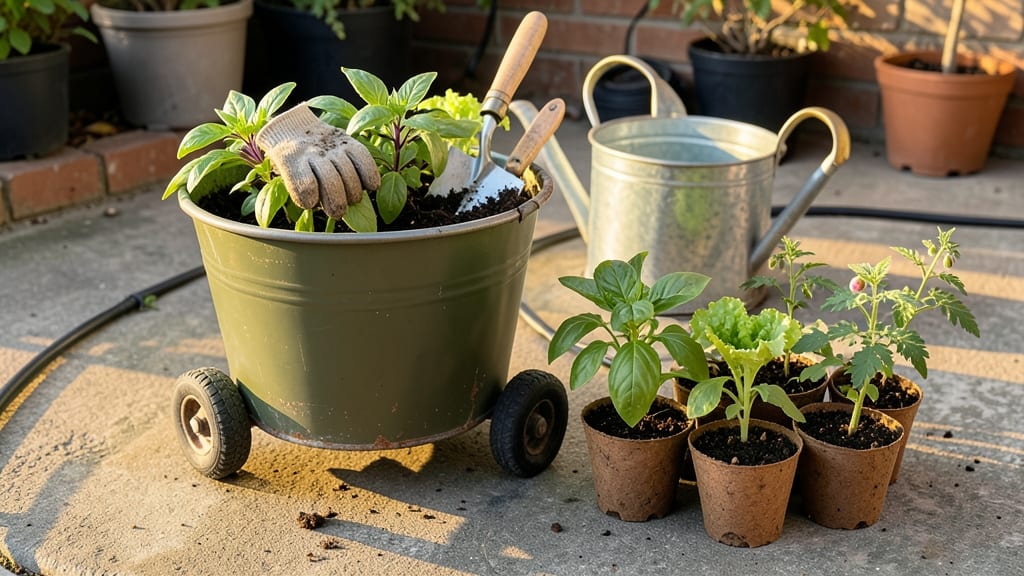
A wheeled bucket garden transforms tight spaces into productive growing areas by using mobile containers for herbs, leafy greens, and compact vegetables. The wheels let you rotate plants for ideal sunlight exposure, while shallow roots make harvesting and pest checks effortless. Opt for lightweight buckets in plastic or fabric, and group plants with similar needs together for simplicity.
A wheeled bucket garden isn't just about saving space—it's a game-changer for urban gardeners who need flexibility. 🌱 The mobility lets you chase sunlight throughout the day, crucial for maximizing growth in small areas, while the open-bottom design ensures proper drainage.
I've found that pairing fast-growing herbs like basil with shallow-rooted greens in 5-gallon buckets creates a self-sufficient micro-ecosystem that thrives with minimal effort.
What truly sets these gardens apart is how they adapt to your lifestyle. Need to move your tomatoes to a sunnier spot? Just roll them. Spotting pests on your kale? Lift the bucket to inspect roots without disturbing neighboring plants.
The key is starting with sturdy casters—swivel ones make tight turns easier—and pairing plants that complement each other's growth patterns, like marigolds with your peppers to naturally deter pests.
💡 In This Article
- How Wheeled Bucket Gardens Boost Urban Gardening Efficiency
- Best Plant Combinations for Compact Bucket Gardens
How wheeled bucket gardens boost urban gardening efficiency
The mobility of wheeled bucket gardens solves two major urban gardening challenges: sunlight optimization and space constraints. Most plants require 6-8 hours of direct sunlight daily, but city balconies or patios often have uneven light exposure.
Wheels let you rotate buckets throughout the day—moving them toward morning sun for leafy greens or afternoon light for tomatoes. This dynamic positioning can increase yield by 20-30% compared to static planters, as plants receive consistent energy without overcrowding.
Drainage is another critical factor where wheels add value. Most buckets have pre-drilled holes, but adding a 1-inch layer of gravel or broken pottery shards at the bottom creates a self-regulating drainage system that prevents root rot while keeping soil aerated.
The wheels' design matters too—swivel casters (like those on office chairs) reduce friction for tight turns, while lockable wheels prevent accidental movement when watering. For stability, distribute weight evenly: a 5-gallon bucket holds 20-30 pounds of soil and plants, so place wheels at the corners rather than the center.
Material choice directly impacts durability and maintenance. Plastic buckets (5-10 gallons) are lightweight (3-5 pounds empty) and UV-resistant, but can crack under freezing temperatures.
Fabric grow bags (7-15 gallons) breathe better, reducing overwatering risks, but may need replacement every 2-3 years from sun exposure. Metal buckets (10+ gallons) last longest but require painting to prevent rust.
I've found that fabric buckets with reinforced bottoms offer the best balance for herbs and greens, while heavy-duty plastic works better for tomatoes.
What most people overlook is how wheels enable root zone access. Need to check for pests on your lettuce? Simply lift the bucket to inspect roots without disturbing neighboring plants. This also makes harvesting easier—just roll the bucket to your prep area.
The mobility extends to seasonal changes too: move heat-loving peppers indoors during 50°F nights or swap out winter kale for spring radishes without digging. This adaptability turns a static garden into a living, evolving system that grows with your needs.
For maximum efficiency, pair your wheel design with a rolling garden cart (available for $50-$150). These add shelves for tools and storage while keeping all buckets at waist height, reducing back strain.
The cart's wheels should be 3-4 inches tall to clear uneven surfaces, and include a brake system for safety. When arranging buckets, group them by water needs—herbs like basil (water every 2-3 days) next to leafy greens (water every 1-2 days)—to streamline care routines.
Here's a pro tip: Add reflective mulch (like aluminum foil) around the bucket base to direct extra light to roots during cloudy days. This simple hack can boost growth by 15% in low-light conditions.
The key is treating your wheeled garden as a mobile ecosystem—where every inch of space and every hour of sunlight gets maximized through thoughtful design and movement.