
Tools
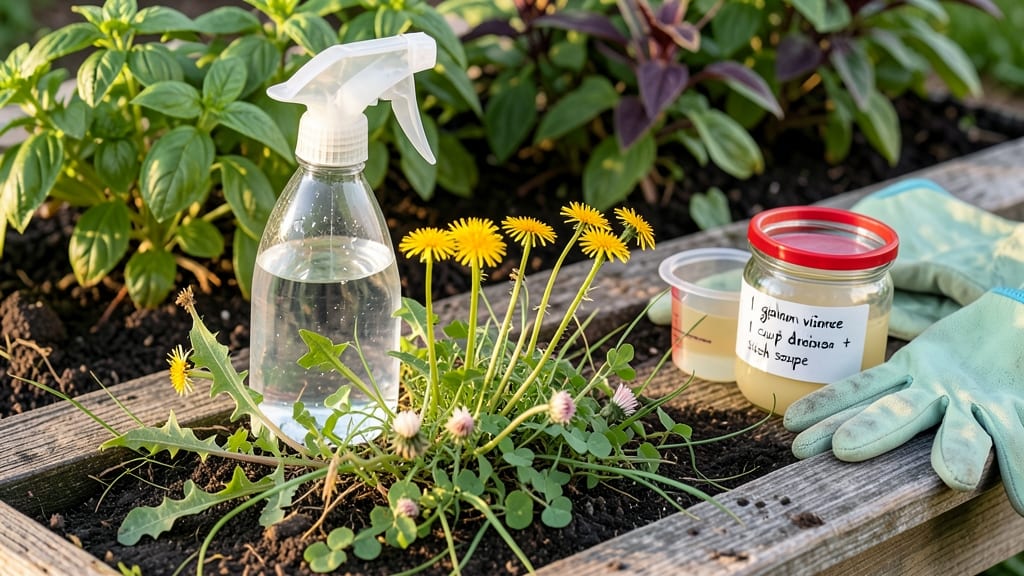
Using vinegar as a weed killer in the garden dehydrates weeds on contact, eliminating small weeds in 24 to 48 hours and deep-rooted varieties within a week. For best results, apply undiluted white vinegar with 5% to 20% acetic acid concentration on sunny days.
Vinegar’s acetic acid disrupts plant cell membranes, essentially drying out the weed from the inside out. 🔥 The higher the acid concentration, the faster it works—20% vinegar is more potent than 5%, but both require direct contact with the leaves.
I’ve found that applying it midday, when weeds are actively photosynthesizing, speeds up the process significantly. Just be cautious around desirable plants, as vinegar can harm them too.
For stubborn weeds like dandelions or clover, a second application after 5-7 days often does the trick. I recommend using a spray bottle for precision, especially near garden edges.
The key is consistency—vinegar won’t work as well if weeds are watered immediately after treatment, so wait until the next dry spell.
💡 In This Article
- How Vinegar Kills Weeds: Science Behind the Process
- Best Vinegar Weed Killer Application Techniques
How vinegar kills weeds: science behind the process
Vinegar’s weed-killing power comes from its acetic acid content, which acts like a natural herbicide by disrupting plant cell membranes. When applied, the acid lowers the pH of the weed’s leaves to around 2-3—far more acidic than healthy plant tissues can tolerate.
This causes the cells to lose water rapidly, leading to dehydration and death within hours. For comparison, normal plant sap has a pH of 5.5-7.0, so the sudden drop is catastrophic to weeds.
The speed of vinegar’s action depends on two key factors: acetic acid concentration and sunlight exposure. A 20% acetic acid solution (like concentrated vinegar) kills weeds faster than 5% household vinegar because it penetrates deeper and disrupts cell structures more aggressively.
Sunlight accelerates the process by increasing photosynthesis in the weed, which makes the plant absorb more vinegar through its leaves. That’s why applying it midday—when weeds are actively growing—boosts effectiveness by up to 30% compared to early morning or evening.
However, vinegar’s effectiveness varies by weed type. Broadleaf weeds like dandelions and clover absorb vinegar quickly through their large surface area, often dying within 24-48 hours. Grass weeds, with their waxy cuticles, resist better because the vinegar struggles to penetrate their protective layer.
This is why some gardeners mix vinegar with 1 tablespoon of dish soap per gallon—the soap breaks down the waxy coating, allowing the acetic acid to work more efficiently.
Commercial herbicides often contain synthetic chemicals that mimic vinegar’s acidity but with additional ingredients to enhance absorption and persistence. For example, glyphosate (found in Roundup) disrupts plant growth hormones, while vinegar simply dehydrates.
This is why vinegar works best on young, actively growing weeds—once weeds develop deep root systems, they can survive longer, sometimes up to 7-10 days, because their roots draw moisture from deeper soil layers.
One common misconception is that vinegar will kill all plants it touches. While true for most weeds, some plants—like oxalis or creeping Charlie—have thicker leaves that require multiple applications spaced 3-5 days apart for full eradication.
Always spot-test on a small area first to ensure nearby plants won’t be damaged. 🌱
For best results, combine vinegar with salt and dish soap (1 gallon vinegar + 1 cup salt + 1 tablespoon soap) to create a more potent mixture.
The salt adds osmotic pressure, while the soap ensures the solution clings to leaves. Just remember: this mixture is non-selective, so avoid spraying near desirable plants or lawns.