
Tools
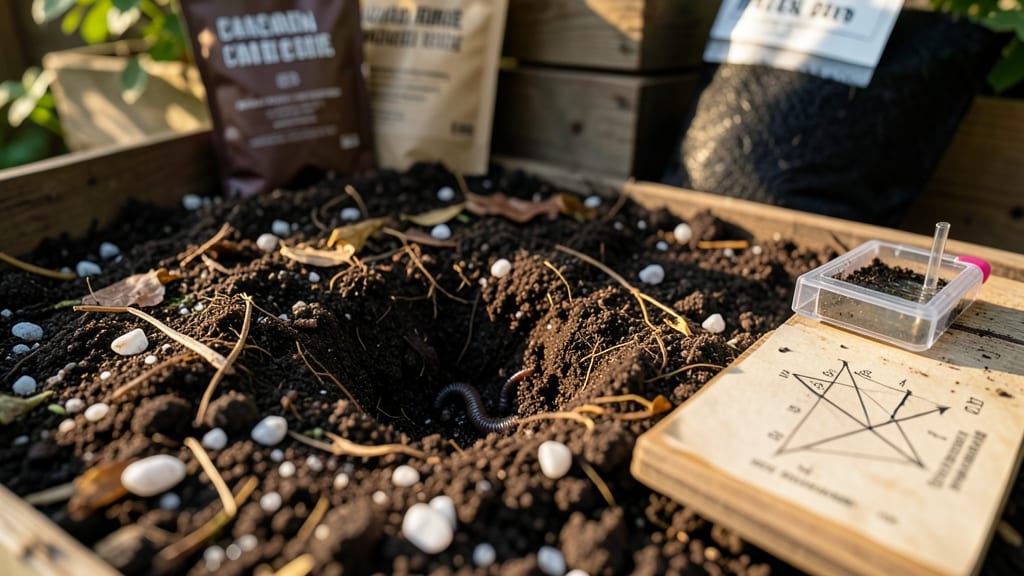
For garden soil, you'll want to use compost to enrich nutrients, peat moss for better drainage, sand for heavy clay soils, perlite to improve aeration, or coconut coir to retain moisture—choosing the right mix for your specific soil type and plants will give them the best growing conditions.
Your garden's health starts with the right soil mix, and each amendment plays a unique role.
Compost adds essential nutrients while improving soil structure, making it perfect for vegetable gardens where plants need constant feeding. 🌱 Peat moss is fantastic for acid-loving plants like blueberries, while sand breaks up clay soils that can suffocate roots.
Perlite creates air pockets for better root oxygenation, ideal for container plants, and coconut coir holds moisture without compacting like traditional peat. The key is testing your soil first—knowing its pH and texture helps you create the perfect blend.
For example, a tomato garden thrives with a 50% compost mix, while succulents need 70% sand or perlite to prevent rot. The right combination transforms poor soil into a thriving ecosystem where plants can access water, nutrients, and oxygen exactly how they need them.
💡 In This Article
- How Soil Amendments Improve Plant Growth
- Best Soil Amendments for Different Plant Types
How soil amendments improve plant growth
Soil amendments work by addressing specific deficiencies in your garden's foundation. Compost, for instance, introduces beneficial microbes and organic matter that decompose into plant-available nutrients like nitrogen, phosphorus, and potassium.
These microbes also break down complex compounds into simpler forms roots can absorb, creating a thriving ecosystem where earthworms and fungi further enhance soil structure. The result? A 5-10% increase in water retention and 20-30% better nutrient availability compared to unamended soil.
Peat moss stands out for its ability to lower soil pH while improving drainage—critical for acid-loving plants like azaleas or blueberries. Its fibrous structure holds 3-5 times its weight in water while still allowing excess to drain, preventing root suffocation.
Sand, on the other hand, physically breaks up clay particles that compact under moisture, creating 20-30% more pore space for air and root growth.
Perlite takes aeration further by adding 90-95% air-filled voids when dry, while coconut coir's fibrous network holds 7-10 times its weight in water without compacting like peat.
The magic happens at the microscopic level. Compost's microbial activity creates tiny channels that improve water infiltration, while perlite's porous structure mimics natural aeration found in forest soils. Sand's coarse particles prevent clay from forming impenetrable plates, and coir's fibrous matrix creates ideal conditions for beneficial fungi.
These amendments don't just add ingredients—they transform soil into a living system where roots can breathe, drink, and feed efficiently.
Consider this: A heavy clay soil with 10% perlite can see root growth accelerate by 40% within 3 months as oxygen reaches deeper layers. Meanwhile, adding 30% compost to sandy soil boosts nutrient retention enough to support continuous vegetable production.
The key is matching the amendment to your soil's existing problems—whether it's poor drainage, nutrient deficiency, or compaction.
What most gardeners overlook is how these amendments interact. For example, mixing 20% compost with 10% perlite creates the perfect balance for container plants—compost feeds roots while perlite prevents compaction. This synergy explains why well-amended soils can support 2-3 times more plant biomass than native soil alone.
The right combination turns dirt into a thriving ecosystem where plants can access everything they need.
Think of soil amendments as vitamins for your garden. Just as your body needs specific nutrients to function, plants require the right soil conditions to grow.
Compost provides the nutrients, peat moss adjusts acidity, sand breaks up clay, perlite adds air, and coir holds moisture—each playing a vital role in creating the perfect growing environment. 🌱