
Pests
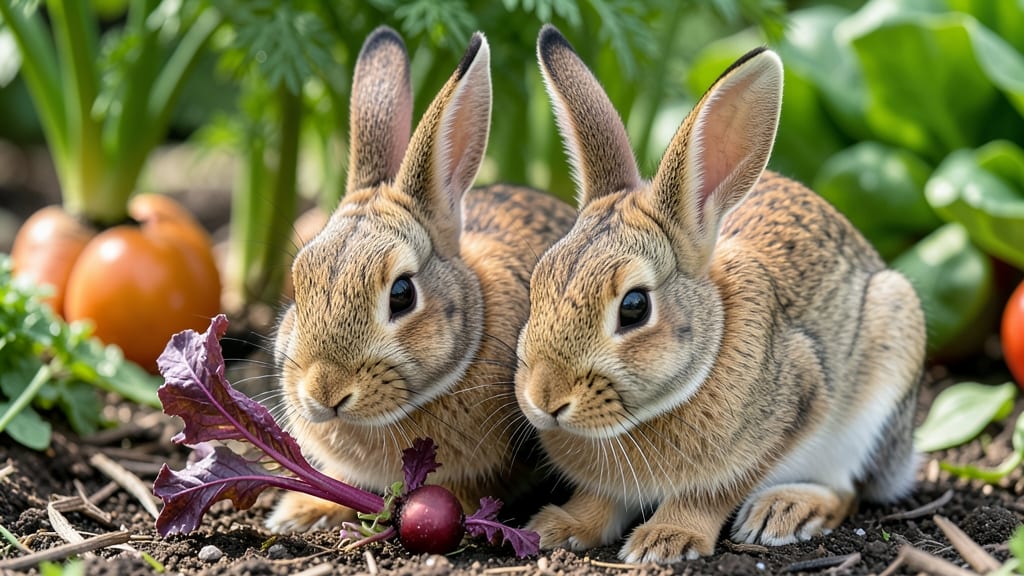
Rabbits and vegetable gardens create major challenges because these pests strip foliage, chew stems, and uproot seedlings, focusing on delicate crops like lettuce, carrots, and peas. Their relentless feeding stunts growth, slashes harvests, and can obliterate entire plantings within days.
These furry invaders rely on scent trails and movement to locate your garden, making fresh plantings especially vulnerable. 🌱 Young shoots lack tough defenses, while mature plants often survive with just cosmetic damage.
The problem worsens during breeding season when colonies expand—what starts as scattered nibbling can turn into total destruction overnight. Understanding their behavior is key to protecting your hard work before it's too late.
While commercial repellents offer quick fixes, many gardeners prefer organic solutions like garlic sprays or predator urine, which disrupt rabbits' foraging patterns without harming plants. The best approach combines physical barriers with natural deterrents, creating a multi-layered defense that keeps these pests out for good.
💡 In This Article
- How Rabbits Identify and Attack Garden Plants
- Top 5 Organic Rabbit Repellents for Vegetable Gardens
How rabbits identify and attack garden plants
Rabbits locate garden plants primarily through their exceptional sense of smell, which can detect fresh vegetation from up to 300 feet away.
Their noses pick up volatile organic compounds (VOCs) emitted by healthy, tender plants—especially those high in nitrogen, like leafy greens. 🌿 Young seedlings release stronger scent signals because their cells are actively growing, making them irresistible snacks.
Rabbits also use visual cues, targeting plants that appear soft and accessible, particularly those under 2 feet tall, which fit their feeding height.
Their feeding behavior follows a predictable pattern: they first nibble leaves, then progress to stems, and finally attack roots if plants are small enough to uproot. Rabbits prefer broadleaf plants like lettuce and spinach over fibrous crops like carrots, but they’ll consume anything tender.
A single rabbit can consume up to 1 pound of vegetation daily, while a colony of 4-6 (common in breeding season) can devastate a garden in 24-48 hours. Their teeth grow continuously, requiring constant gnawing to maintain proper wear.
Seasonal behavior amplifies the damage. Spring and early summer see peak activity as rabbits breed, with litters of 4-12 young appearing every 28 days.
These juvenile rabbits begin foraging at 8-10 days old, creating a sudden surge in garden pressure. 🐇 Mature rabbits also become more aggressive during droughts when other food sources dry up, forcing them to raid gardens for moisture-rich plants.
The combination of scent detection, visual targeting, and seasonal population spikes makes young gardens particularly vulnerable.
What makes this damage so destructive is how rabbits attack plants systematically. They don’t just take bites—they create "windowpaning", where they strip leaves clean down to the midrib, leaving plants unable to photosynthesize. For root crops like carrots, they’ll gnaw through the taproot, causing plants to wilt and rot.
The worst damage occurs at dawn and dusk when rabbits are most active, giving gardeners little warning before significant destruction happens.
Interestingly, rabbits have learned to associate certain garden layouts with food sources. Studies show they prefer gardens with open edges (like those near fences or property lines) where they can approach undetected.
They also avoid areas with strong human scent or physical barriers, which explains why some garden sections remain untouched while others are completely ravaged. Understanding these behavioral patterns lets gardeners strategically place deterrents where rabbits are most likely to enter.
One often-overlooked factor is how rabbit damage compounds over time.
Even if a plant survives an initial attack, the stress from leaf loss weakens its immune system, making it susceptible to diseases like powdery mildew. 🌱 The roots of chewed plants also struggle to absorb water efficiently, leading to stunted growth.
What starts as scattered nibbling can become a death sentence for entire plantings if left unchecked during critical growth stages.