
Tools
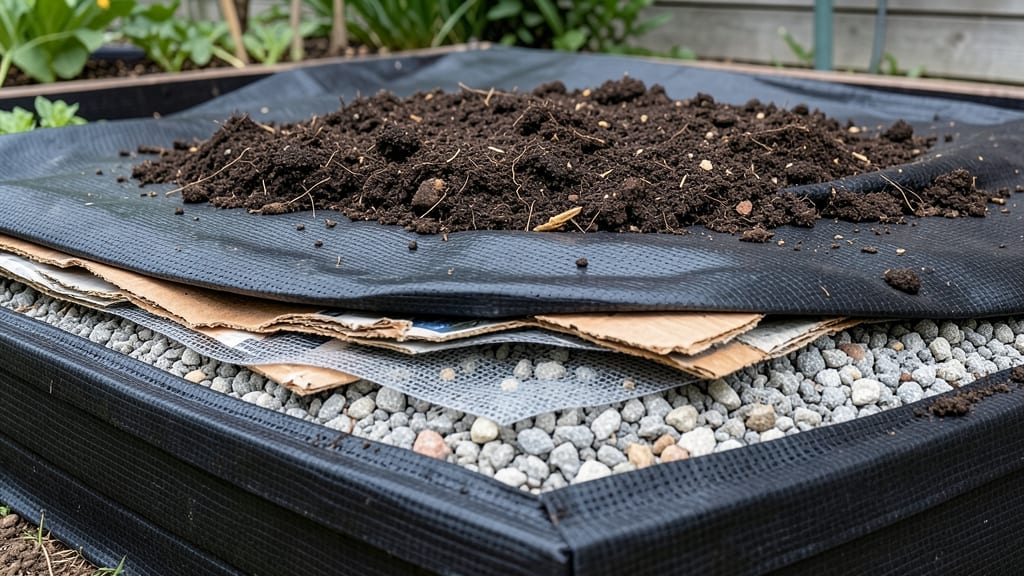
To put on the bottom of a raised garden bed, use landscape fabric, cardboard, or untreated wood chips to boost drainage, block weeds, and encourage healthy root development while maintaining soil quality. Skip plastic sheets to avoid trapping moisture or polluting the soil.
What to put on the bottom of a raised garden bed isn't just about drainage—it's about creating the perfect environment for roots to thrive. Cardboard breaks down over time, adding nutrients to your soil, while wood chips improve aeration and moisture control.
Landscape fabric offers long-term weed suppression without decomposing, making it ideal for perennial beds. 🌱 The key is balancing organic materials for soil health with durable options for weed control, depending on what you're growing and how long you plan to use the bed.
Each material has its strengths: cardboard works best for short-term beds or when you want to enrich the soil, while wood chips provide excellent insulation in colder climates. For heavy weed pressure, landscape fabric is the most reliable, though it requires careful installation to avoid gaps.
The worst choice? Plastic sheets—they suffocate roots, trap moisture, and can leach harmful chemicals into your soil over time.
💡 In This Article
- How Drainage Layers Affect Root Health and Plant Growth
- Best Organic and Synthetic Materials for Raised Garden Beds
How drainage layers affect root health and plant growth
The foundation layer in your raised bed isn't just about drainage—it's about creating an ecosystem where roots can breathe and thrive. When you use organic materials like cardboard or wood chips, they gradually decompose, adding nutrients to the soil while improving its structure.
This decomposition process releases beneficial microbes that break down organic matter, creating tiny air pockets that roots need to absorb oxygen. Without these air pockets, roots suffocate, leading to stunted growth or even plant death. 🌱
Synthetic options like landscape fabric take a different approach by blocking weeds while allowing water to flow freely. The fabric's woven structure creates a barrier that prevents weed seeds from sprouting, but it doesn't decompose, so it maintains its weed-blocking properties for years.
The key difference here is airflow: fabric lets water drain but doesn't contribute to soil fertility, while organic materials actively improve the soil over time.
For example, a 3-inch layer of wood chips can reduce soil compaction by up to 40% while also regulating moisture levels—critical for plants like tomatoes that hate soggy roots.
Moisture retention is another critical factor. Organic materials like coconut coir or straw absorb and slowly release water, preventing both drought stress and waterlogging. In contrast, gravel or rocks provide excellent drainage but offer no moisture regulation, making them better suited for beds with irrigation systems.
The worst offenders for moisture issues are plastic sheets, which trap water against the roots, creating anaerobic conditions that lead to rot. This is why plastic is banned in many organic gardening standards—it doesn't just fail to help; it actively harms plant health.
Root growth is also influenced by temperature regulation. Organic layers like wood chips act as natural insulators, keeping soil temperatures stable in both hot and cold climates. During summer, they reduce heat stress on roots, while in winter, they protect against freezing.
This temperature buffering is especially important for sensitive crops like lettuce or herbs, which can bolt or become bitter when exposed to temperature extremes. The right foundation layer can extend your growing season by 2-4 weeks in marginal climates.
One often-overlooked benefit is how these layers affect microbial activity. Healthy soil teems with bacteria and fungi that break down organic matter into plant-available nutrients. Organic materials provide food for these microbes, creating a self-sustaining cycle.
For instance, a 1-inch layer of untreated wood chips can increase microbial diversity by up to 30% compared to bare soil. This microbial boost translates to stronger plants that resist diseases and pests more effectively. 💫
For long-term beds, the choice between organic and synthetic materials becomes a trade-off between short-term benefits and long-term goals. Organic materials improve soil health over time but require replenishment every 1-3 years. Synthetic options like fabric last decades but offer no soil benefits.
The best approach often combines both: use fabric for weed control and top it with 2-3 inches of wood chips to balance drainage, aeration, and soil fertility. This hybrid system gives you the best of both worlds while avoiding the pitfalls of plastic.