
Tools
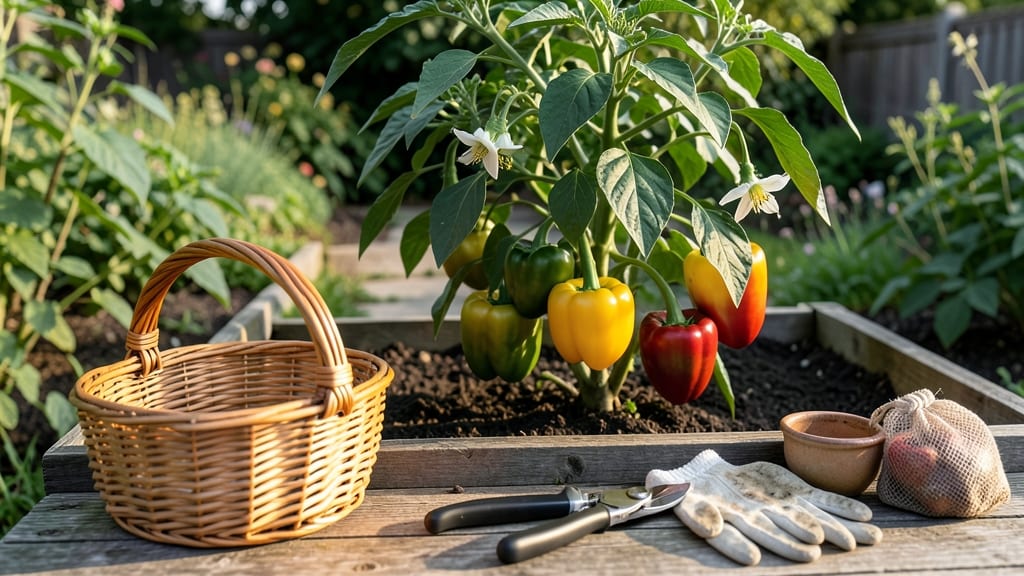
What to do with peppers from your garden includes using them fresh in salads, roasting for flavorful sides, pickling for crunchy snacks, or preserving through drying, freezing, or fermenting. Creative options include homemade hot sauce, stuffed peppers, or dehydrated flakes for year-round seasoning.
Garden peppers are incredibly versatile, and their potential goes far beyond simple salads. 🌶️ The key is matching each variety—like sweet bell peppers, fiery jalapeños, or smoky poblano—to the right technique.
For instance, bell peppers shine when roasted whole for dips or stuffed with rice and cheese, while hot peppers excel in fermented hot sauces or dried flakes. Preservation methods like freezing chopped peppers in olive oil or air-drying them for powdered seasoning unlock year-round flavor without waste.
Don’t let your harvest overwhelm you—start with simple recipes like roasted pepper hummus or quick-pickled jalapeños to build confidence. The beauty of garden peppers is their adaptability: they can transform a basic dish into something extraordinary with minimal effort.
Plus, experimenting with different preservation methods means you’ll always have fresh-tasting ingredients ready, even in winter.
💡 In This Article
- Preserving Garden Peppers: Best Methods for Long-Term Storage
- 10 Easy Recipes Using Fresh Garden Peppers
Preserving garden peppers: best methods for long-term storage
The secret to preserving garden peppers lies in understanding their moisture content and how it affects shelf life. Bell peppers, with their thick walls and 85-90% water content, can be sliced and frozen in olive oil or water for up to 12 months without losing texture.
Hot peppers like jalapeños, with 80-85% water but thinner skins, dry best when strung and hung in a 65-70°F environment with 40-50% humidity—ideal conditions mimic a well-ventilated pantry. 🌶️
Drying methods vary dramatically in results. Air-drying takes 2-4 weeks but requires perfect airflow to prevent mold, while oven-drying at 175°F for 2-3 hours speeds it up to 4-6 hours.
The goal is to reduce moisture to 10-15%—this creates shelf-stable pepper flakes that retain 90% of their capsaicin (the compound that gives peppers heat).
For fermenting, like in hot sauce, peppers need 2-3% salt brine to inhibit harmful bacteria while encouraging lactic acid fermentation, which develops complex flavors over 2-4 weeks.
Freezing is the simplest method for most peppers, but prep matters. Chopping peppers into 1/2-inch pieces before freezing prevents clumping, while whole peppers should be blanched for 3 minutes to preserve color. Store in airtight containers or vacuum-sealed bags to block freezer burn—this keeps peppers usable for 10-12 months.
The key is removing as much air as possible; even a 1% oxygen increase accelerates oxidation and flavor loss.
Canning requires precise techniques to avoid botulism. Water bath canning works for acidified peppers (pH 4.6 or lower) like pickled jalapeños, while pressure canning is needed for low-acid peppers like bell peppers. The USDA recommends processing jars at 240°F for 25 minutes for pints, which kills Clostridium botulinum spores.
Fermented peppers, like kimchi-style mixes, need 5-7% salt and 70°F temperatures to ensure safe lactic acid dominance over mold growth.
Temperature and humidity are non-negotiable for long-term storage. Dried peppers should be kept in cool, dark places (like glass jars) with silica gel packets to maintain below 60% humidity. Frozen peppers last longest at -10°F or colder, while fermented products thrive in 50-60°F environments.
The right conditions mean your preserved peppers stay vibrant and flavorful for months—no bland, mushy results here!
Here’s a quick comparison of methods:
- Drying: Best for heat lovers—retains 90% capsaicin, lasts 6-12 months in jars
- Freezing: Preserves texture for 10-12 months, ideal for cooking
- Fermenting: Adds probiotics, develops complex flavors in 2-4 weeks
- Canning: Longest shelf life (1-2 years), but requires precision
Don’t overlook the sensory rewards—properly dried peppers develop a deep, smoky aroma, while fermented ones gain tangy depth. The right method turns your harvest into a year-round flavor powerhouse! ✨