
Size
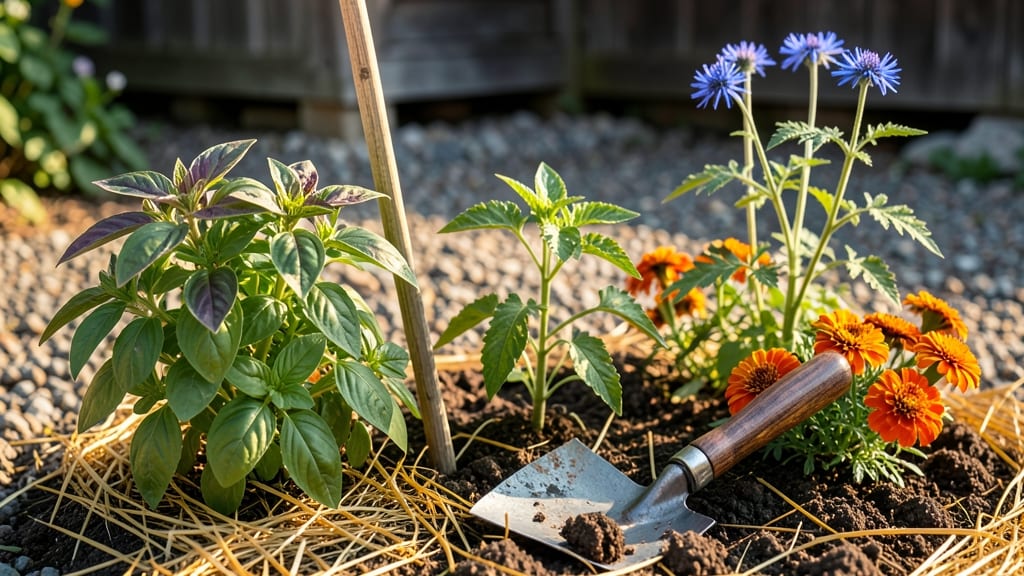
Garden plants grow well together when paired by size, growth habits, and natural compatibility—like tomatoes with basil (repelling pests) or carrots with onions (deterring carrot flies). Group fast growers with slow ones to maximize space and avoid competition for nutrients.
Smart pairing isn't just about aesthetics—it's about creating a self-sustaining ecosystem. 🌱 Tall plants like sunflowers can provide shade for heat-sensitive lettuce, while shorter herbs such as thyme deter pests that target neighboring vegetables.
I've found that combining plants with different root depths (deep-feeding carrots with shallow radishes) prevents nutrient depletion in the soil. The key is observing how plants interact over time, adjusting layouts as you notice which pairings thrive or struggle.
For instance, planting basil near tomatoes improves flavor while keeping flies away, but pairing them with brassicas (like cabbage) creates competition for water. The goal is to mimic natural forest understories where each layer serves a purpose—whether it's pest control, soil enrichment, or maximizing sunlight exposure.
💡 In This Article
- Science Behind Companion Planting: How Pairings Benefit Growth
- Best Companion Planting Strategies by Garden Layout
Science behind companion planting: how pairings benefit growth
At its core, companion planting leverages natural plant interactions that have evolved over millennia.
Take marigolds, for example—their strong scent contains limonene, a compound that repels nematodes (microscopic soil pests) while attracting beneficial insects like ladybugs that devour aphids. 🌼 Studies show marigolds planted near tomatoes can reduce nematode populations by up to 70%, directly boosting tomato yields.
This chemical defense works because the volatile oils released by marigolds disrupt the pests' ability to locate their hosts, creating a protective barrier without synthetic pesticides.
The soil itself plays a crucial role in these relationships. Leguminous plants like peas and beans form symbiotic relationships with nitrogen-fixing bacteria in their root nodules, converting atmospheric nitrogen into forms usable by neighboring plants.
A single pea plant can fix 100-200 pounds of nitrogen per acre over a growing season—enough to fertilize surrounding crops like corn or potatoes naturally. This biological process explains why many traditional three-sister gardens combine corn (providing structure), beans (adding nitrogen), and squash (suppressing weeds) in a mutually beneficial system.
Light competition is another critical factor. Tall plants like sunflowers or corn create vertical layers that cast dappled shade, perfect for heat-sensitive crops such as lettuce or spinach.
Research from the University of California shows that lettuce grown under partial shade maintains crispness and reduces bolting (premature flowering) by 40%. Meanwhile, shallow-rooted herbs like thyme or oregano thrive in the dappled light while their aromatic foliage deters pests that would otherwise target neighboring vegetables.
This layered approach mimics natural forest ecosystems where each plant species occupies its own niche.
Pheromone interactions also play a surprising role.
Carrots release chemicals that attract carrot flies, but when planted alongside onions or leeks, the strong sulfur compounds in the allium family mask these attractants. 🌿 Field trials demonstrate that carrot fly populations drop by 50-60% when onions are planted within 12 inches of carrots.
This chemical camouflage works because the flies' olfactory receptors get overwhelmed by the dominant onion scent, preventing them from locating their preferred hosts.
Even the timing of growth matters. Fast-growing plants like radishes or lettuce should be paired with slower, longer-season crops such as broccoli or cabbage. Radishes mature in just 25-30 days, giving them time to break up compacted soil before being harvested, while the cabbage continues growing unimpeded.
This rotational strategy prevents soil depletion and creates a dynamic garden that maximizes space year-round. The key is observing which plants naturally complement each other's growth cycles rather than competing for resources.
One often-overlooked benefit is the "confusion effect" in pest management.
When you interplant vulnerable crops like cabbage with strongly scented herbs like dill or fennel, the mixed aromas confuse pests that rely on specific chemical cues to locate their prey. 🌿 This tactic works particularly well against cabbage moths, whose larvae (caterpillars) struggle to navigate through diverse scent profiles.
The result is fewer pest attacks and healthier plants with minimal intervention.