
Tools
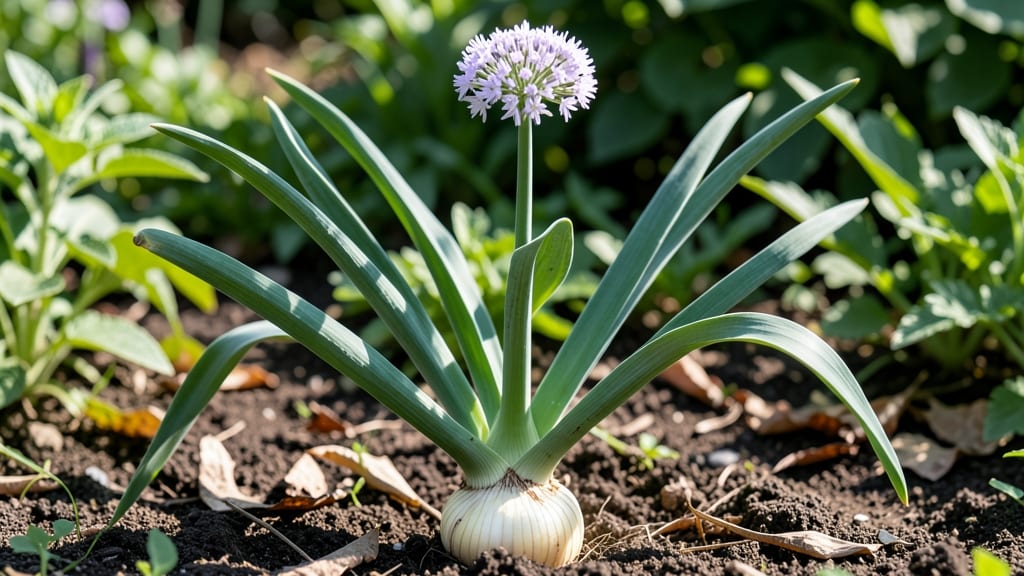
Garlic in the garden looks like tall, slender green shoots with long, flat leaves that resemble grass blades at first, then develops a low-growing purple or brown flower stalk (scapes) in spring before forming bulb clusters underground by summer. Each mature bulb contains individual cloves encased in papery white skins.
Garlic's early growth phase often tricks gardeners into mistaking it for weeds or grass, but those long, strappy leaves are your first clue. 🌱 The real magic happens when the scapes appear—those curly, twisted stalks that signal the plant is channeling energy into bulb development.
What's fascinating is how hardneck varieties produce these scapes more dramatically than softneck types, which focus more on gradual bulb growth. I've seen gardeners accidentally pull scapes thinking they're pests, only to miss out on the best harvest season.
Once the leaves start yellowing and falling over, that's your cue to dig—though wait until the tops brown completely for the sweetest flavor.
The bulbs themselves are what make garlic so rewarding to grow; those papery skins protect the individual cloves, which range from tiny to golf-ball-sized depending on the variety and growing conditions.
💡 In This Article
- Identifying Garlic Plant Stages: Leaves, Scapes, and Bulbs
- Common Garlic Look-Alikes: Weeds and Pests to Watch For
Identifying garlic plant stages: leaves, scapes, and bulbs
Garlic's early growth begins with slender, grass-like leaves that emerge from the soil in early spring, typically reaching 12-24 inches tall depending on the variety. These leaves are long, flat, and hollow—similar to chives but broader, with a smooth, slightly waxy texture that helps conserve moisture.
Hardneck varieties often develop 6-10 leaves before scaping, while softneck types may produce 10-15 leaves with a more gradual growth pattern.
The key difference lies in their leaf width: hardnecks tend to have slightly narrower leaves (1/8 to 1/4 inch wide), while softnecks are broader (1/4 to 1/2 inch). 🌱
The scape—garlic's distinctive flower stalk—appears in late spring as a curly, twisted stem that grows from the center of the plant. Hardneck varieties produce purple or brown scapes that can reach 12-24 inches long, while softneck types rarely scape at all.
These stalks contain a small bulb at the tip, but removing them (a practice called "scaping") redirects the plant's energy toward bulb development, resulting in larger harvests. The scape's unique spiral shape helps distinguish it from weeds or volunteer onions, which have straight, upright stems.
Bulb formation begins in early summer when the leaves start yellowing and falling over. Underground, the plant develops a cluster of individual cloves wrapped in papery white skins that range from 1-3 inches in diameter.
Hardneck varieties typically produce 4-12 cloves per bulb, while softneck types yield 10-20 cloves in a more compact arrangement. The bulbs' size and shape vary by variety: some develop round, plump bulbs (like Rocambole), while others form elongated shapes (like Silverskin).
Climate plays a crucial role—cooler regions often produce larger bulbs with more cloves due to slower, steadier growth. ✨
One common misconception is that garlic bulbs develop quickly, but they actually take 80-120 days from planting to maturity, depending on the variety and growing conditions. The papery skins protect the cloves from moisture and disease, giving them that familiar layered appearance when you peel back the outer layers.
What's fascinating is how these skins change color as the bulb matures: they start white but may develop hints of purple or brown in hardneck varieties, especially when exposed to sunlight.
To determine if your garlic is ready for harvest, look for these visual cues: the lower 1/3 of the leaves should be brown and crispy, while the upper leaves remain green. At this stage, the bulbs are fully developed but still contain moisture, which prevents them from storing well.
If you harvest too early, the bulbs will be small and watery; if you wait too long, the skins may crack, exposing the cloves to rot. The ideal harvest time is when 50-75% of the leaves have turned brown, typically in late summer or early fall. 🌿
Here's a quick reference for distinguishing garlic's growth stages:
- Early Spring: Grass-like leaves (12-24 inches tall) emerging from soil
- Late Spring: Curly scapes (12-24 inches long) in hardneck varieties
- Summer: Yellowing leaves with browned lower 1/3 indicating bulb maturity
- Fall: Fully developed bulbs with papery white skins and 4-20 cloves