
Watering
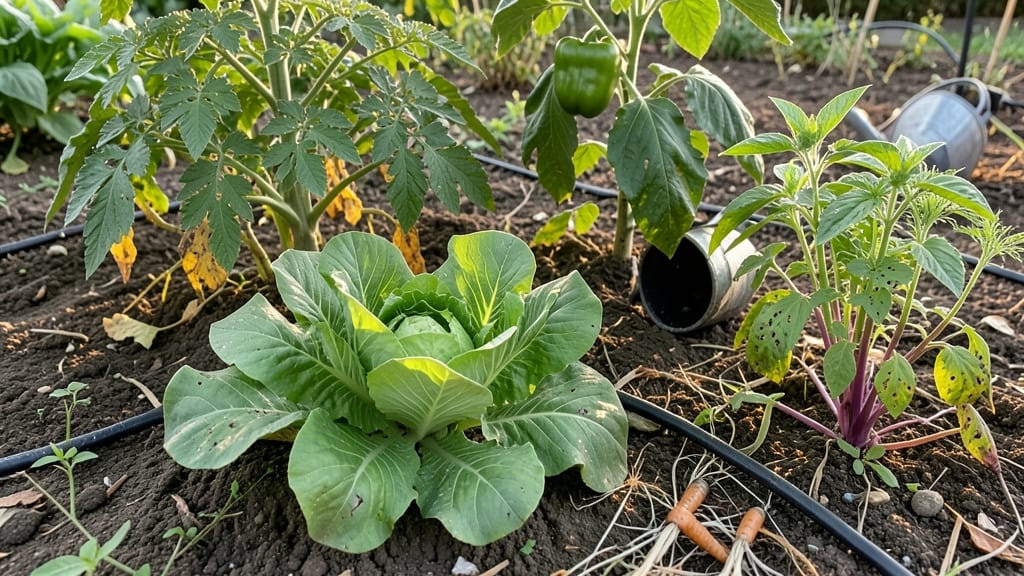
Watering your vegetable garden isn't just about keeping soil damp—it's about feeding roots, preventing disease, and unlocking the full flavor of your harvest. 🌱 I learned the hard way when my tomatoes split open last summer from inconsistent watering, and that's when I realized precision irrigation makes all the difference.
The right amount at the right time transforms a struggling garden into one that produces juicy tomatoes, crisp lettuce, and sweet peppers all season long.
Most gardeners overcomplicate this, but the key is simple: deep, infrequent watering that encourages strong root systems. You'll need a reliable water source, a timer if you're not watering by hand, and the ability to check soil moisture before each session.
My 5-gallon bucket with a spout became my go-to tool—it gives me consistent measurements and helps me avoid both underwatering and drowning plants. The payoff? Plants that stay upright, leaves that don't wilt midday, and vegetables that taste like they came straight from a farmer's market.
What you'll actually achieve is a garden that works with you, not against you. The soil stays moist without becoming soggy, roots grow deeper in search of water, and your plants develop natural drought resistance.
You'll notice the difference within 2-3 weeks—fewer yellowing leaves, no blossom-end rot on tomatoes, and herbs that stay fragrant instead of bolting. The best part? This method saves time because you're not constantly checking plants or fixing problems caused by uneven watering.
Works for any vegetable garden—whether you're growing in raised beds, in-ground plots, or containers. The principles stay the same, and once you master the basics, you can adapt for different crops and seasons. Let's get those roots drinking deep and your harvests thriving!
📚 In This Guide
- What you need
- Instructions
- Tips and common mistakes
- Wrapping up and next steps
What you need
- ○ Watering can: 1–2 gallons (with a rose attachment for gentle watering at the base). Optional: A spray nozzle for seedlings.
- ○ Hose with adjustable nozzle: ¼"–⅝" diameter (e.g., braided hose for durability). Optional: A soaker hose or drip irrigation kit for efficiency.
- ● Timer or smart sprinkler: Programmable (e.g., Orbit B-Hyve) to automate watering schedules.
- ● Watering wand: 1–2 feet long (for hard-to-reach spots).
- ● Measuring cup or rain gauge: To track ½–1 inch of water per week (adjust for climate).
- ● Mulch (straw, wood chips, or compost): 2–3 inches thick to retain moisture and reduce evaporation.
- ● Know your soil: Test drainage (dig a 6" hole, fill with water—if it drains in <1 hour, you’re good!).
- ● Sunlight & shade mapping: Group plants with similar water needs (e.g., leafy greens vs. tomatoes).
- ● Water source access: Ensure your hose or irrigation system reaches all garden beds.
- ● Early-morning routine: Water before 10 AM to minimize fungal risks (💡 Pro tip: Avoid evening watering!).
Step-by-Step guide to watering a vegetable garden
Mastering irrigation transforms your garden from guesswork to guaranteed growth.
💧 Step 1: Assess Soil Moisture Before Watering
Check the top 6 inches of soil with your fingers—this is where roots actively absorb water. If it feels dry to the touch, it's time to water. I press gently; if the soil crumbles easily, moisture is too low. Sandy soil drains fast, while clay holds water longer—adjust your schedule accordingly.
Use the poke test: Insert a screwdriver or dowel. If it slides in easily, water deeply. If it meets resistance at 2-3 inches, hold off until the next day. Morning is ideal—watering in the heat wastes moisture to evaporation and can scorch leaves.
☀️ Step 2: Water Deeply at the Base
Focus water at the soil line, not the leaves. A soaker hose or drip irrigation delivers moisture directly to roots without wetting foliage, which prevents fungal diseases like powdery mildew. Water for 15-20 minutes per zone to saturate 12-18 inches deep—this encourages roots to grow downward for stability.
Watch for puddling. If water pools, you're either overwatering or have poor drainage. Break up compacted soil gently with a fork to improve absorption. Mulch with 2-3 inches of straw afterward to retain moisture and block weeds—this cuts water needs by 30%.
⏰ Step 3: Adjust Frequency by Plant and Season
Leafy greens like lettuce and spinach need 1-1½ inches of water weekly, while tomatoes and peppers thrive on 1.5-2 inches. Use a rain gauge to track totals—don’t rely on memory. In 75-85°F weather, water every 2-3 days; in 90°F+, increase to daily if soil dries fast.
Newly transplanted seedlings require daily shallow watering for the first week to establish roots. Once established, shift to deep, infrequent watering. Overhead sprinklers waste water and spread disease—stick to ground-level delivery for efficiency.
🌱 Step 4: Monitor for Stress Signs
Wilting leaves by midday signal thirst, but don’t assume—some plants (like cucumbers) naturally droop in heat. Check soil first. Yellowing lower leaves often mean overwatering or poor drainage; crispy edges indicate underwatering. Adjust based on what you see.
Root crops like carrots and beets need consistent moisture—fluctuations cause splitting. If the soil surface dries between waterings, you’re not going deep enough. Use a moisture meter for precision, especially in containers where soil dries faster.
✂️ Step 5: Maintain Equipment and Soil Health
Clean irrigation lines weekly to prevent clogs from algae or mineral buildup. Flush soaker hoses with vinegar and water (1:3 ratio) monthly for deep cleaning. Check emitters for even flow—uneven watering creates weak, uneven growth.
Test soil pH annually—ideal range for most veggies is 6.0-7.0. Amend with lime or sulfur if needed, as pH affects nutrient uptake. Healthy soil holds moisture better, reducing your watering workload by 20%.
Tips & tricks for perfect vegetable garden irrigation
Precision watering isn't just about timing—it's about understanding your soil, plants, and climate. Here's how to take your irrigation from basic to brilliant.
Soil Texture Matters: The poke test in Step 1 isn't just about moisture—it reveals your soil's character. Sandy soils need watering every 1-2 days because they drain like a sieve, while clay soils may only need water every 5-7 days despite feeling dry at the surface. I've learned the hard way that treating all soil equally leads to either drowned roots or parched plants. For loamy soil (the gold standard), aim for that 15-20 minute deep watering every 2-3 days during 75-85°F weather, as specified in Step 3.
Equipment Upgrade: Don't settle for basic hoses—upgrade to a soaker hose with adjustable flow or smart irrigation timers that sync with local weather forecasts. I invested in a timer that automatically adjusts watering based on rainfall, saving me 40% on water usage last summer. For the 15-20 minute deep watering in Step 2, use a hose with a flow meter to track exactly how long you're watering each zone—most gardeners either under- or overwater without realizing it.
Seasonal Adjustments: The 90°F+ threshold in Step 3 isn't arbitrary—it's when evaporation rates skyrocket and roots struggle to absorb water. In extreme heat, I split the 15-20 minute watering into two 10-minute sessions—once in early morning and once in late evening—to prevent shock. Also, increase your weekly water allowance by 25% during peak summer, as plants transpire 30% faster in high temperatures.
Mulch Strategy: The 2-3 inches of straw mentioned in Step 2 does more than retain moisture—it creates a microclimate that keeps soil temperatures 5-10°F cooler during heatwaves. I've seen mulched beds maintain 85°F soil temps when unmulched beds hit 100°F+, which stresses roots. For containers, use 3-4 inches of mulch since they heat up faster. This simple layer can reduce your watering frequency by 30-40% while improving plant health.
Pro Tips for Watering Veg Garden
- Precision watering isn't just about timing—it's about understanding your soil, plants, and climate.
- Soil Texture Matters: The poke test in Step 1 isn't just about moisture—it reveals your soil's character.
- Equipment Upgrade: Don't settle for basic hoses—upgrade to a soaker hose with adjustable flow or smart irrigation timers that sync with local weather forecasts.
Frequently asked questions
Got questions about keeping your veg garden lush and productive? Here are answers to some of the most common concerns—straight from the garden to your fingertips!
How often should I water my vegetable garden?
Most veggies need 1–1.5 inches of water per week, including rain. Check soil moisture by sticking your finger 1–2 inches deep—if it’s dry, it’s time to water. Early morning is ideal to reduce evaporation and fungal risks. Pro tip: Mulch helps retain moisture, so you’ll water less often!
Can I overwater my vegetable plants?
Overwatering suffocates roots, promotes rot, and invites pests. Signs include yellowing leaves, wilting, or moldy soil. Let the top 1–2 inches of soil dry out between waterings. For container gardens, use pots with drainage holes and avoid letting plants sit in saucers of water.
What’s the best time of day to water my veg garden?
Watering in the early morning (5–9 AM) is best—it lets water soak in before heat evaporates it. Avoid evening watering, as damp leaves overnight can encourage fungal diseases like powdery mildew. If you must water later, do it before 6 PM and ensure plants dry quickly.
What’s an alternative to hand-watering my garden?
If hand-watering feels tedious, try these low-maintenance options:
- Drip irrigation delivers water slowly to roots, reducing waste.
- Soaker hoses are budget-friendly and great for rows of plants.
- Self-watering planters (like wicking beds) hold reserves for days.
- Rainwater collection (with a barrel) cuts costs and helps the environment.
Why are my leaves curling after watering?
Curling leaves often signal overwatering, underwatering, or pests. Check soil moisture first—if it’s soggy, cut back on water. If dry, increase frequency. Inspect undersides of leaves for bugs (like aphids) or check for wilting (a sign of thirst). Some plants, like beans, naturally curl in hot weather—adjust shade or water as needed!
Wrapping up and next steps
Mastering the art of watering your veg garden is the secret sauce to bountiful harvests! 🌱 By choosing the right tools, understanding your plants’ needs, and timing your watering sessions, you’ll set your garden up for success. Remember—consistency is key, and a little effort now means big rewards later.
Ready to take your garden to the next level? Start small—pick one new technique (like drip irrigation or mulching) and test it out this week. Your future self—and your taste buds—will thank you! 🌿