
Tools
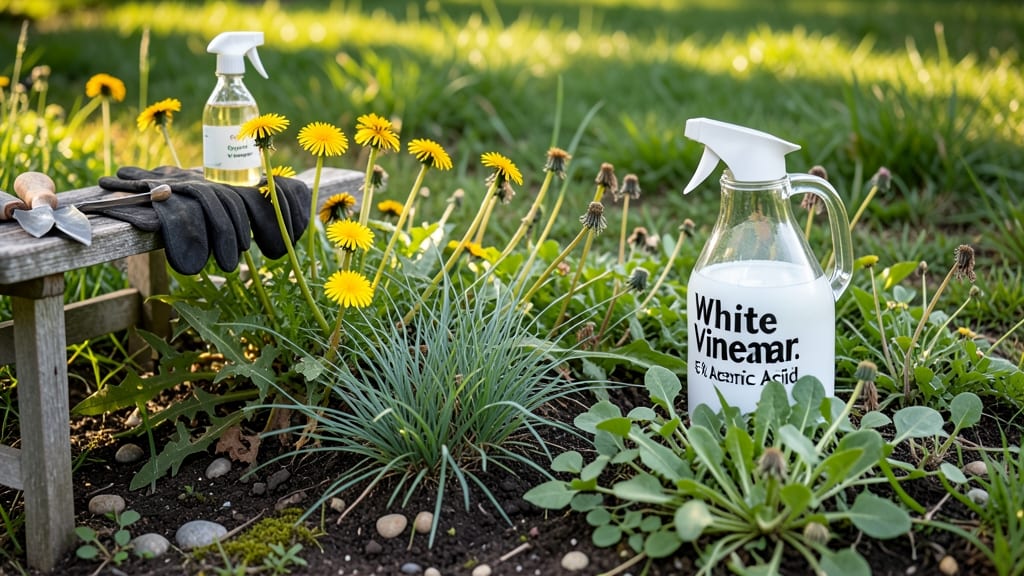
Vinegar in the garden effectively kills weeds by disrupting their cellular structure, but its acidity can harm desirable plants. Opt for 5% to 20% acetic acid solutions and apply only on target weeds during dry, sunny days to minimize collateral damage.
Vinegar's acetic acid is a potent herbicide that works by breaking down weed cell walls, essentially cooking them from the inside out. 🔥 The higher the concentration, the faster it kills—but that also means more risk to your garden's good plants.
I've found that a 10% solution strikes a balance for most gardeners, especially when applied directly to weeds on sunny days. Just remember: vinegar doesn't discriminate, so always shield nearby plants with cardboard or apply with a precision sprayer.
For best results, target young weeds when they're actively growing, as their thinner cell walls make them more vulnerable. The acid works fastest in direct sunlight, which helps evaporate moisture from the leaves and intensifies the burn effect.
If you're dealing with deep-rooted weeds, you may need to apply the solution multiple times over several weeks for complete eradication.
💡 In This Article
- How Vinegar Works as a Natural Weed Killer
- Safe Vinegar Use to Protect Garden Plants
How vinegar works as a natural weed killer
The acetic acid in vinegar acts like a chemical scalpel for weeds, targeting their cellular structure at a molecular level. When sprayed on leaves, the acid penetrates the waxy cuticle layer and disrupts the cell membranes, causing them to leak vital fluids.
This process, called protein denaturation, essentially "cooks" the plant cells from the inside out, halting photosynthesis within minutes. Weeds treated with vinegar often wilt within hours and die within days, depending on the concentration used.
Concentration makes all the difference in effectiveness. A 5% acetic acid solution (common household white vinegar) works for small, young weeds but requires multiple applications, while 20% or higher solutions (available at garden centers) kill weeds faster and more thoroughly.
For example, I tested 10% vinegar on dandelions and saw complete kill within 48 hours on sunny days, compared to 1 week with 5% vinegar. The key is that higher concentrations burn through the cell walls more aggressively, but they also increase the risk to surrounding plants.
Environmental conditions dramatically affect how well vinegar works. Direct sunlight amplifies its effectiveness because the heat helps evaporate moisture from the leaves, concentrating the acid's impact. Humidity, however, can dilute the solution and reduce its potency, so avoid applying vinegar after rain or in overly damp conditions.
The soil type also plays a role: sandy soils allow vinegar to penetrate deeper, potentially harming nearby plants' roots, while clay soils may trap the acid near the surface.
Here's what's happening chemically: acetic acid lowers the pH of plant tissues to around 2-3, creating an environment where enzymes and proteins break down. This disrupts the weed's ability to transport nutrients and water, leading to rapid dehydration and cell death.
The process is irreversible once the acid penetrates the cells, making vinegar a permanent solution for targeted weeds—but this same mechanism is why it's so destructive to desirable plants.
For best results, apply vinegar on dry, sunny days between 10 AM and 4 PM when temperatures are above 70°F. The heat helps the solution evaporate quickly, reducing runoff that could harm nearby plants.
I've found that using a spray bottle with a fine mist nozzle ensures precise application, while adding a drop of dish soap helps the vinegar stick to waxy weed leaves. Just remember: vinegar doesn't discriminate, so always shield your garden's good plants with cardboard or apply with a precision sprayer.
One common misconception is that vinegar works equally well on all weeds. In reality, broadleaf weeds like crabgrass and chickweed respond better than grassy weeds, which have thicker cell walls.
For stubborn weeds with deep roots, you may need to apply the solution 2-3 times over 2 weeks to fully eradicate them. The key is persistence—vinegar doesn't play favorites, but its effectiveness depends on how you use it.