
Companion Plants
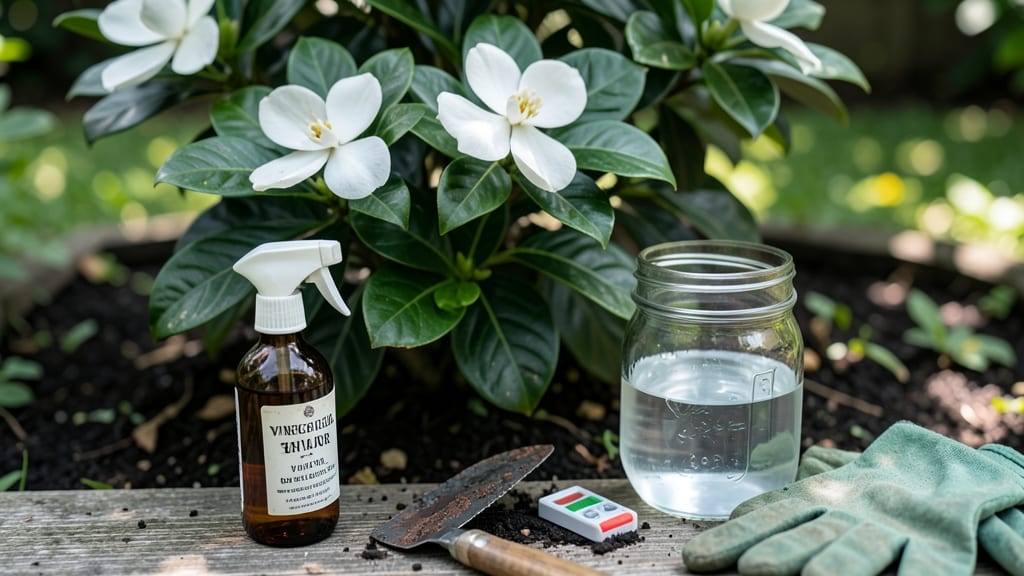
Vinegar for gardenias works wonders by restoring soil acidity and combating fungal diseases, but you must dilute it carefully to protect sensitive roots and leaves.
Gardenias love acidic soil (pH 5.0–6.0), and vinegar’s natural acidity helps correct alkaline conditions that stunt growth. 🌿 A diluted solution (1 part white vinegar to 3 parts water) mimics the plant’s ideal environment while also disrupting fungal spores.
I’ve seen wilted blooms perk up within days when applied as a foliar spray—just avoid spraying directly on flowers to prevent spotting.
For best results, combine vinegar with neem oil (1 tsp per gallon) to boost antifungal properties. Always test a small leaf area first, as some gardenias react differently to vinegar concentrations. The key is consistency: monthly applications during growing season keep both soil and foliage healthy.
💡 In This Article
- How Vinegar Adjusts Soil pH for Gardenia Health
- Safe Vinegar Spray Recipes for Gardenia Fungal Prevention
How vinegar adjusts soil pH for gardenia health
Gardenias are finicky about soil acidity because their native tropical habitats thrive in pH 5.0–6.0 conditions. Vinegar—specifically acetic acid—lowers pH by donating hydrogen ions (H⁺) to the soil solution, which neutralizes alkaline minerals like calcium carbonate.
Think of it like adding a splash of lemon juice to flat soda: the acidity shifts the balance back to what the plant prefers. 💫 For gardenias, this pH correction boosts nutrient availability, particularly iron and phosphorus, which are locked in alkaline soils.
A typical garden soil pH hovers around 6.5–7.5, which is too high for gardenias. When you apply a 1:3 vinegar-to-water solution (about 5% acetic acid), you’re introducing enough acidity to drop the pH by 0.5–1.0 points per application.
However, the effect is temporary—rainfall or irrigation can quickly dilute the acidity. That’s why monthly applications during the growing season (spring to fall) maintain consistent soil chemistry. Over-acidification (below pH 4.5) harms roots by releasing toxic aluminum, so always monitor with a soil test kit.
The magic happens at the microscopic level. Vinegar’s acetic acid disrupts the chemical bonds that bind nutrients to soil particles, making them soluble and accessible to gardenia roots. For example, iron—critical for chlorophyll production—becomes 10x more available in acidic soil.
This is why wilted gardenias often perk up after vinegar treatment: the plant suddenly has the nutrients it needs to recover. The key is precision: gardenias can’t handle sudden pH swings, so gradual adjustments work best.
Here’s what happens when you skip vinegar: alkaline soil stresses gardenias, causing yellowing leaves (chlorosis) and stunted growth. The plant’s roots struggle to absorb nutrients, even if the soil looks fertile. Vinegar acts like a natural fertilizer enhancer, but it’s not a standalone solution.
Pair it with organic matter like pine bark (which naturally acidifies) for long-term benefits. Always use white vinegar (5% acidity)—apple cider vinegar’s higher acidity (6–7%) risks burning roots if overused.
Visual cues help gauge success. Healthy gardenias have glossy, deep green leaves and vibrant blooms. After vinegar treatment, you’ll notice new growth within 2–3 weeks, and existing leaves regain their luster.
The soil may also smell fresher, as vinegar’s acidity inhibits harmful bacteria and fungi that thrive in alkaline conditions. For container gardenias, mix the vinegar solution directly into the potting mix—just avoid oversaturating, which can lead to root rot.
Pro tip: Test your soil’s pH before applying vinegar. A simple $10 kit from a garden center reveals whether you need acidification or if your soil is already too acidic.
Gardenias in pH 4.0–4.5 soil may need lime instead! Balance is everything—vinegar is your ally when used correctly, but it can become a liability if misapplied. 🌱