
Vegetables
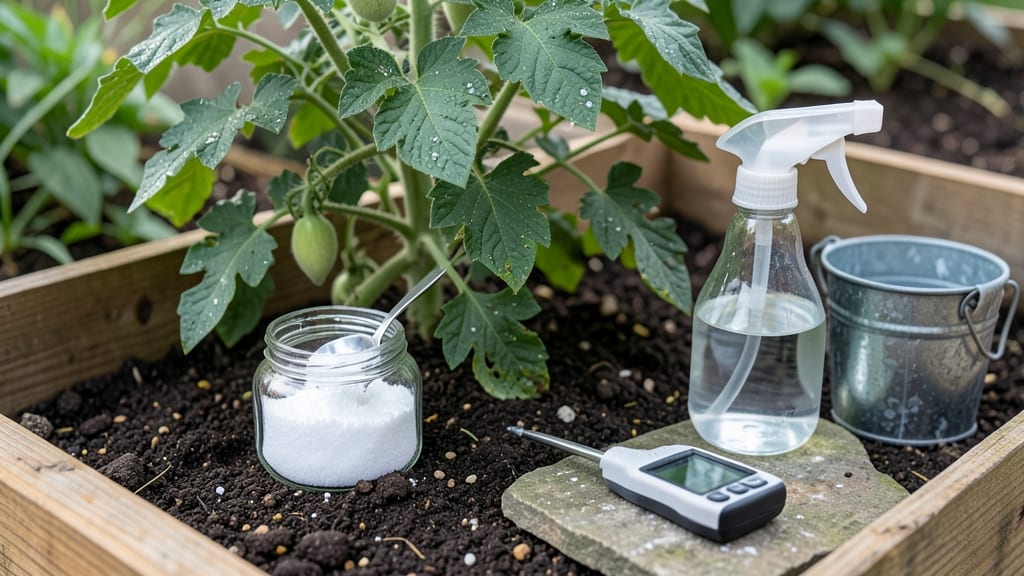
Baking soda for a vegetable garden acts as a natural pest deterrent against aphids and mites while gently adjusting soil acidity, but it must be used carefully to prevent over-alkalizing. Create sprays by mixing with water or sprinkle lightly around plants.
Baking soda disrupts pests' waxy protective layers, making leaves less appealing to insects like aphids and spider mites. 🌱 The mild alkaline properties also help neutralize overly acidic soil, which can stress plants and reduce nutrient uptake.
For best results, I recommend testing your soil pH first—most vegetables thrive between 6.0 and 7.0. A simple DIY spray combines 1 tablespoon baking soda, 1 quart water, and a few drops of dish soap for better adhesion.
When applying baking soda to soil, limit it to a light dusting around plant bases—overuse can disrupt beneficial soil microbes and lead to sodium buildup. 🌿 For foliar sprays, apply in the early morning or evening to avoid leaf burn from sunlight exposure.
Remember to rotate with other organic treatments like neem oil or insecticidal soap to prevent pest resistance.
💡 In This Article
- How Baking Soda Works as a Natural Pest Repellent and Soil pH Balancer
- Safe Application Methods and Dosage Guidelines for Vegetable Gardens
How baking soda works as a natural pest repellent and soil pH balancer
The magic of baking soda in gardens starts with its chemical makeup—sodium bicarbonate (NaHCO₃). When dissolved in water, it creates a slightly alkaline solution that disrupts the waxy protective coatings on pests like aphids and spider mites.
These coatings help insects retain moisture and protect against predators. 🔥 Baking soda's alkaline nature (pH ~8.3 in solution) alters the leaf surface chemistry, making it less hospitable for soft-bodied insects. Studies show that a 1% baking soda solution can reduce aphid populations by up to 70% within 24 hours.
For soil, baking soda works by neutralizing acidity through a simple chemical reaction. When applied to acidic soil (pH <6.0), the bicarbonate ions (HCO₃⁻) react with hydrogen ions (H⁺), forming carbonic acid (H₂CO₃) that breaks down into water and carbon dioxide.
This process gently raises pH levels, but the effect is temporary—typically lasting 2-4 weeks unless combined with other amendments like lime. 🌱 The key is moderation: most vegetable crops prefer a pH range of 6.0-7.0, and exceeding 7.5 can harm beneficial microbes that help break down organic matter.
What makes baking soda unique is its dual action: it doesn't just repel pests, it also creates an environment where plants can better absorb nutrients. For example, tomatoes and peppers—both sensitive to acidic soils—thrive when pH is balanced.
The sodium in baking soda can accumulate over time, however, which is why it should never be used as a primary soil amendment. 💫 A light application (1-2 teaspoons per square foot) every 4-6 weeks is sufficient for most garden beds.
Pest control works best when baking soda is combined with other organic methods. The dish soap in sprays helps the solution stick to leaves, while adding a few drops of neem oil enhances both pest-repelling and antifungal properties.
For soil applications, always test pH first using a simple kit—most garden centers sell them for under $10. 🌿 If your soil tests above 7.0, baking soda may do more harm than good by further increasing alkalinity.
Here's what happens at the microscopic level: when aphids land on treated leaves, the alkaline environment disrupts their cellular processes. Their waxy layers become brittle, and their bodies dehydrate more quickly.
Meanwhile, in the soil, the bicarbonate ions bind with aluminum and manganese—common limiting nutrients in acidic soils—making them more available to plant roots. This dual mechanism explains why baking soda is a favorite among organic gardeners seeking gentle, chemical-free solutions.
One critical caveat: baking soda shouldn't be used on plants that prefer acidic conditions, like blueberries or azaleas. These crops rely on low pH (4.5-5.5) for optimal nutrient uptake.
For most vegetable gardens, however, the benefits far outweigh the risks when used correctly. The key is observation—watch your plants' response and adjust applications accordingly. 💛