
Tools
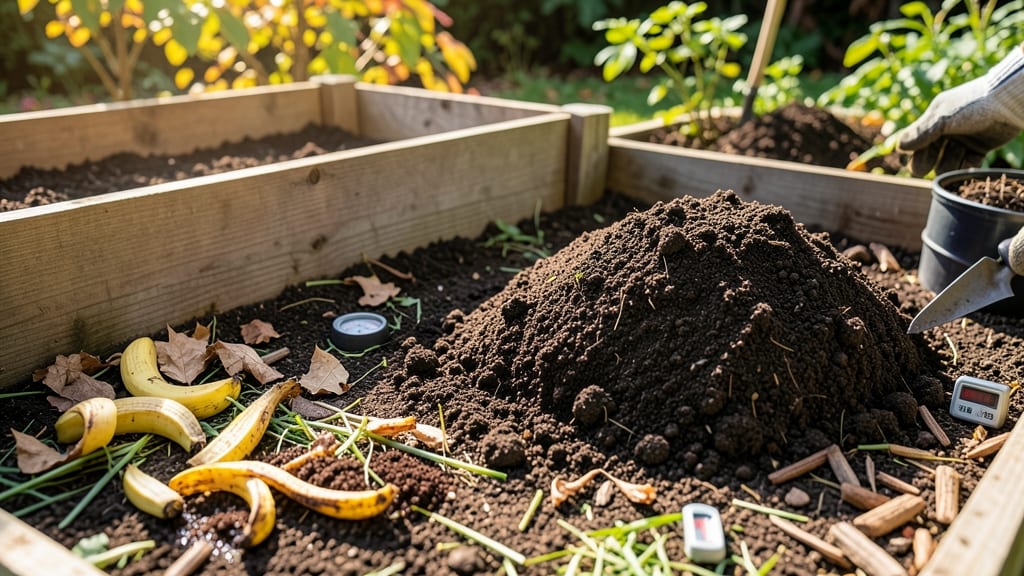
Mixing garden soil and compost creates nutrient-rich planting beds by combining natural minerals with organic matter, improving drainage, aeration, and microbial activity for stronger plant roots and higher yields. Aim for a 70/30 soil-to-compost ratio for most vegetables and flowers.
Combining garden soil and compost is like giving your plants a supercharged foundation.
The soil provides essential minerals and structural stability, while compost adds organic matter that boosts microbial life, retains moisture, and slowly releases nutrients. 🌱 This dynamic duo creates an ideal environment where roots can thrive without competing for resources.
For example, tomatoes and peppers flourish with this mix because the improved aeration prevents root rot while the compost feeds them throughout the growing season.
What many gardeners don't realize is that the right balance depends on your plant types and climate. A 70/30 mix works for most vegetables, but shrubs and trees often need less compost (60/40 ratio) to avoid overfeeding.
I've found that adding a handful of worm castings to the mix can further enhance microbial activity, especially in heavy clay soils.
The key is to refresh your compost annually—this maintains the nutrient cycle while preventing compaction. In hot climates, you might need to adjust ratios to retain moisture, while cooler regions can handle slightly higher compost percentages.
The goal is always the same: create a living soil ecosystem that supports vigorous growth.
💡 In This Article
- How Soil and Compost Work Together for Plant Health
- Best Soil-to-Compost Ratios by Plant Type
How soil and compost work together for plant health
Soil acts as the structural backbone of your garden beds, providing essential minerals like nitrogen, phosphorus, and potassium that plants need for growth. However, pure garden soil often lacks the organic matter necessary to create a thriving ecosystem.
Compost, on the other hand, is rich in decomposed organic materials that break down slowly, releasing nutrients over time while improving soil texture. The magic happens when these two combine: compost adds porosity to dense clay soils while preventing compaction in sandy soils, creating an ideal balance for root development.
One of the most critical benefits is improved water retention. Compost can hold up to 4 times its weight in water while still allowing excess to drain away, preventing both drought stress and waterlogging.
The microbial activity in compost—with populations reaching 100,000 to 1,000,000 organisms per gram—breaks down organic matter into plant-available nutrients. This microbial network also helps suppress harmful pathogens, creating a healthier growing environment.
For example, a well-mixed bed will have 20-30% more beneficial fungi and bacteria compared to soil without compost.
The physical structure changes dramatically too. Pure soil particles pack tightly, leaving minimal space for roots and oxygen. When you add compost, those particles become separated by organic matter, creating 30-50% more pore space for air and water movement.
This aeration is crucial because plant roots need oxygen to respire—just like we do.
In my own garden, I've noticed that tomatoes planted in this mixed soil develop roots that spread 2-3 times wider than those in pure soil, giving them better access to nutrients and water throughout the growing season.
Another key factor is nutrient availability. Compost acts like a slow-release fertilizer, providing a steady supply of nitrogen, phosphorus, and potassium while also introducing micronutrients like calcium and magnesium. The organic matter in compost also helps buffer soil pH, preventing extreme acidity or alkalinity that can lock out nutrients.
For instance, compost can raise the pH of acidic soils by 0.5-1.0 points over a growing season, making nutrients like phosphorus more accessible to plants.
What many gardeners overlook is the long-term soil structure improvement. Over time, the organic matter in compost becomes humus—a stable, spongy substance that continues to improve soil quality for years.
This is why experienced gardeners often say "feed the soil, not the plant"—the goal is to build a living ecosystem where plants can thrive independently.
The right mix creates a self-sustaining cycle where roots, microbes, and organic matter work together to create an environment that's 2-5 times more productive than pure soil alone.
You can see the difference when you dig into a well-amended bed versus pure soil. The compost-soil mix will have a darker color, crumbly texture, and earthy aroma from the active microbial life.
When you squeeze a handful, it should hold together slightly but still break apart easily—this indicates the perfect balance of moisture retention and drainage. The roots in this environment grow with confidence, exploring more of the soil volume and accessing nutrients more efficiently.