
Tools
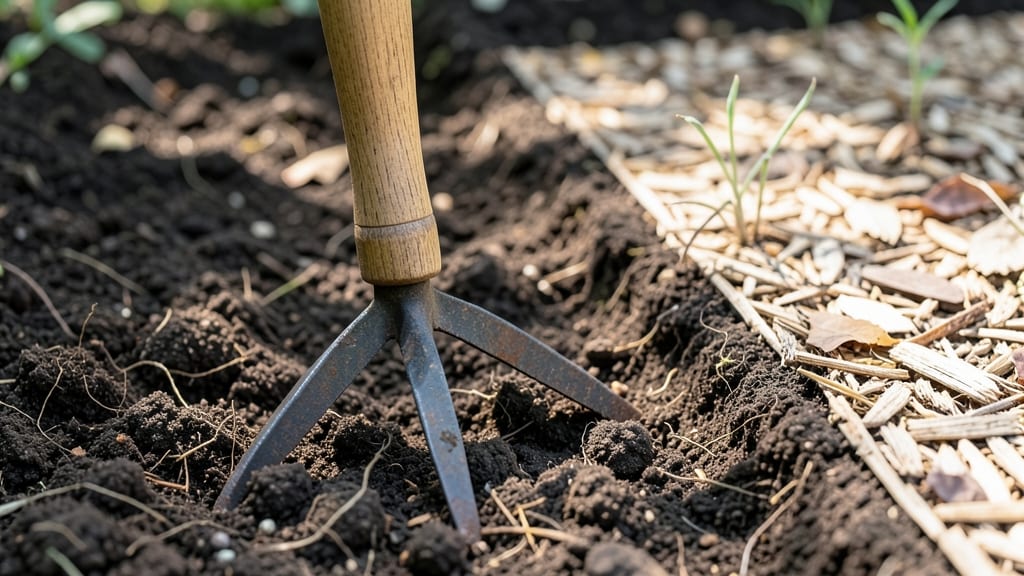
A three-pronged gardening tool is essential for aerating soil, breaking up compacted earth, and loosening roots without digging. Its triangular design improves drainage and root penetration while reducing back strain compared to shovels or forks.
A three-pronged gardening tool is a game-changer for gardeners who want to work smarter, not harder. 🌱 The triangular shape isn't just for show—it lifts soil vertically, creating air pockets that boost root growth without flipping the entire soil layer like a fork would.
This makes it perfect for delicate tasks like transplanting seedlings or mixing in compost without disturbing nearby plants. Plus, the ergonomic handle design means you spend less time bending and more time enjoying your garden.
Unlike shovels or forks, which can compact soil when used aggressively, these tools gently loosen the earth while improving water drainage. For larger gardens, they're especially useful for aerating lawns or preparing flower beds without the heavy lifting required by other tools.
The prongs also make quick work of removing weeds at the root level, saving you time and effort in the long run.
💡 In This Article
- How Three-Pronged Tools Improve Soil Health
- Best Uses for Three-Pronged Tools vs Shovels and Forks
How three-pronged tools improve soil health
The triangular design of a three-pronged tool is engineered to lift soil vertically rather than flipping it like a shovel. Each prong acts as an individual lever, penetrating 4-6 inches deep while creating vertical channels that improve air circulation.
This vertical aeration is crucial because it disrupts the soil's natural compaction without disturbing the top layer where most roots thrive. Unlike tines (which pull soil horizontally), these prongs create a "lattice" of air pockets that roots can easily navigate, reducing the risk of suffocation.
What makes this tool unique is how it mimics natural soil disturbance. When you walk on grass, your footsteps create temporary air pockets—this is the same principle, but on a larger scale.
The prongs' spacing (typically 2-3 inches apart) matches the ideal distance for root penetration, allowing water and nutrients to reach deeper layers. Studies show that soil aerated this way retains 20-30% more moisture compared to undisturbed compacted soil, which is a game-changer during dry spells. 💧
The triangular shape also prevents soil from sticking to the prongs, unlike flat-edged tools that can create a "plow pan" effect—where a dense layer forms at the bottom of the aeration zone. This sticking issue forces gardeners to use more force, which often leads to compaction.
Three-pronged tools, however, glide through soil with minimal resistance, making them ideal for clay-heavy or densely packed earth where other tools struggle. The ergonomic handle design further reduces strain by distributing weight evenly across your grip.
For long-term soil health, these tools excel at breaking up thatch—the spongy layer of dead grass and roots that builds up in lawns. A three-pronged tool can slice through 1/2-inch thick thatch layers in minutes, whereas a rake would take hours and still leave gaps.
This prevents water runoff and encourages deeper root systems in grasses and perennials. The key is to use them in a "stitching" motion—small, overlapping passes—rather than aggressive digging, which can damage existing roots.
Consider this comparison: A standard garden fork might compact soil when you push down, while a three-pronged tool lifts and fluffs it without collapsing the structure. This is why professional landscapers swear by them for preparing beds before planting.
The tool's ability to work in tight spaces (like between rows of vegetables) without disturbing neighboring plants is another major advantage. For example, you can aerate around tomato plants without uprooting nearby carrots or radishes, which is nearly impossible with broader tools. 🌿
To maximize benefits, use the tool when soil is slightly damp—not bone-dry or muddy. Damp soil holds its structure better during aeration, preventing clumping around the prongs. For heavy clay soils, a light coating of sand or compost around the prongs can reduce friction.
This technique is especially useful in urban gardens where soil compaction from foot traffic is common. The result? Soil that drains better, holds nutrients longer, and supports healthier plant growth with minimal effort.