
Advice
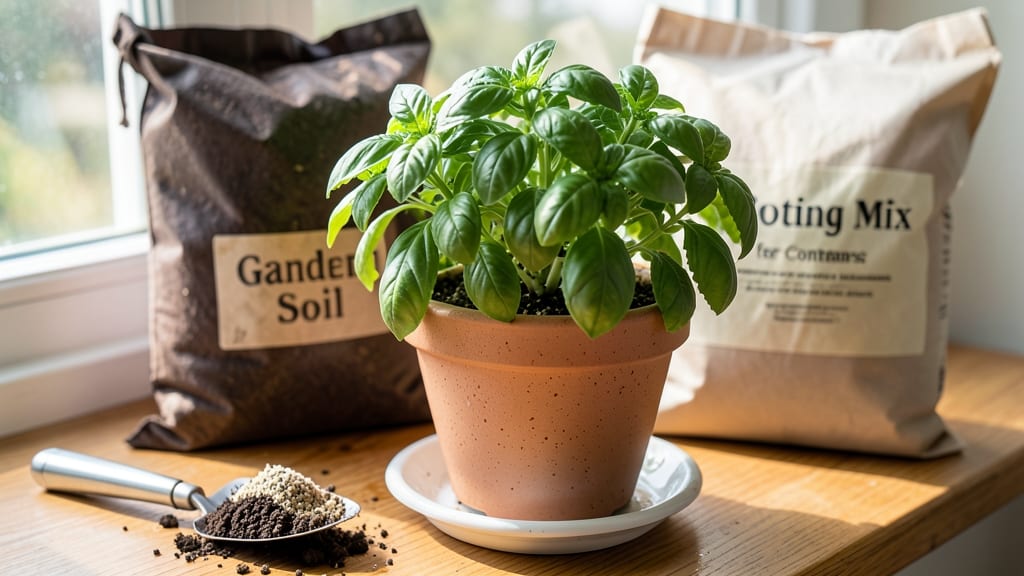
You can't use garden soil as potting soil because it compacts easily, drains poorly, and may harbor pests or diseases. Instead, mix it with perlite, sand, or compost to improve aeration and drainage for healthier potted plants.
Garden soil is designed for outdoor plants with deep root systems, while potted plants need lightweight mixes that allow roots to breathe. 🌱 The dense structure of garden soil suffocates roots by blocking oxygen flow, and its heavy composition can lead to root rot when water pools.
Even if you sterilize garden soil, it lacks the essential air pockets and organic matter that potting mixes provide for optimal growth.
For best results, blend garden soil with 50% perlite or vermiculite to create air pockets, and add 20-30% compost to restore nutrients. This DIY mix works well for most container plants, though succulents and cacti need even more gritty amendments like coarse sand or pumice.
💡 In This Article
- Why Garden Soil Fails as Potting Mix
- How to Safely Amend Garden Soil for Potted Plants
Why garden soil fails as potting mix
Garden soil is engineered for outdoor landscapes where plants have deep roots and natural drainage. Its dense composition—often packed with clay, silt, and organic debris—creates a heavy, compacted structure that suffocates container plants.
When watered, garden soil forms a thick, waterlogged layer that blocks oxygen from reaching roots, leading to anaerobic conditions where beneficial microbes can't thrive. This is why potted plants in pure garden soil often develop yellowing leaves or stunted growth within weeks.
The root of the problem lies in particle density. Garden soil typically contains 45-50% solids (minerals, sand, silt) with only 5-10% air pockets, while ideal potting mixes have 20-30% air space for root respiration.
For example, a standard potting mix might contain 70% peat moss or coconut coir (which holds water but stays loose) and 30% perlite or vermiculite (for drainage). Compare that to garden soil, where the same volume might be 80% clay and organic matter, creating a brick-like consistency when wet.
Another critical issue is nutrient imbalance. Garden soil provides slow-release nutrients over seasons, but potted plants need readily available minerals to thrive in confined spaces. The organic matter in garden soil decomposes unevenly, sometimes releasing too much nitrogen at once (burning roots) or not enough phosphorus for flowering plants.
For instance, herbs like basil require high nitrogen early on but need balanced phosphorus/potassium later—something garden soil can't reliably deliver in a container environment.
Pests and pathogens also thrive in garden soil. Weeds, larvae, and fungal spores hitchhike from outdoor beds into pots, creating hidden threats.
Even sterilized garden soil may retain dormant weed seeds that germinate unpredictably, while beneficial mycorrhizal fungi (which help roots absorb water) often fail to establish in the confined, disturbed environment of a pot. This is why professional potting mixes are pasteurized and formulated to exclude these contaminants.
Consider the texture: Garden soil feels gritty when dry and turns into a dense paste when wet, while potting mixes remain light and crumbly—almost like damp sandcastle material. This difference isn't just about feel; it directly impacts root health.
Roots in compacted soil struggle to expand, leading to circumstantial root rot where water can't escape, and the plant's vascular system gets clogged. 🌱
For a real-world example, imagine planting a tomato seedling in garden soil versus a 50/50 blend with perlite. In garden soil, the roots may grow only 1-2 inches deep before hitting impenetrable clay, while in amended mix, they'll spread 3-4 inches outward and downward, accessing more nutrients and oxygen.
The difference in plant vigor is dramatic—often 30-50% more growth in the right mix.