
Tools
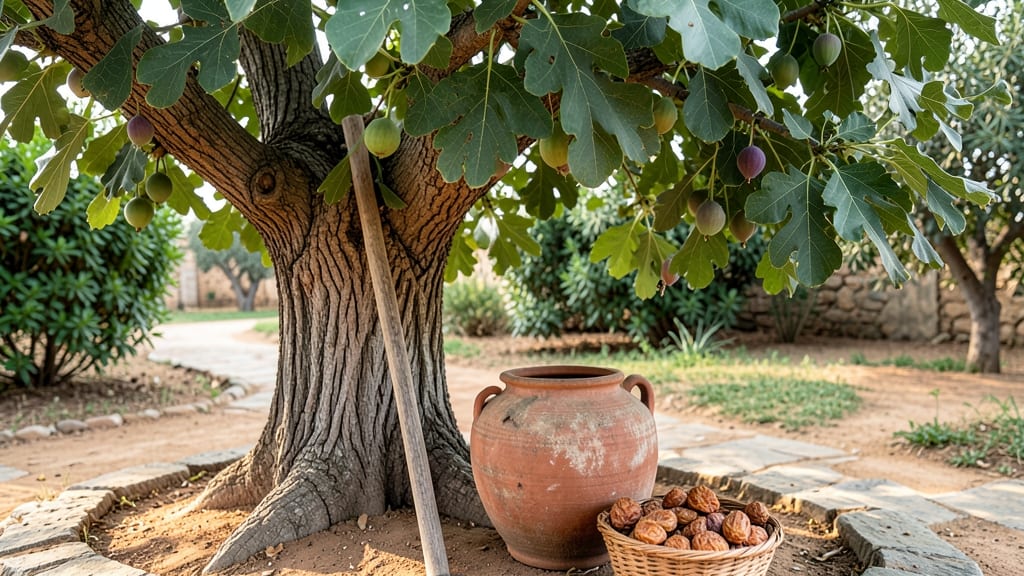
The Garden in the Bible, known as Eden, represents humanity's original home where God placed Adam and Eve amidst life-giving trees, including the Tree of Knowledge and Tree of Life, illustrating divine care and humanity's role as stewards of creation.
The Garden in the Bible isn't just a story—it's the foundation of how we understand humanity's relationship with nature and divinity. 🌿 In Genesis, Eden is described as a lush paradise with four rivers (Pishon, Gihon, Hiddekel, and Euphrates) and every tree pleasing to the eye, emphasizing abundance and harmony.
This sacred space wasn't just a physical location but a symbol of perfect communion between God and His creation, where humans were given the responsibility to cultivate and protect it.
What makes Eden so powerful as a concept is its dual role: it's both a literal garden and a spiritual metaphor. Theologically, it represents humanity's original state of innocence and divine provision, while also serving as a model for how we should engage with the natural world.
Many Christian traditions later adopted Eden's imagery in designing monastic gardens, creating spaces meant to mirror this ideal of sacred stewardship.
💡 In This Article
- Biblical Names and Descriptions of Eden’s Garden
- Symbolic Meanings of Eden’s Garden in Theology and Gardening
Biblical names and descriptions of Eden’s garden
The Hebrew term 'Eden (עֵדֶן) literally means "delight" or "luxuriance," reflecting the garden's role as a place of unparalleled beauty and abundance. In Genesis 2:8, we see it described as a specific location east of Eden, where God planted Adam and Eve.
The word gan (גַּן), meaning "garden" or "enclosure," is used alongside 'Eden to emphasize its cultivated nature—a space intentionally designed and maintained by divine care. This dual terminology suggests Eden wasn't just a wild landscape but a meticulously arranged sanctuary, blending natural fertility with intentional human stewardship.
The garden's botanical richness is highlighted by its four rivers—Pishon (possibly the Indus), Gihon (Nile), Hiddekel (Tigris), and Euphrates—which provided life-sustaining water to the entire region.
The fertile soil, described as "good" (Genesis 2:5), would have supported lush vegetation, including every tree pleasing to the eye and two central trees: the Tree of Knowledge of Good and Evil and the Tree of Life.
Archaeological parallels show ancient Near Eastern gardens often featured symmetrical layouts with water features, reinforcing Eden's role as a structured paradise rather than a chaotic wilderness.
Ancient translations further shaped our understanding. The Septuagint (3rd century BCE) rendered 'Eden as Paradeisos (παράδεισος), a Greek term meaning "park" or "hunting preserve," which later influenced the English word "paradise." Meanwhile, the Latin Vulgate used hortus (garden) and paradise, blending Hebrew and Greek concepts.
These translations subtly shifted the focus from Eden as a literal garden to a broader metaphor for divine perfection—a shift that persists in modern biblical interpretation.
What's fascinating is how these translations reflect cultural priorities. The Greek Paradeisos emphasized leisure and abundance, aligning with Hellenistic ideals of pleasure gardens, while the Latin hortus tied Eden to Roman agricultural traditions.
This linguistic evolution explains why many Christians today visualize Eden as a serene, well-tended garden rather than a wild, untamed paradise. The original Hebrew, however, paints a more dynamic picture: a thriving, cultivated space where humans were meant to actively participate in its care.
The garden's geographical location—east of Eden—is often debated among scholars. Some suggest it was near Mesopotamia (modern Iraq), given the river references, while others propose a symbolic "east" representing humanity's journey toward God. The ambiguity invites both literal and metaphorical interpretations, making Eden a uniquely flexible symbol in biblical theology.
This duality is key to understanding why it remains relevant across centuries of Christian thought and practice.
Consider this: the garden's name 'Eden isn't just descriptive—it's prescriptive. By calling it "delight," Scripture frames Eden as a place meant to evoke joy and wonder, challenging us to see creation not as a resource to exploit but as a gift to cherish.
This perspective laid the foundation for later Christian attitudes toward nature and gardening, from monastic herb gardens to modern community plots inspired by biblical stewardship.