
Tools
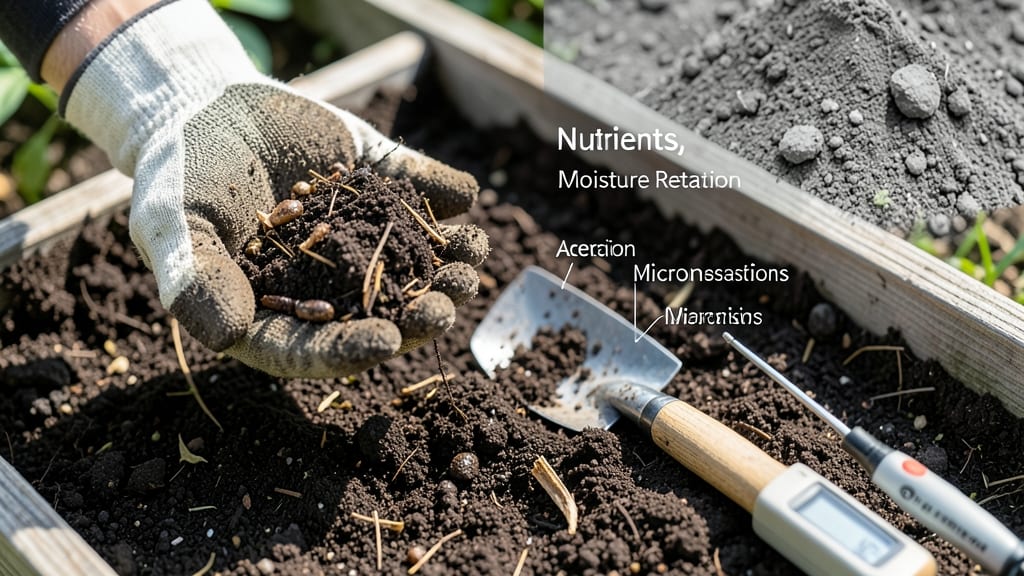
Garden soil is used for nurturing plant roots, improving drainage, retaining moisture, and providing essential nutrients like nitrogen, phosphorus, and potassium for healthy growth in flower beds, vegetable patches, and lawns.
Garden soil isn't just dirt—it's the foundation for thriving plants.
The right mix of organic matter, minerals, and microorganisms creates a living ecosystem that supports root development while regulating water flow. 🌱 For example, loamy soil with its balanced texture drains well but holds enough moisture for deep-rooted vegetables, while sandy soil might need compost to retain nutrients.
Many gardeners test their soil's pH and nutrient levels annually to match it with the plants they want to grow, whether that's nitrogen-loving tomatoes or phosphorus-dependent blooms.
Beyond vegetables, garden soil transforms landscapes. A well-amended blend can turn a patchy lawn into lush green coverage or help shrubs establish strong root systems in harsh climates.
The key is understanding your soil's current state—whether it's too dense, too acidic, or lacking organic material—and adjusting it with amendments like peat moss, perlite, or aged manure. This tailored approach saves time and water in the long run while creating a healthier environment for all your plants.
💡 In This Article
- How Garden Soil Supports Plant Growth Mechanically and Nutritionally
- Best Soil Types for Different Garden Plants and Landscaping Projects
How garden soil supports plant growth mechanically and nutritionally
The foundation of healthy plants starts with soil's physical structure. Loamy soil—ideal for most gardens—combines equal parts sand, silt, and clay, creating a 40-60% pore space that balances aeration and water retention. Sandy soil drains too quickly (like a sieve), while clay holds water so tightly roots suffocate.
The magic happens in loam, where 25-30% organic matter binds particles into crumbly aggregates that hold nutrients while allowing oxygen to reach roots.
Nutrient availability depends on soil chemistry. Organic matter decomposes through microbial action, releasing nitrogen (N) for leafy growth, phosphorus (P) for root development, and potassium (K) for disease resistance.
A 6.0-7.0 pH range keeps these nutrients soluble—below 5.5, phosphorus becomes locked away, while above 7.5, micronutrients like iron turn unavailable. 🌱 For example, blueberries thrive in acidic pH 4.5-5.5 soil, while most vegetables prefer neutral 6.0-7.0.
Moisture regulation is equally critical. Clay soils can hold 40-50% water by volume, but release it slowly, while sandy soils hold only 5-10% yet drain instantly. The solution? Adding 3-5% compost doubles water retention capacity while improving drainage.
This explains why gardeners often see wilting in sandy beds after just 2-3 days without watering, versus clay soils that may stay soggy for weeks.
Microorganisms do the heavy lifting. A single teaspoon of healthy soil contains 1 billion bacteria and 100 million fungi, breaking down organic matter into plant-accessible forms. Earthworms alone can process 500 lbs of soil per year, aerating it while their castings release 5x more nitrogen than unprocessed soil.
Without this microbial network, even fertile soil would starve plants of essential nutrients.
Consider the case of tomatoes: They're heavy feeders needing 1 lb of nitrogen per 100 sq ft annually. In poor soil, this means frequent fertilizing, but in well-amended loam, the microbes continuously recycle nutrients, reducing waste.
The same principle applies to lawns—Kentucky bluegrass requires 0.5 lbs of nitrogen per 1,000 sq ft per month during growing season, which healthy soil can supply naturally through proper management.
Soil temperature matters too. Below 50°F, microbial activity slows dramatically, halting nutrient cycling. This is why spring planting often fails if soil isn't warmed first—roots can't access nutrients until microbes wake up. Conversely, summer heat above 85°F** can kill beneficial microbes, creating a feedback loop of poor growth. 🌡️