
Pests
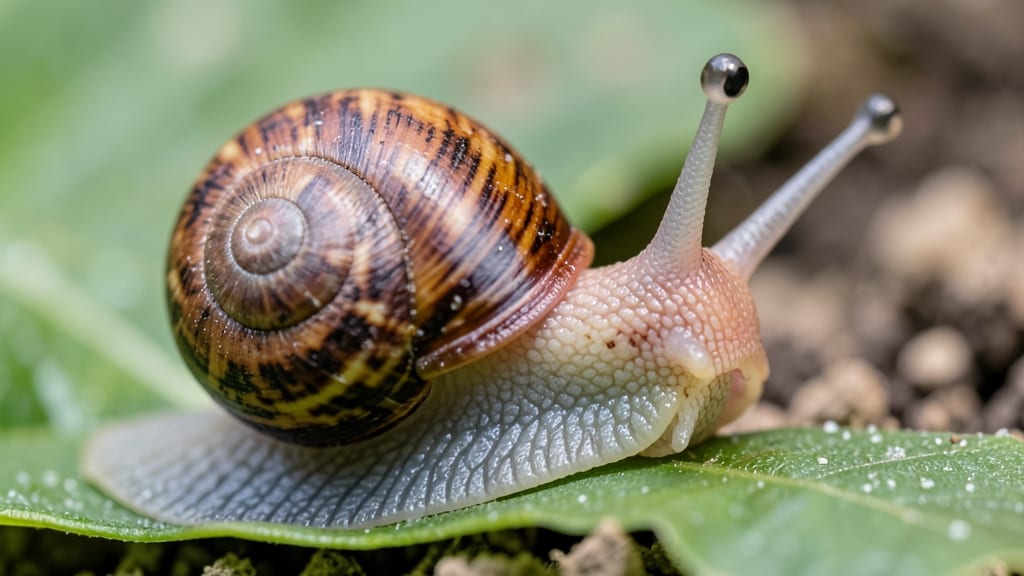
Understanding garden snail anatomy reveals a coiled shell for protection, a muscular foot for gliding, and a retractable head equipped with sensory tentacles, eyes, and a radula for scraping plant surfaces. Their internal systems include a heart, lungs, and a digestive tract perfectly adapted for their herbivorous lifestyle.
A garden snail's coiled shell isn't just armor—it's their portable home, containing up to 90% of their body weight in water. 🔥 The two sensory tentacles (longer ones for touch, shorter ones with eyes) help them detect predators and moisture, while that raspy radula acts like a tiny file, shredding leaves into digestible bits.
Their slime trail isn't just for movement; it's a moisture-retaining highway that also contains antimicrobial properties to prevent infection. What's fascinating is how their circulatory system pumps hemolymph (not blood) through their body, delivering oxygen via their lungs—making them surprisingly efficient for such small creatures.
For gardeners, recognizing these features helps in natural pest control. The muscular foot leaves distinctive slime trails, while the eye placement on the shorter tentacles means they can see almost 360 degrees.
Targeting their vulnerable areas—like disrupting their slime trails with diatomaceous earth or removing their favorite hiding spots—can significantly reduce their damage to plants.
💡 In This Article
- How a Garden Snail’s Body Supports Survival
- Identifying Key Snail Parts for Garden Pest Control
How a garden snail’s body supports survival
The coiled shell of a garden snail isn't just a protective armor—it's a marvel of biological engineering. This spiral structure, made of calcium carbonate, houses up to 90% of their body weight in water, acting as a built-in hydration reserve.
The shell's tight coils create a larger surface area relative to volume, which helps regulate moisture loss in dry conditions. Without this adaptation, snails would dehydrate within hours in arid environments. 🔥
At the front of their body lies the muscular foot, a broad, flat sole that secretes a layer of mucus for gliding. This slime isn't just for movement—it contains antimicrobial compounds that prevent bacterial infections while the snail moves across potentially contaminated surfaces.
The foot's cilia (microscopic hair-like structures) create a wave-like motion that propels them forward at speeds up to 0.03 mph, about as fast as a slow crawl.
Their retractable head houses the radula, a ribbon-like structure covered in thousands of tiny teeth. This scraping tool can exert pressures up to 1,000 times their body weight, allowing them to shred plant surfaces with precision.
The radula's teeth are constantly replaced—snails produce new ones continuously, with the entire structure regenerating every 3-5 weeks. This adaptation lets them consume everything from tender seedlings to tougher leaves.
The two pairs of sensory tentacles serve distinct purposes. The longer upper pair detects air currents and vibrations, while the shorter lower pair contains their eyes at the tips. Each eye has a lens and retina, providing 360-degree vision (though with poor resolution).
This arrangement lets them spot predators like birds or frogs from almost any angle while remaining hidden in their shells. The tentacles also retract instantly when threatened, pulling the entire head into the shell within 0.3 seconds.
Internally, their circulatory system pumps hemolymph (a colorless fluid) through an open system that bathes their organs directly. Unlike vertebrates, snails don't have red blood cells—their hemolymph carries oxygen via specialized cells called hemocytes.
Their lungs, located near the rear of their body, allow them to breathe air while still retaining moisture, a critical adaptation for their semi-aquatic lifestyle. 💫
The digestive system is equally specialized. Snails have a gizzard that grinds ingested plant material with ingested sand or small stones, while their salivary glands produce enzymes to break down cellulose. Their saliva contains mucus and digestive enzymes that begin breaking down food before it even reaches their stomach.
This entire system is designed to extract maximum nutrition from plant matter, which typically contains only 10-20% digestible material.
What's most remarkable is how these adaptations work together. The shell protects them while they sleep, the radula harvests food, the tentacles monitor threats, and the slime trail creates a moisture highway. Every part of their anatomy is optimized for survival in gardens—where they face both predators and environmental challenges.
This level of specialization explains why they're so successful as pests: their bodies are perfectly engineered for their niche. ✨