
Tools
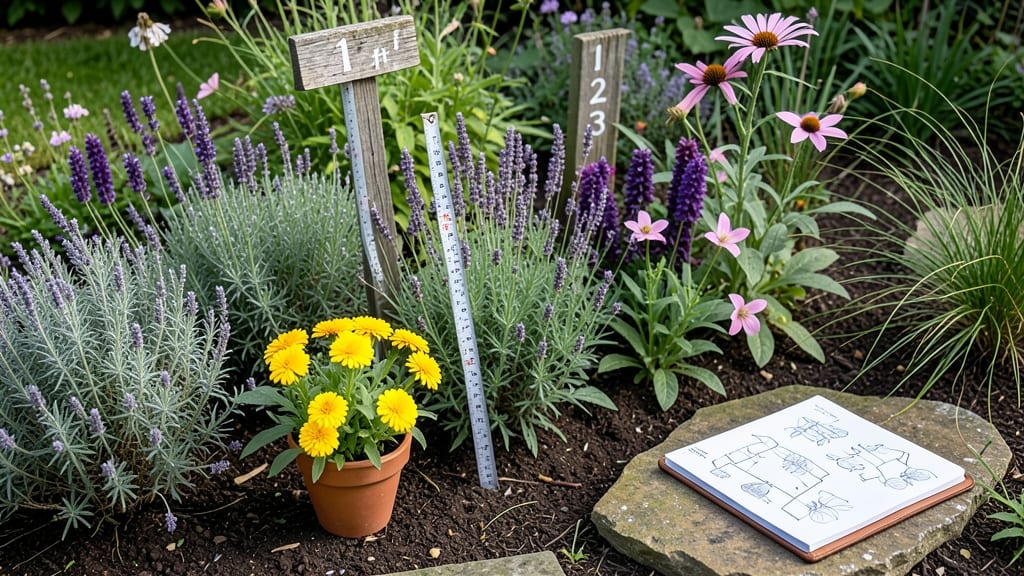
Calculating the size of a garden starts with measuring its length and width in feet, then multiplying those numbers to get square footage—this measurement directly impacts how many plants you can fit, how much soil or mulch you'll need, and even your irrigation setup. For tricky shapes, break them into simpler geometric sections like rectangles or triangles.
Knowing your garden's exact dimensions is the foundation for everything from plant selection to material purchases. 🌱 For example, a 10-foot by 12-foot plot equals 120 square feet, which determines how many tomato plants (typically spaced 18 inches apart) you can grow.
Many gardeners use graph paper to sketch their layout first—this helps visualize walkways, raised beds, and plant groupings before breaking out the measuring tape. Pro tip: Always measure twice to avoid costly mistakes when buying soil or fencing materials.
If your garden has curves or slopes, divide it into smaller sections you can measure separately. A circular plot uses the formula πr² (pi times radius squared), while triangular spaces need the base multiplied by height divided by two.
Digital tools like garden planning apps can handle these calculations instantly, but even a simple sketch with measurements written in the corners keeps you organized. Remember, accuracy here saves time—and money—later.
💡 In This Article
- Calculating Garden Square Footage for Plant Layouts
- Tools and Techniques for Precise Garden Measurements
Calculating garden square footage for plant layouts
Square footage calculations transform raw measurements into actionable garden plans. Start by measuring the longest straight edge of your garden (length) and the perpendicular edge (width) using a tape measure or wheel meter for accuracy.
For a simple rectangular plot, multiply length × width—so a 15-foot by 20-foot garden equals 300 square feet. This number becomes your baseline for everything from plant spacing to soil volume calculations. 🌱
The magic happens when you apply this to real-world gardening needs. Most vegetables need 9-12 square inches per plant (e.g., lettuce), while larger crops like pumpkins require 100+ square feet. Divide your total square footage by these plant-specific requirements to determine how many of each you can grow.
For example, in that 300-square-foot garden, you could fit 250 tomato plants spaced 18 inches apart, or 300 lettuce plants with 9-inch spacing.
Complex shapes require breaking the garden into geometric sections. A circular herb spiral (radius of 5 feet) uses πr², giving you about 78.5 square feet—perfect for calculating soil depth or irrigation coverage.
Trapezoidal sections (like sloped gardens) need the average width multiplied by length, while irregular curves can be approximated by dividing into rectangles. This method ensures you account for every usable inch without overcomplicating the math.
Square footage also dictates material needs. A 100-square-foot raised bed might require 20 cubic feet of soil (assuming 6-inch depth), while a 500-square-foot plot could need 1,000 gallons of water for irrigation (assuming 2 inches per week).
These calculations prevent costly over-purchases or under-preparedness. Pro tip: Use graph paper to sketch your layout—marking 1 square = 1 square foot lets you visualize plant arrangements before digging.
Advanced gardeners often use the "square foot gardening" method, where each square foot is dedicated to specific plants. This system maximizes yield in small spaces by eliminating walkways between rows.
For instance, a 4-foot by 4-foot square (16 sq ft) could grow 16 basil plants spaced 12 inches apart, while leaving room for companion planting like marigolds in the corners. The precision of square footage calculations makes this method both efficient and scalable.
Don't forget about vertical space! Trellises, cages, or climbing plants can effectively add 2-3 times the growing area in a small footprint. Calculate your garden's vertical potential by measuring wall space or fence lengths—this could turn your 100-square-foot plot into a 300-square-foot growing system.
The key is tracking both horizontal and vertical dimensions in your square footage calculations to fully utilize your garden's potential. 💫