
Light Requirements
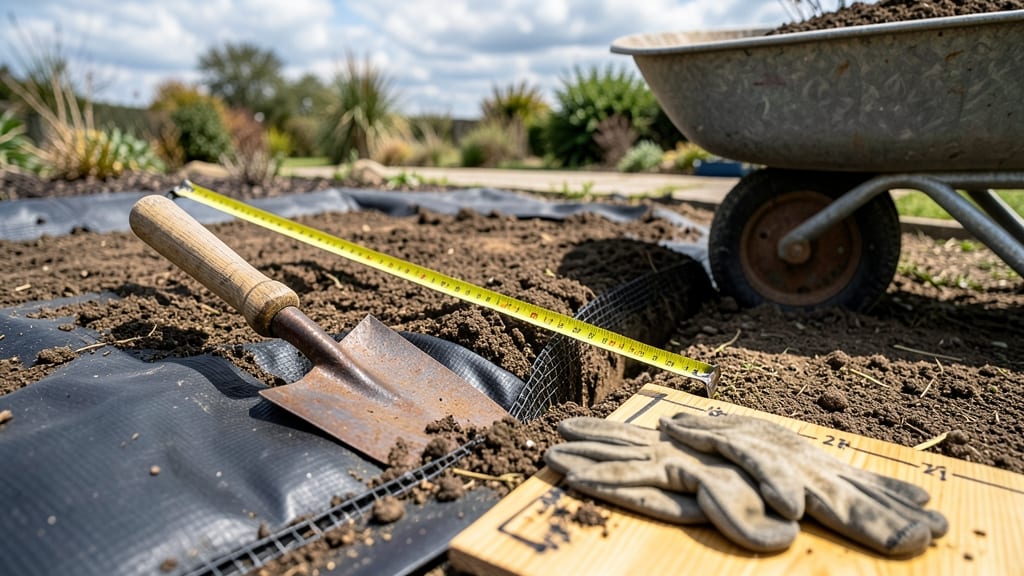
To determine how much soil for a garden bed, multiply the length × width × depth (in feet) to find cubic feet. For instance, a 4×8 ft bed filled 6 inches deep requires 16 cubic feet (4×8×0.5). Always buy 10-20% extra to account for settling and uneven edges.
Understanding how much soil you need starts with the basic formula—length × width × depth—but the real magic happens when you convert inches to feet for accuracy. 🌱 A 6-inch depth becomes 0.5 feet, which is why that 4×8 ft bed only needs 16 cubic feet, not the 32 you might guess at first glance.
I've found that most gardeners overestimate by about 30% when they forget to convert, leading to wasted soil or extra trips to the store.
Depth matters more than you'd think for root growth and moisture retention. For most vegetables, 6-12 inches is ideal, but deeper beds (18+ inches) are better for root crops like carrots or potatoes.
The type of soil also affects volume—lighter compost blends take up more space than dense topsoil, so check your mix's weight per cubic foot before calculating. Pro tip: Use a tape measure and mark your depth in feet to avoid guesswork.
💡 In This Article
- Garden Bed Soil Volume Formula Explained
- Choosing the Right Soil Type and Quantity for Your Garden
Garden bed soil volume formula explained
At its core, the soil volume formula—length × width × depth—works because garden beds are three-dimensional spaces.
Think of it like filling a box: if your bed measures 4 feet long, 3 feet wide, and you want 10 inches of soil, you first convert that depth to feet (10 ÷ 12 = 0.83 feet). Multiply 4 × 3 × 0.83 to get 9.96 cubic feet.
Round up to 10 cubic feet to account for uneven edges and settling. This method ensures you buy just enough soil without overcommitting to heavy bags you won't use.
The depth conversion is where many gardeners trip up. A common mistake is treating 6 inches as 0.6 feet (which is correct), but forgetting that 12 inches equals 1 foot.
For example, a 5×10 ft bed with 12 inches of soil needs 5 × 10 × 1 = 50 cubic feet—not 100 cubic feet if you mistakenly use 12 inches as 1.2 feet. Always double-check your conversions, especially when working with partial feet like 8 inches (which is 0.67 feet).
Depth isn't just about volume—it directly impacts plant health. Roots need space to grow downward for stability and upward for nutrient absorption. A 6-inch depth supports shallow-rooted plants like lettuce or herbs, while deeper beds (12+ inches) are essential for carrots or tomatoes.
The extra volume also improves moisture retention, reducing how often you need to water. For raised beds, aim for at least 12 inches of soil mix to accommodate root crops and prevent overheating in summer.
Soil type affects how much you'll actually need. Topsoil is denser and settles less than compost, meaning you might need 5-10% less volume of topsoil compared to a fluffy compost blend.
For example, a 3×6 ft bed with 8 inches of compost might require 14.4 cubic feet, but if you use topsoil, you could get away with 13 cubic feet due to its tighter packing.
Always check the product label for "cubic feet per bag" to avoid surprises—some bags advertise "yield" after settling, which can be misleading.
Here’s a pro tip: Use a simple spreadsheet or calculator to avoid mental math. Input your bed dimensions in feet, then multiply by depth (converted to feet). For example, a 6×12 ft bed with 10 inches of soil (0.83 feet) needs 6 × 12 × 0.83 = 60 cubic feet.
Add 15% for waste (9 cubic feet), and you’ll need 69 cubic feet total. This method saves time and reduces frustration when comparing bag sizes at the garden center.
Visualizing the math helps too. Imagine stacking 12-inch cubes of soil—each cube represents 1 cubic foot. A 4×8 ft bed with 6 inches of soil is like stacking 16 of these cubes side by side.
This mental image makes it easier to grasp why depth matters and why converting inches to feet is non-negotiable. 🌱
For quick reference, here are common bed sizes and their soil needs (assuming 6-inch depth):
- 4×8 ft bed: 16 cubic feet
- 3×6 ft bed: 9 cubic feet
- 5×10 ft bed: 25 cubic feet
- 8×12 ft bed: 48 cubic feet