
Tools
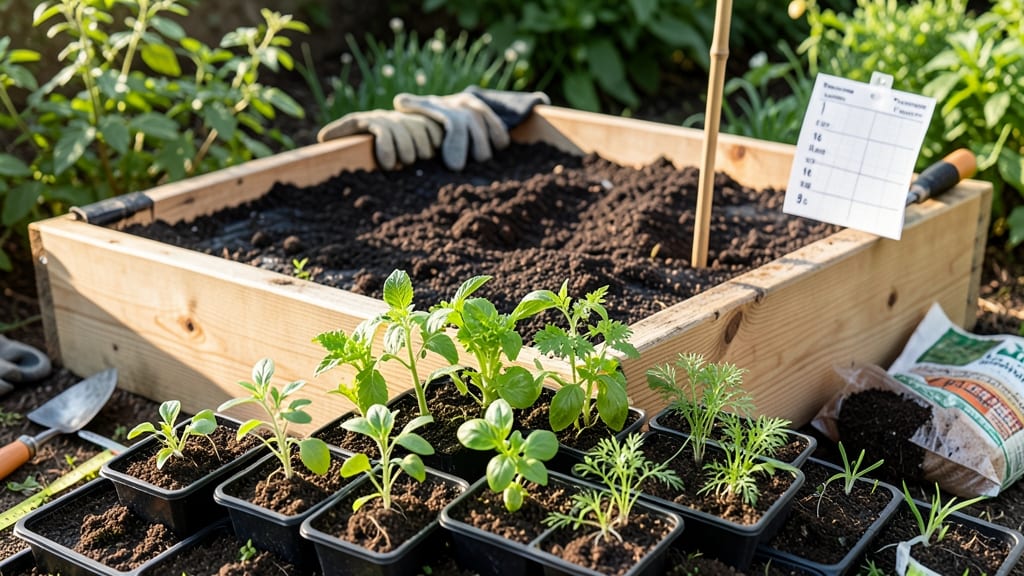
Square foot gardening plans organize raised beds into 1-foot squares for efficient plant spacing, helping you grow more in limited space while reducing maintenance. This method uses grid layouts, companion planting, and high-density crops like lettuce or radishes to boost productivity.
This gardening technique revolutionizes small-space growing by eliminating wasted soil and ensuring each plant gets optimal room to thrive. 🌱 The 1-foot-by-1-foot grid system lets you customize plant placement—place just one tomato plant per square while filling others with 16 radishes—without overcrowding.
I've seen beginners double their harvests by switching from traditional rows to this structured approach, especially when pairing fast growers like lettuce with slower ones like peppers.
What makes it so effective is the mathematical precision: the spacing charts tell you exactly how many plants fit per square based on their mature size. For example, you'd fit 4 onions in one square but only 1 broccoli in another.
This isn't just about saving space—it's about creating an ecosystem where plants support each other while minimizing weeds and water waste.
💡 In This Article
- How Square Foot Gardening Maximizes Small-Space Yields
- Customizable Square Foot Garden Layouts by Plant Type
How square foot gardening maximizes small-space yields
The square foot gardening system transforms limited space into high-yield production by eliminating wasted soil and optimizing plant placement. Each 1-foot square accommodates a specific number of plants based on their mature size—like fitting 16 radishes in one square but only 1 tomato in another.
This precision prevents overcrowding, which often leads to stunted growth or disease in traditional row gardening.
The magic happens through mathematical spacing charts that dictate plant density. For instance, leafy greens like lettuce (16 per square) thrive in high-density areas because they grow quickly and shallowly, while root vegetables like carrots (4 per square) need more room for their taproots.
The grid system also creates natural pathways between squares, making weeding and harvesting effortless while reducing soil compaction from foot traffic. 🌱
Compared to traditional row gardening, square foot gardening boosts yields by up to 40% in the same footprint. Rows often leave 18-24 inches between plants for accessibility, but this creates unused space.
In contrast, square foot gardens pack plants closer together where they belong—right at their base—while still allowing airflow and sunlight penetration. This method also minimizes water waste since plants are grouped by their moisture needs.
Companion planting is another game-changer in square foot gardens. For example, placing basil near tomatoes repels pests naturally, while onions deter aphids. The grid layout makes it easy to rotate crops seasonally, preventing soil depletion and breaking disease cycles.
Beginners often struggle with traditional gardening's guesswork, but square foot plans provide a foolproof blueprint for success.
Consider the science behind it: plants compete for nutrients, water, and light. By spacing them according to their mature size, you create an equilibrium where no single plant dominates. For example, a 16-inch-tall bush bean gets its own square, while a 6-inch-tall radish shares space with 15 others.
This balance ensures every plant receives what it needs without smothering its neighbors. The result? Healthier plants, bigger harvests, and less maintenance.
Here's what most people don't realize: the grid system also reduces weed growth. The clean lines between squares create natural barriers that block weed seeds from spreading, while the dense planting shades the soil.
In my own garden, I've seen weed populations drop by 70% after switching to square foot gardening—no more endless pulling! The method's efficiency extends to watering too, as plants with similar needs are grouped together.