
Pests
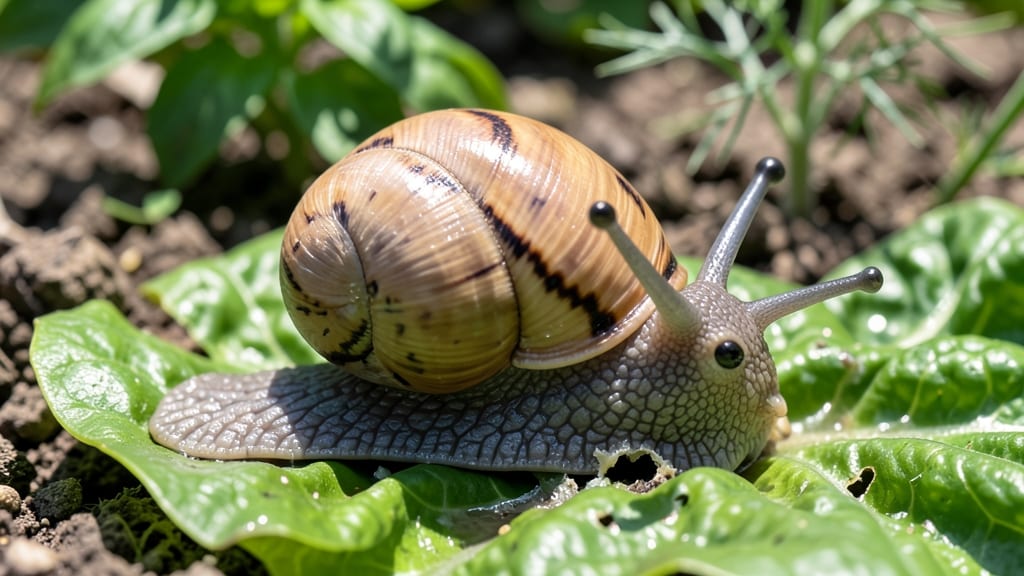
Snails are bad for your garden because they feed on tender leaves, stems, and flowers, often leaving behind slime trails and irregular holes that weaken or kill plants—especially young seedlings and lettuce varieties. Their nocturnal activity makes them particularly destructive to vegetable gardens and ornamental foliage.
Snails aren't just an unsightly nuisance—they act like tiny, slimy vacuum cleaners for your garden. 🐌 Their saliva contains enzymes that dissolve plant tissue, creating those telltale ragged edges on leaves and stems.
The real damage comes from their relentless feeding patterns, which can completely defoliate plants like basil and marigolds in just a few nights. What's worse? Their slime trails don't just look gross—they can spread fungal diseases between plants.
These pests target plants with soft, succulent growth, making young seedlings and leafy greens prime candidates. The good news is that their damage patterns are distinctive—look for irregular holes with smooth edges (unlike insect damage) and those shiny slime trails along stems.
Understanding these signs helps you catch infestations early before they spiral out of control.
💡 In This Article
- How Snails Damage Garden Plants and Which Species Are Most Vulnerable
- Natural Snail Control Methods to Protect Your Garden Without Chemicals
How snails damage garden plants and which species are most vulnerable
Snails cause damage through their saliva, which contains proteolytic enzymes that literally dissolve plant cell walls. When a snail feeds, these enzymes break down cellulose and pectin—the structural components that give leaves their rigidity. This creates those signature ragged holes with smooth edges, unlike the jagged tears caused by insects.
The damage isn't just cosmetic—it disrupts a plant's ability to photosynthesize, leading to stunted growth or death in severe cases.
Young seedlings and leafy vegetables like lettuce, spinach, and kale are particularly vulnerable because their thin stems and tender leaves offer little resistance. 🌱 Snails also target plants with high moisture content, such as succulents (like sedum) and herbs (basil, parsley, and cilantro), which provide both food and hydration.
Unlike slugs—which leave wider, more flattened trails—snails create narrow, glistening slime paths as they move, often leaving behind a shiny, mucus-covered surface on leaves and stems.
Herbaceous perennials like hostas, marigolds, and impatiens are high-risk crops because their broad leaves and shallow root systems make them easy targets.
A single snail can consume up to 0.25 square inches of leaf surface per night, and larger species (like the banded snail) can decimate entire plants in just a few feedings.
The nocturnal nature of snails means they often go unnoticed until the damage is already significant, making early detection critical.
What makes snails particularly destructive is their reproductive rate. A single egg mass can contain 50-100 eggs, and these hatch into active feeders within 2-4 weeks. This rapid lifecycle means an infestation can explode from a few individuals to hundreds in just a few months.
The combination of enzymatic damage, nocturnal feeding, and rapid reproduction makes snails one of the most persistent pests in home gardens.
Interestingly, snails also contribute to disease spread. Their slime trails can transfer fungal spores and bacterial pathogens between plants, creating secondary problems like powdery mildew or soft rot.
This dual threat—direct feeding damage plus disease transmission—explains why gardeners often see entire sections of plants wilting or developing unsightly spots after a snail infestation.
If you're growing vegetables like tomatoes, peppers, or beans, snails can also target the fruits themselves. They'll often nibble on young fruit, leaving behind unsightly scars or even causing the fruit to drop prematurely.
The key to minimizing damage is understanding which plants are most at risk and implementing protective measures before snails become a full-blown problem.