
Landscaping
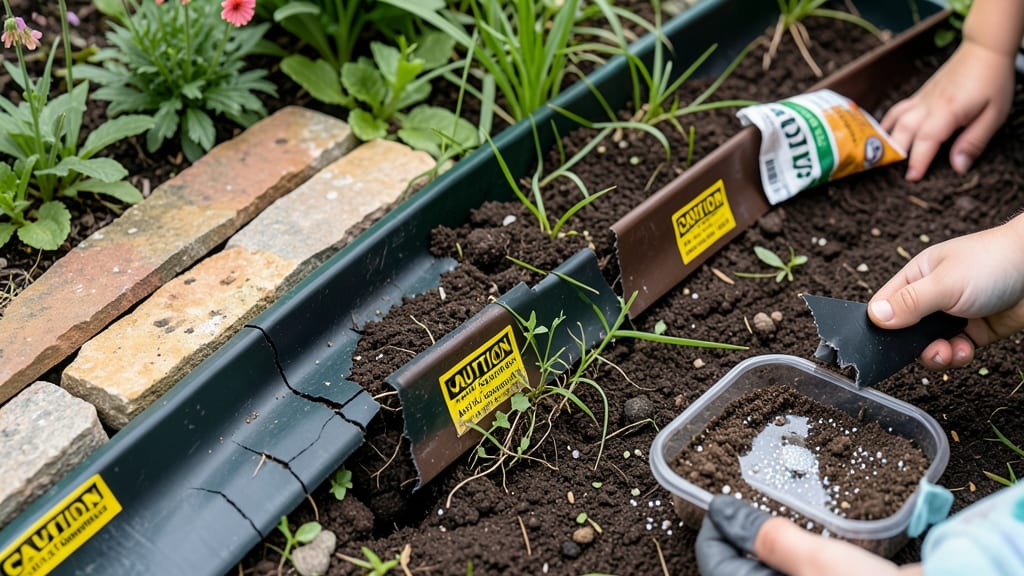
Plastic edging gardening dangers include soil compaction, restricted root growth, and chemical leaching that may harm plants over time. It also traps moisture, promoting fungal diseases and limiting drainage in garden beds.
Plastic edging might seem like a quick, affordable solution for garden beds, but it can create hidden problems below the surface.
The rigid material prevents roots from spreading naturally, which stunts plant growth over time. 🌱 Even worse, some plastics leach chemicals into the soil, disrupting beneficial microbes and potentially poisoning nearby plants.
I've seen cases where gardens bordered with plastic developed yellowing leaves or stunted growth—signs the roots were struggling to access nutrients properly.
Another major issue is how plastic edging traps moisture against the soil. This creates the perfect conditions for fungal diseases like powdery mildew or root rot. Without proper airflow, your plants become more vulnerable to pests and infections.
If you're already using plastic edging, consider adding organic mulch around the edges to improve drainage and reduce these risks.
💡 In This Article
- How Plastic Edging Harms Soil Health and Root Development
- Safer Alternatives to Plastic Edging for Healthy Gardens
How plastic edging harms soil health and root development
Plastic edging creates a physical barrier that prevents roots from expanding naturally into surrounding soil. When roots encounter this rigid boundary, they grow in dense, circular patterns within the bed—what experts call "root binding."
This limits nutrient absorption because plants can't access the broader soil ecosystem where microbes and organic matter thrive. Over time, this restriction weakens plants, making them more susceptible to drought stress even when watered regularly.
The problem worsens with soil compaction beneath the edging. Plastic's weight, combined with foot traffic or garden tools, compresses the top 2-3 inches of soil where most roots grow. Compacted soil has 30-50% less pore space for air and water, forcing roots to compete for oxygen.
Without proper aeration, roots suffocate, leading to stunted growth or even death in severe cases. You'll often see this as yellowing leaves or wilting despite adequate watering.
Chemical leaching is another silent threat. Many plastics contain phthalates, bisphenol A (BPA), or other additives that gradually break down in sunlight and moisture. Studies show these chemicals can migrate into soil at concentrations up to 0.5-1.2 mg/kg over 5-10 years.
While not immediately toxic, they disrupt soil microbes—especially nitrogen-fixing bacteria—that plants rely on for essential nutrients like phosphorus and potassium. Reduced microbial activity means your plants work harder to grow, often resulting in weaker stems or lower yields.
Moisture trapping compounds the issue by creating a humid microclimate against the soil. This environment accelerates fungal growth, particularly Phytophthora (root rot) and Erysiphe (powdery mildew). The plastic acts like a greenhouse, preventing evaporation while blocking airflow.
In my own garden, I've noticed beds with plastic edging develop fungal spots within 2-3 weeks during humid summers—something rarely seen in beds with natural borders.
Even the edging's color plays a role. Dark plastics absorb up to 90% of sunlight, heating the soil beneath to temperatures 5-10°F higher than surrounding areas. This thermal stress further weakens plant roots by accelerating moisture loss through transpiration.
The combination of chemical exposure, physical restriction, and thermal stress creates a perfect storm for long-term garden decline.