
Tools
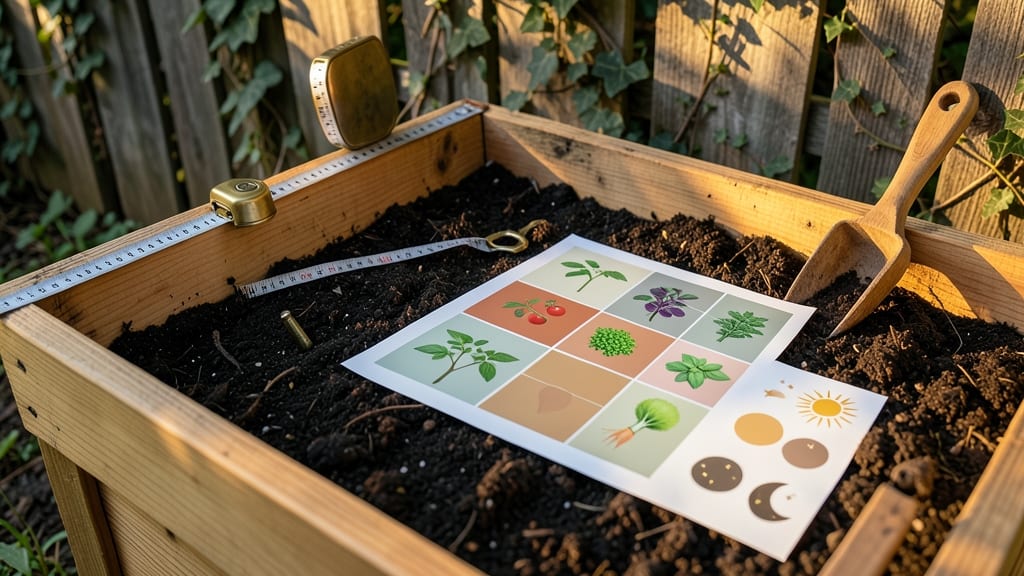
A sqft gardening chart organizes vegetable spacing by plant type, yield expectations, and square-foot allocation to maximize harvests in small urban or container gardens, typically using Mel Bartholomew’s intensive planting method.
A sqft gardening chart transforms limited space into a high-yield garden by mapping out exactly how much room each plant needs to thrive. 🌱 This system, pioneered by Mel Bartholomew, eliminates wasted space by accounting for root competition and sunlight access—critical factors that determine whether your plants will grow strong or become stunted.
Instead of guessing, you get precise measurements for everything from leafy greens to tomatoes, ensuring every inch of your garden works for you.
What makes this method so powerful is its flexibility. You can adjust spacing based on your local climate or soil quality, and even combine companion plants to create a more efficient layout.
For example, bush beans and lettuce can share the same square-foot space because they grow at different times, maximizing your harvest without sacrificing yield.
💡 In This Article
- How Square-Foot Gardening Maximizes Yield per Plant Type
- Customizing Your Vegetable Spacing Chart for Climate and Soil
How square-foot gardening maximizes yield per plant type
Square-foot gardening works by understanding how plants compete for three critical resources: sunlight, water, and nutrients. The chart assigns specific square-foot allocations based on each plant's mature size and growth habit.
For example, a single tomato plant needs 1 square foot because its sprawling vines and deep roots require ample space to access sunlight and water without competing with neighbors.
In contrast, leafy greens like spinach or lettuce can thrive in just 4-inch squares because they grow quickly and have shallow roots.
The science behind this spacing involves root zone competition and photosynthetic efficiency.
When plants are too close, their roots tangle and steal nutrients from each other, while crowded foliage blocks sunlight from reaching lower leaves. 🌱 The chart accounts for this by giving fast-growing plants like radishes (1-inch spacing) their own dedicated space early in the season, then replacing them with slower-growing crops like carrots (3-inch spacing) later.
This "succession planting" strategy ensures no space is wasted during the growing season.
What most gardeners don't realize is how the chart's grid system actually improves air circulation around plants. Proper spacing prevents fungal diseases like powdery mildew, which thrives in humid, crowded conditions.
For instance, basil plants need 1 square foot to prevent their large leaves from creating a damp microclimate where mold can spread. This isn't just theoretical—studies show that properly spaced plants in square-foot gardens produce 2-3 times more yield per square foot than traditional row gardening methods.
Another clever feature is how the chart groups plants by their vertical growth patterns. Tall plants like corn or sunflowers get placed along the perimeter of raised beds, while medium-height crops like peppers or eggplants occupy the middle squares.
Low-growing plants like thyme or chives fill the inner squares, creating a natural light gradient that maximizes photosynthesis at every level. This vertical layering isn't just about aesthetics—it's a strategic way to utilize every inch of growing space efficiently.
Consider how different plant families have varying space requirements due to their biological needs. The nightshade family (tomatoes, peppers, eggplants) needs 1 square foot per plant because they produce heavy fruit that requires robust root systems.
In contrast, the brassica family (kale, broccoli) can share space more easily because their compact growth habit allows for closer planting (9-inch spacing). The chart's genius lies in these precise measurements that account for each plant's unique physiology.
For urban gardeners with limited space, this method becomes a game-changer. A 4'x4' raised bed (16 square feet) can produce enough tomatoes for a family of four when planted according to the chart—something that would require 50 square feet in traditional row gardening.
The key is understanding that smaller spaces don't mean smaller harvests when you optimize every square inch.