
Planting
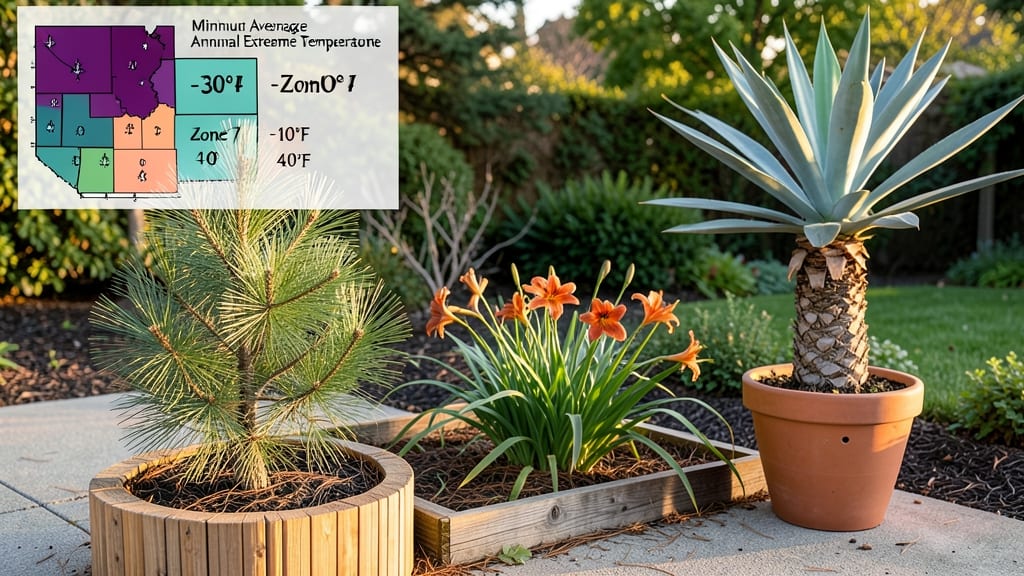
Understanding plant gardening zones helps you choose the right plants for your area by matching them to your region's coldest winter temperatures. The USDA Plant Hardiness Zone Map divides the U.S. into 13 zones (1-13), with sub-zones (a/b) for more precise planting guidance, ensuring you pick species that survive local frost patterns and microclimates like urban heat islands or sheltered valleys.
These zones are based on the average annual minimum temperature, which is why Zone 10 plants (like citrus) thrive in Southern California but freeze in Zone 6 areas like Chicago. 🌱 The map updates periodically to reflect climate shifts, so even if you've gardened for years, checking your zone is always a good idea.
For example, a Zone 5a gardener can grow hardy perennials like coneflowers, while a Zone 8b gardener might opt for subtropical plants like bougainvillea.
What many gardeners overlook is how microclimates can shift your effective zone by up to 5 degrees. A south-facing wall might create a Zone 7 microclimate in a Zone 5 yard, while a low-lying area could be colder.
Tools like frost clocks or soil thermometers help refine your planting decisions beyond the standard zone map.
💡 In This Article
- How USDA Plant Hardiness Zones Work
- Adjusting for Microclimates: Urban Heat, Sheltered Spots, and More
How USDA plant hardiness zones work
The USDA Plant Hardiness Zone Map is built on 30-year averages of the coldest winter temperatures in a region, measured in 10-degree Fahrenheit increments. For example, Zone 5 experiences average minimum temperatures between -20°F and -10°F, while Zone 9 ranges from 20°F to 30°F.
These thresholds determine which plants can survive winter dormancy—like how a Zone 3 maple tree (cold-hardy to -40°F) would freeze in Zone 7 winters (0°F to 10°F). 🌡️
Each zone is further divided into a and b sub-zones, representing a 5-degree difference. For instance, Zone 5a (-20°F to -15°F) is colder than Zone 5b (-15°F to -10°F).
This precision matters because some plants, like Russian sage, thrive in Zone 4 but struggle in Zone 3, while others, like bougainvillea, need Zone 9+ to survive.
The map also accounts for last frost dates, which vary by 2-4 weeks across zones—critical for warm-season crops like tomatoes.
Climate change has already shifted zones northward by 1-2 zones in some areas since the 1990s, making older maps outdated. For example, Zone 6 plants now grow reliably in parts of Zone 5 where winters are milder.
The USDA updates the map every 10 years using data from 8,000+ weather stations, but gardeners should cross-check with local records—some regions (like Denver) have 10°F colder winters than nearby Boulder due to elevation.
Here’s how zones translate to real-world planting:
- Zones 1-3: Cold-hardy perennials like crabapple trees or wintergreen (survive -40°F)
- Zones 4-6: Classic garden staples like peonies or hydrangeas (thrive at -10°F to 0°F)
- Zones 7-9: Subtropical plants like olive trees or aloe (need 10°F+)
- Zones 10-13: Tropical species like mangoes or citrus (require 30°F+)
What’s often overlooked is how heat tolerance matters just as much as cold hardiness. A Zone 7 plant might wilt in 100°F+ summers unless it’s adapted to high heat—like desert willows vs. rhizomes. The USDA map focuses on winter survival, so summer heat zones (like the Heat Zone Map) should also guide plant choices in hot climates. 🌵
For precise planning, use the USDA Interactive Zone Finder to pinpoint your exact zone (including sub-zones) based on your ZIP code. Entering 90210 (Beverly Hills) might show Zone 10a, while 90210’s neighbor, 90045 (Hollywood), could be Zone 11a—a 10°F difference that affects which citrus varieties thrive.
Always verify with local nurseries, as microclimates can override the map.