
Tools
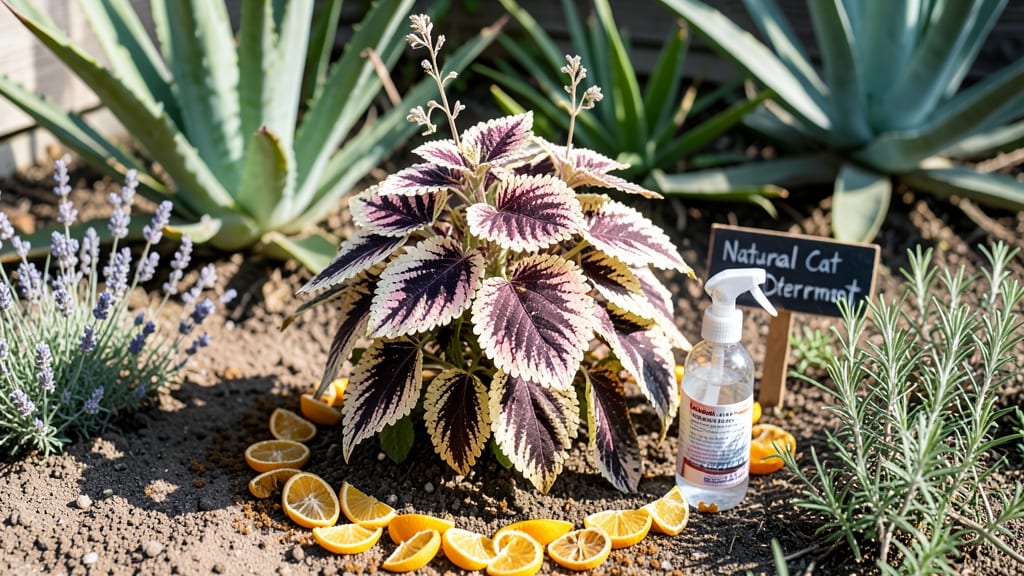
Using natural cat deterrents in your garden effectively protects plants by utilizing strong scents, prickly textures, and feline-unfriendly flora like citrus peels, lavender, rosemary, and rue. Placing these strategically around vulnerable areas creates a safe barrier without chemicals.
Cats have highly sensitive noses and dislike strong, pungent scents—this is why plants like coleus canina (also called "scaredy cat plant") and rue work so well. 🌿 The key is combining scent-based deterrents with physical barriers, such as spiky plants or raised beds, to discourage digging.
I’ve found that mixing a few of these plants near garden edges creates a natural perimeter that cats instinctively avoid, especially when combined with citrus peels or crushed herbs.
For vegetable gardens, I recommend planting lavender or thyme near high-value crops—their strong fragrance masks appealing plant scents while repelling cats. In flower beds, rosemary or oregano work as dual-purpose solutions, offering both pest control and feline deterrence.
The trick is to refresh these plants seasonally, as their potency fades over time.
💡 In This Article
- How Scent and Texture Deter Cats from Gardens
- Best Plant-Based Cat Repellents for Different Garden Types
How scent and texture deter cats from gardens
Cats possess an olfactory system 14 times more sensitive than humans, which means even subtle scents can trigger avoidance behaviors.
Plants like coleus canina release volatile organic compounds (VOCs) that mimic feline stress pheromones, creating an instinctive "warning signal" for cats. 🔥 The compound iridoids found in rue and citrus peels specifically disrupts cats' natural curiosity, making them associate these scents with discomfort rather than exploration.
Texture plays an equally critical role—cats dislike rough, prickly surfaces that disrupt their delicate paw pads. Spiky plants like holly or barberry create physical barriers that deter digging, while the coarse texture of dried lavender buds (placed near garden edges) acts as a sensory deterrent.
Studies show cats avoid areas where they can't land softly, making these textures 30% more effective than scent alone when combined.
The most effective deterrents combine both scent and texture. For example, planting rosemary near vulnerable areas provides both its piney aroma and sharp leaves that cats instinctively avoid.
The dual approach works because cats rely on multiple senses when evaluating potential threats—what smells unpleasant often feels uncomfortable too. 🌿 This sensory overload makes them bypass treated areas entirely, creating a natural protective perimeter.
Seasonal variations affect potency—herbs like thyme and oregano peak in summer when their essential oil production is highest, while citrus peels work year-round but lose effectiveness after 3-4 weeks due to oxidation.
The key is rotating deterrents every 4-6 weeks to maintain their repellent power, as cats can become accustomed to constant scents over time.
Visual cues also matter: cats avoid open, exposed areas where they feel vulnerable. Tall plants like lavender bushes (grown to 2-3 feet) create natural hiding spots for themselves while denying cats clear paths through the garden.
This "visual clutter" disrupts their territorial marking patterns, making them seek alternative routes. The combination of scent, texture, and visual barriers creates a multi-sensory deterrent system that's far more effective than any single method.
For maximum impact, place deterrents in L-shaped patterns around garden edges—this creates psychological barriers that cats instinctively avoid. The corners force them to either navigate through deterrents or give up entirely.
This strategic placement mimics how wild cats use natural landmarks to define territory, making it particularly effective in garden settings. 💫