
Fertilization
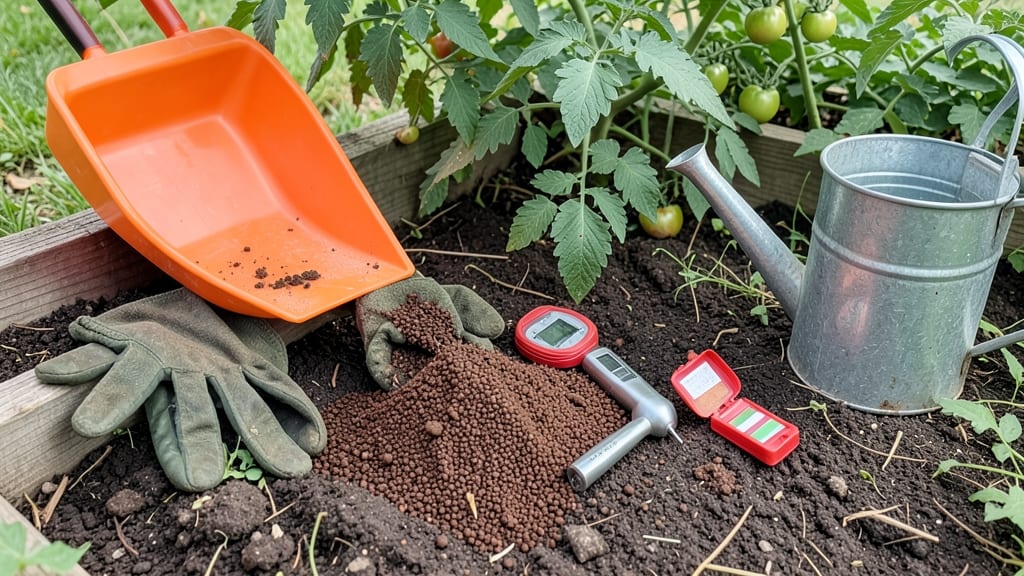
Fertilizing your veg garden at the right times is the secret to bigger harvests and healthier plants 🥬 — and missing these windows can leave your soil starved or your plants burned.
Most gardeners either overdo it too early or wait until the plants are already struggling. The truth? Your vegetable garden needs feeding at three key moments: before planting, during rapid growth, and when flowers turn to fruit.
Get this timing wrong, and you’ll end up with stunted greens or bitter tomatoes.
In this guide, I’ll walk you through the exact seasonal schedule for fertilizing, from pre-planting soil prep to mid-season boosts, plus how to adjust for leafy greens versus fruiting crops. No more guessing — just science-backed timing for a thriving garden.
You’ll also learn how to spot nutrient deficiencies early, when to skip feeding entirely, and the best organic vs. synthetic options for your zone. Let’s get those roots growing strong!

Pre-planting fertilization: soil preparation for strong vegetable starts
Getting your vegetable garden off to a strong start begins long before you drop a single seed in the soil. Pre-planting fertilization is the foundation for healthy seedlings and robust plants.
I’ve learned that skipping this step often leads to stunted growth, poor yields, and plants that struggle to fight off pests or diseases. The key is understanding when to fertilize and what nutrients your soil truly needs—because not all vegetables have the same requirements.
Most gardeners make the mistake of waiting until planting day to fertilize, but the best time to prepare your soil is actually 4-6 weeks before sowing seeds or transplanting seedlings. This gives organic amendments like compost and well-rotted manure enough time to break down and enrich the soil.
If you’re using synthetic fertilizers, apply them closer to planting—typically 1-2 weeks before—to avoid burning tender roots.
Before you even think about fertilizing, you need to test your soil’s pH and nutrient levels. A simple soil test kit (available at garden centers) will tell you if your soil is too acidic, alkaline, or lacking essential nutrients like nitrogen, phosphorus, or potassium.
For most vegetables, the ideal pH range is 6.0 to 7.0. If your soil is outside this range, you’ll need to amend it with lime to raise pH or sulfur to lower it before adding fertilizer.
Now, let’s talk about the nutrient ratios that matter most for seedling success. Vegetables fall into two main categories: leafy greens (like lettuce and spinach) and root or fruiting crops (like tomatoes and carrots).
Leafy greens benefit from a higher nitrogen (N) ratio, such as a 10-10-10 or 5-10-10 fertilizer, because nitrogen promotes leafy growth. In contrast, fruiting crops need more phosphorus (P) and potassium (K) for root development and fruit production, so a 5-10-10 or 3-4-6 ratio works better.
Here’s a quick breakdown of what to prioritize based on your crop type:
| Crop Type | Best Fertilizer Ratio | When to Apply | Key Nutrient Focus |
|---|---|---|---|
| Leafy Greens (Lettuce, Spinach, Kale) | 10-10-10 or 5-10-10 | 4-6 weeks before planting | Nitrogen (N) for foliage |
| Root Vegetables (Carrots, Beets, Radishes) | 5-10-10 or 3-4-6 | 2-3 weeks before planting | Phosphorus (P) for roots |
| Fruiting Crops (Tomatoes, Peppers, Cucumbers) | 5-10-10 or 3-4-6 | 2-3 weeks before planting | Potassium (K) for fruit |
| Cool-Season Crops (Peas, Broccoli, Cabbage) | 5-10-10 or 10-20-20 | 6-8 weeks before last frost | Balanced N-P-K |
| Warm-Season Crops (Tomatoes, Peppers, Eggplants) | 5-10-10 or 3-4-6 | 2 weeks before last frost | Phosphorus (P) for roots |
For organic gardeners, compost and well-rotted manure are my go-to amendments because they improve soil structure, retain moisture, and provide a slow-release of nutrients. I like to mix in 2-3 inches of compost into the top 6-12 inches of soil before planting.
If your soil is particularly poor, you can also add bone meal (for phosphorus) or kelp meal (for potassium) to give seedlings a nutrient boost right from the start.
Seasonal timing is another critical factor. Cool-season crops, like peas and broccoli, should be fertilized 6-8 weeks before the last frost date to ensure the soil is ready when they’re planted in early spring.
Meanwhile, warm-season crops, such as tomatoes and peppers, can wait until 2 weeks before the last frost because they won’t tolerate cold soil. Always check your local frost dates to plan accordingly!
One mistake I see gardeners make is over-fertilizing before planting. Too much nitrogen can lead to excessive leafy growth at the expense of roots, while too much phosphorus or potassium can cause nutrient imbalances that stunt growth.
Stick to the recommended ratios and apply fertilizers sparingly. If you’re unsure, start with a light application and monitor your plants’ response.
Finally, don
Mid-growth fertilization schedule: how to feed plants at each growth Stage
Once your vegetable plants have sprouted and are actively growing, their nutrient needs shift dramatically. This is where many gardeners make mistakes—either over-fertilizing too early or missing critical feeding windows.
Understanding stage-specific fertilization ensures your plants get the right nutrients at the right time, whether they're leafy greens or fruiting crops.
Leafy greens like lettuce and spinach thrive on high-nitrogen fertilizers during their rapid leaf production phase, while fruiting plants such as tomatoes and peppers need a balanced approach with more phosphorus and potassium as they flower and set fruit. Recognizing these differences prevents wasted nutrients and maximizes your harvest.
-
Seedling Stage (2-4 weeks after planting)
Use a low-nitrogen fertilizer (5-5-5) to avoid burning tender roots. Focus on water-soluble fertilizers for quick absorption.
-
Vegetative Growth (4-6 weeks)
Switch to a balanced fertilizer (10-10-10) for leafy greens or high-nitrogen (20-5-5) for foliage crops. Apply every 3-4 weeks.
-
Flowering Stage (6-8 weeks)
Use a phosphorus-rich fertilizer (5-10-5) to promote blooms. Slow-release granules work well here to avoid nutrient spikes.
-
Fruiting Stage (8+ weeks)
Shift to a potassium-heavy (5-5-10) fertilizer to boost fruit development. Liquid fertilizers are ideal for quick uptake during this phase.
Watch for visual cues like yellowing leaves (nitrogen deficiency) or stunted growth (phosphorus deficiency) to adjust your fertilization schedule. For example, if your tomato plants develop purple stems, they’re craving phosphorus—time for a bone meal application.
For slow-release fertilizers, apply them at planting and again mid-season to provide a steady nutrient supply. Liquid fertilizers, on the other hand, are best for quick fixes, especially during hot weather when plants absorb nutrients faster. Always water deeply after fertilizing to prevent root burn.
Timing matters just as much as the type of fertilizer. Feed your veggies in the early morning when temperatures are cooler, and avoid fertilizing within 24 hours of rain to prevent nutrient runoff. This simple routine ensures your plants get the most out of their meals.
By tailoring your fertilization schedule to each growth stage, you’ll see stronger plants, bigger yields, and fewer nutrient-related problems. It’s all about giving your veggies what they need, when they need it—just like a well-timed garden snack break! 🥬