
Tools
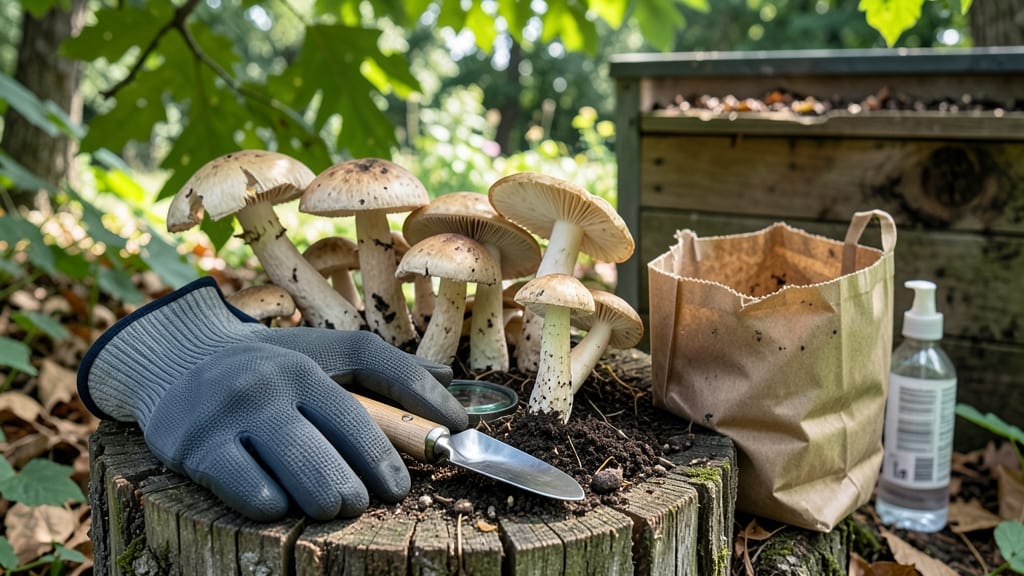
Deciding whether to remove mushrooms from your garden depends on their type: most varieties support soil health by decomposing organic matter and cycling nutrients, but toxic species like death cap must be removed immediately for safety reasons.
Most garden mushrooms play a crucial ecological role by breaking down fallen leaves and plant debris, which enriches your soil naturally. 🌱 These fungi also form symbiotic relationships with plant roots, helping trees and shrubs absorb water and minerals more efficiently.
However, identifying toxic species requires careful observation—look for gills, stem shape, and cap color, or consult a local mycology guidebook before handling any unfamiliar fungi.
If you spot potentially harmful mushrooms, the safest approach is to bag them completely before disposal to prevent spore spread. For non-toxic varieties, consider leaving them in place—they're working to improve your garden's fertility.
If you prefer a cleaner look, try mulching with straw or wood chips to discourage mushroom growth while still supporting beneficial soil organisms.
💡 In This Article
- Ecological Role of Garden Mushrooms
- Safe Removal Methods for Toxic Mushrooms
Ecological role of garden mushrooms
Mushrooms in your garden act like nature's recyclers, breaking down dead plant material through a process called decomposition. Their mycelium—thread-like structures—secretes enzymes that digest cellulose and lignin, the tough components of fallen leaves, wood chips, and other organic debris.
This transformation converts complex materials into simpler nutrients like nitrogen and phosphorus, which plants can absorb. For example, a single square yard of garden soil can contain miles of fungal mycelium, forming an underground network that rivals the size of a highway system.
Their ecological contributions go beyond decomposition. Many mushrooms form mycorrhizal relationships with plant roots, creating a symbiotic partnership where the fungi exchange nutrients for carbohydrates from the plant.
Studies show that mycorrhizal fungi can increase a plant's access to water by up to 40% and improve nutrient uptake, especially in phosphorus-poor soils. This is why you often see mushrooms growing near trees—they're helping those trees thrive while also preparing the soil for new plant growth. 🌿
Not all mushrooms are beneficial, though. Toxic varieties like the death cap (Amanita phalloides) or destroying angel (Amanita bisporigera) can pose serious health risks if ingested. These species produce deadly toxins like amatoxins, which attack the liver and kidneys.
Visually, they often feature a white gills and a bulbous stem with a skirt-like ring, but accurate identification requires expert knowledge or a field guide.
The key difference between helpful and harmful fungi lies in their ecological function—beneficial types focus on decomposition and nutrient cycling, while toxic ones prioritize survival through chemical defenses.
Seasonal patterns also influence mushroom behavior. Most garden fungi appear after heavy rain in late summer or fall when organic matter is plentiful and soil moisture is high. During dry spells, their growth slows dramatically, and they may become dormant until conditions improve.
This natural cycle means that while mushrooms might seem like an eyesore, they're actually performing essential ecosystem services that improve your garden's long-term health. Understanding these patterns helps you decide whether removal is truly necessary or if allowing them to complete their life cycle would be more beneficial.
Consider the texture and appearance of your garden's mushrooms as clues to their purpose. Beneficial species often have soft, spongy caps that break down easily, while toxic varieties tend to have smoother, more durable structures designed to survive longer.
For instance, the common oyster mushroom (Pleurotus ostreatus) has a fan-shaped cap that decomposes leaf litter rapidly, while the death cap maintains a firm, almost waxy appearance that resists decomposition. These physical differences reflect their ecological roles—one is a soil improver, the other a chemical weapon against predators.
If you're still unsure about a mushroom's identity, the safest approach is to avoid touching it. Many toxic species release spores that can cause skin irritation or respiratory issues. Instead, observe from a distance and consult local mycological resources.
Remember that your garden's fungal population is part of a delicate balance—removing all mushrooms could disrupt this equilibrium and potentially harm your plants in the long run. The key is to distinguish between the garden helpers and the harmful intruders. ✨