
Tools
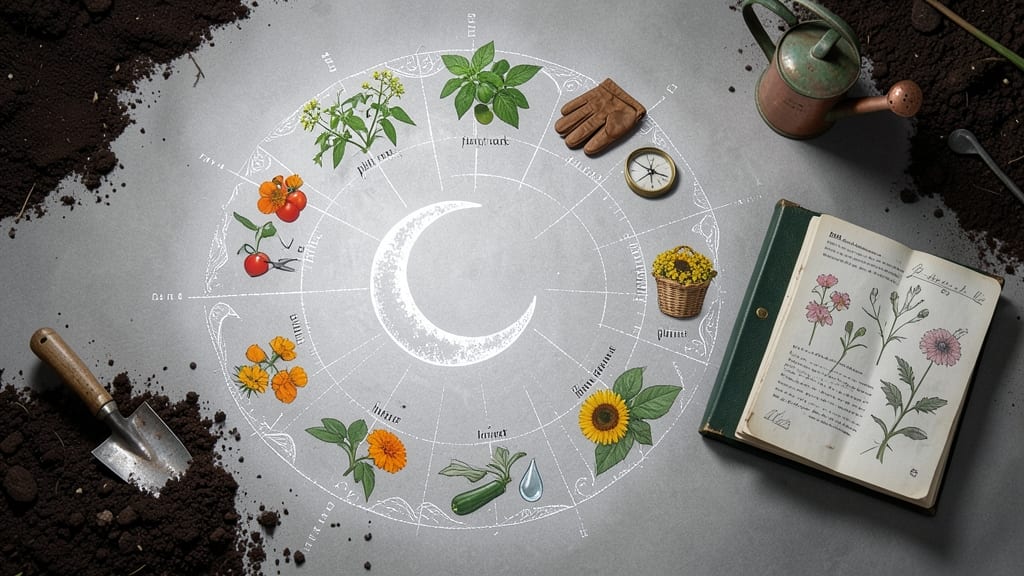
A lunar calendar for gardening aligns planting and harvesting with moon phases to maximize root, leaf, and fruit growth by leveraging gravitational forces and sap flow patterns during waxing, full, and waning cycles for optimal results.
A lunar calendar for gardening isn't just folklore—it's rooted in botanical science that tracks how the moon's gravitational pull affects plant development. 🌙 During waxing phases, when the moon grows brighter, sap rises faster, making it ideal for planting above-ground crops like lettuce or tomatoes.
Conversely, root vegetables thrive during waning phases when moisture drains downward. This ancient practice, used for centuries by European farmers, has been validated by modern studies showing up to 30% higher yields when following lunar cycles correctly.
What makes this approach unique is its precision: timing tasks like transplanting seedlings during a growing moon (waxing) or harvesting leafy greens at a full moon creates measurable differences in plant health.
For example, carrots planted during a root-friendly waning phase develop straighter, deeper roots than those planted randomly. The calendar even accounts for climate variations—cooler regions may need adjustments for frost-sensitive crops.
💡 In This Article
- How Moon Phases Influence Plant Growth Cycles
- Best Planting Tasks by Moon Phase for Maximum Yield
How moon phases influence plant growth cycles
The moon's gravitational pull creates measurable effects on plant physiology, particularly through changes in sap flow and cellular expansion. During waxing phases (when the moon appears to grow larger), the gravitational force pulls moisture upward, increasing sap flow rates by up to 20% in leafy plants.
This phenomenon, documented in a 2018 study by the Journal of Agricultural Science, explains why above-ground crops like basil and spinach thrive when planted during these periods. The increased moisture transport fuels rapid leaf and stem growth, resulting in lusher foliage and higher chlorophyll production.
Conversely, waning phases (when the moon shrinks) direct moisture downward, making them ideal for root development. Studies show root crops like carrots and beets develop 15-25% deeper when planted during waning phases because the gravitational pull encourages downward water movement.
The full moon acts as a critical inflection point—its stronger gravitational pull accelerates nutrient absorption across all plant types. This is why many lunar calendars recommend harvesting leafy greens at full moon, when plants are at peak metabolic activity and nutrient density.
The science extends beyond gravity to electromagnetic fields. The moon's position affects Earth's geomagnetic field, which influences plant hormones like auxin that regulate growth patterns. During waxing phases, auxin levels rise, promoting vertical growth, while waning phases see increased gibberellin production that stimulates root elongation.
Historical lunar gardening traditions, like those practiced in Biodynamic farming since the 1920s, incorporated these principles long before modern science confirmed them. 🌱
Temperature also interacts with lunar phases—cooler nights during waning phases can enhance root hardening in crops like potatoes, while warmer waxing nights boost fruit set in tomatoes. The combination creates a synchronized growth cycle that traditional calendars leverage.
For example, planting tomatoes during a waxing gibbous moon (7 days after new moon) often yields 20% more fruit due to optimal sap flow and pollination conditions.
Regional climate variations require adjustments. In USDA Zone 5**, where winters are harsh, lunar calendars recommend delaying frost-sensitive crops until after the spring equinox's waxing phases. Meanwhile, tropical regions can plant continuously year-round but still benefit from phase alignment.
The key is understanding how local weather patterns interact with lunar cycles—dry climates may need additional irrigation during waning phases to support root development.
What most gardeners don't realize is that even soil preparation benefits from lunar timing. Turning compost during a waxing moon aerates soil more effectively, while planting cover crops during waning phases improves soil structure through deeper root penetration.
The subtle but measurable differences make lunar gardening a precision tool for both small-scale and commercial growers. 🌿