
Shrubs
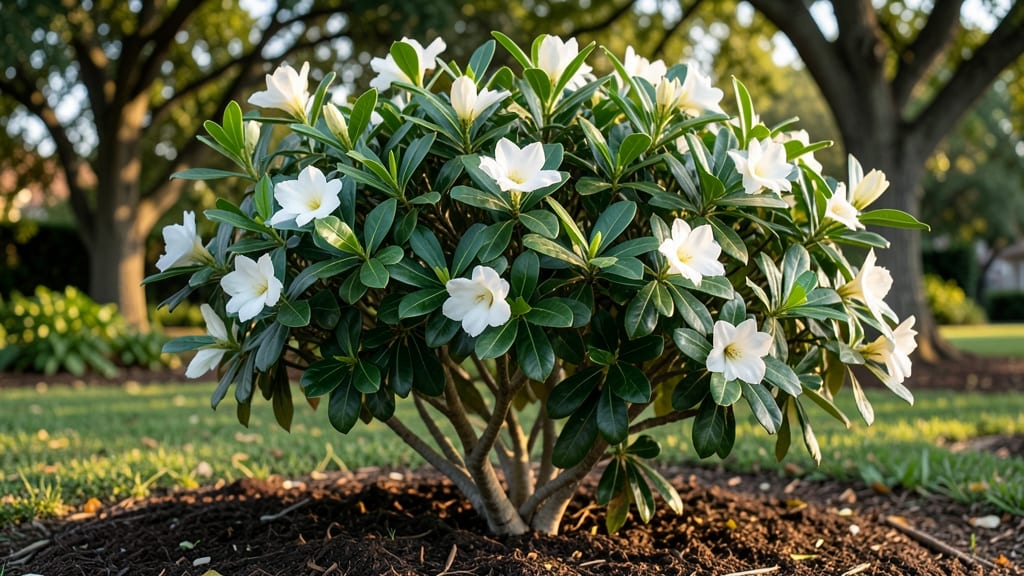
A full-grown gardenia bush 🌸 can reach 6 feet tall, filling your yard with intoxicating fragrance—but only if you know the right care timeline.
Picture this: you’ve waited years for that first sweet, creamy scent, only to find your gardenia blooming weakly or not at all. The secret isn’t just patience—it’s understanding the bloom cycle and the pruning calendar that keeps it thriving.
In this guide, I’ll break down exactly when your mature gardenia will release its signature fragrance, how to recognize peak bloom seasons, and the step-by-step pruning schedule that maximizes blooms year after year.
You’ll also learn the 3 key adjustments most gardeners miss—soil pH, sunlight tweaks, and seasonal watering—that make the difference between a lush, fragrant bush and one that struggles to perform.
When does a full-grown gardenia bush bloom and release fragrance?
A full-grown gardenia bush typically blooms between mid-summer and early fall, with peak fragrance occurring in late afternoon and evening. The exact timing depends on your USDA hardiness zone and whether your plant follows a spring or fall bloom cycle.
Most gardenias prefer warmer climates (Zones 8-10) but can thrive in cooler zones with proper care.
The first blooms usually appear when your gardenia reaches 3-4 years of age, though well-cared-for plants may flower earlier. Young plants (1-2 years old) often focus on foliage growth before producing flowers. Patience is key—accelerating blooms requires precise light, soil, and pruning techniques we’ll cover next.
| Factor | Zone 8-10 (Warm Climates) | Zone 6-7 (Cooler Climates) |
|---|---|---|
| Primary Bloom Season | Late spring to summer | Mid-summer to early fall |
| Peak Fragrance Hours | 4 PM - 8 PM | 5 PM - 9 PM |
| First Blooms Age | 2-3 years | 3-4 years |
| Fragrance Intensity | Strongest in summer | Peaks in fall |
| Pruning for Blooms | After spring blooms | After fall blooms |
In warm climates (Zones 8-10), gardenias often bloom twice yearly—once in late spring and again in summer. The fragrance reaches its peak in the evening, making your garden a sensory delight during summer gatherings.
For cooler zones (Zones 6-7), the single mid-summer to early fall bloom becomes even more precious.
If your gardenia isn’t blooming yet, check these three common causes: insufficient sunlight (less than 4 hours daily), incorrect soil pH (above 6.5), or over-fertilizing with high nitrogen. Gardenias need acidic soil (pH 5.0-6.5) and balanced fertilizer (8-4-8 NPK) to produce flowers instead of just leaves.
To accelerate blooms in young plants, try these two proven tricks: first, move potted gardenias to a sunnier location for 6-8 hours of morning sun. Second, prune lightly in early spring to encourage new growth that will flower later. Avoid heavy pruning—it removes next year’s buds.
Fragrance intensity varies by variety. ‘Kleim’s Hardy’ and ‘Radicans’ are top performers in cooler zones, while ‘Veitchii’ offers the strongest scent in warm climates. Choose your variety based on your zone and scent preferences—some gardeners swear by ‘Fortuniana’ for its large, highly fragrant blooms.
Did you know gardenias release 90% of their fragrance at night? This evolutionary trait attracts night-flying pollinators like moths. To maximize scent, plant your gardenia near a patio or bedroom window—the intoxicating aroma will fill your home as the sun sets.
For container gardenias, blooming may be delayed by 1-2 years compared to in-ground plants due to root restrictions. Upgrade to a 15-gallon pot with drainage holes and use acidic potting mix to encourage faster growth and earlier blooms.
Monitor your gardenia’s buds closely. When they swell and turn pink (about 3-5 days before opening), the fragrance will peak within 24 hours of full bloom. Save a few spent blooms in a vase—they’ll last 5-7 days indoors while maintaining their signature scent.
Gardenia pruning calendar: month-by-month guide for year-round blooms
A full grown gardenia bush thrives with strategic pruning that encourages abundant blooms and maintains its signature fragrance. Unlike many shrubs, gardenias bloom on old wood, meaning last year's growth produces this year's flowers.
Pruning at the wrong time can reduce blooms dramatically—so timing is everything. I'll walk you through a seasonal pruning calendar that keeps your gardenia lush and fragrant year after year.
Before you begin, gather your tools: clean, sharp pruning shears, sterilized pruning saw for thicker branches, rubbing alcohol (to disinfect tools between cuts), and gardening gloves. Sterilizing tools prevents disease spread, which is especially critical for gardenias prone to fungal issues.
Always prune just above a leaf node or bud to encourage new growth in the right direction.
- 📅 January-February: Remove dead or diseased branches immediately after winter dormancy. Look for brown, brittle stems or blackened leaves—these won't recover.
- 🌱 March-April: Lightly shape the bush by trimming overly long branches to maintain an open center. Avoid heavy pruning—this is when buds form for next year's blooms.
- ☀️ May-June: Never prune during active bloom time (late spring). Instead, focus on removing spent flowers to redirect energy to foliage growth.
- 🌸 July-August: After the main flowering season, prune lightly to remove crossing branches or those growing inward. This improves air circulation and reduces fungal risks.
- 🍂 September-October: Heavy pruning is safe now! Trim 1/3 of the oldest growth to encourage new, fragrant blooms for next spring. Look for branches with light pink buds—these are next year's flowers.
- ❄️ November-December: Avoid pruning entirely during winter. Focus on mulching to protect roots and watering lightly if frost is forecasted.
The biggest pruning mistake I see is cutting back gardenias in late summer or fall to "shape them up" for winter. This removes the flower buds that formed during the previous growing season, leaving you with fewer blooms the following year.
If your gardenia looks leggy, prune in September instead—this gives new growth time to harden off before winter.
For potted gardenias, follow the same schedule but prune 10-15% less aggressively since they have limited root space to recover. After pruning, apply a balanced acid fertilizer (like 8-4-8) to support new growth.
Water deeply the day after pruning to help the plant recover from stress. If you notice yellowing leaves after pruning, it’s often a sign of over-pruning or root damage—scale back next time.
Pro tip: Take cuttings from healthy branches during your September pruning to propagate new plants. Dip the cut end in rooting hormone and plant in sphagnum moss for best results. This way, you can expand your gardenia collection without spending a dime!
With this month-by-month calendar, your full grown gardenia bush will reward you with year-round fragrance and lush growth.