
Landscaping
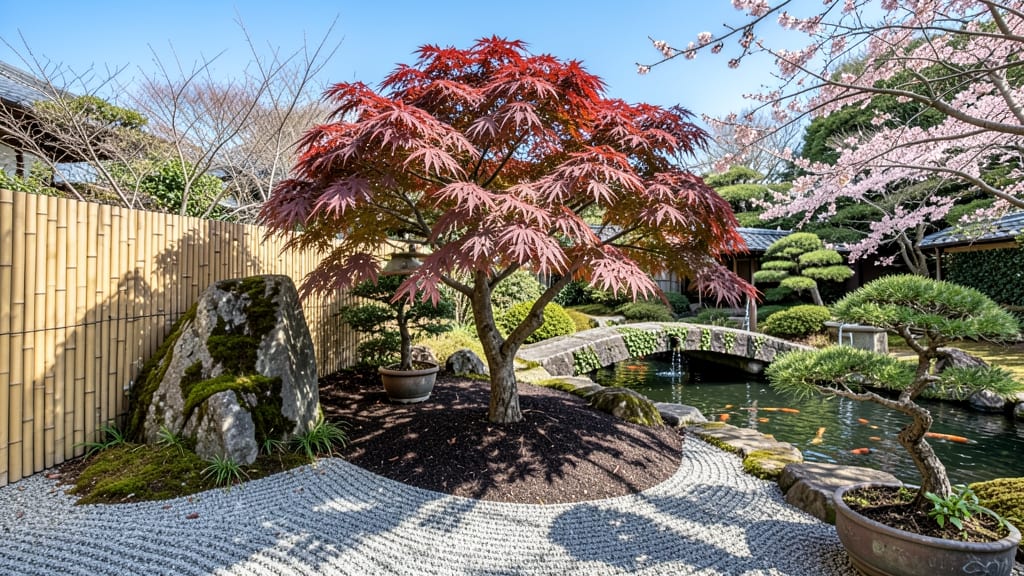
A Japanese garden in LA provides peaceful retreats through thoughtfully crafted Zen spaces, serene koi ponds, and carefully curated greenery, such as the iconic Getty Garden or the historic Japanese Garden at the Huntington Library. These urban sanctuaries harmonize classic Japanese aesthetics with LA’s vibrant landscapes, creating serene spots for meditation and inspiration.
Los Angeles may be famous for its bustling streets, but hidden within its urban sprawl are some of the most breathtaking Japanese gardens in the country. 🌿 These meticulously designed spaces bring the tranquility of Kyoto to the City of Angels, offering a respite from the city's energy.
Beyond their visual beauty, these gardens incorporate traditional elements like gravel pathways, carefully placed rocks, and water features that all serve specific purposes—whether it's symbolizing the flow of time or inviting mindfulness.
The Huntington Library's garden, for instance, dates back to 1917, making it one of the oldest in the U.S., while newer installations like the Getty Garden blend modern landscaping with timeless Japanese techniques.
What makes these gardens particularly fascinating is how they adapt to LA's climate and urban environment. Many feature drought-resistant plants like Japanese maples and bamboo, which thrive in Southern California's dry conditions while maintaining their traditional aesthetic.
The water features, often koi ponds or bamboo fountains, not only add to the serene atmosphere but also serve practical purposes in water conservation. These gardens prove that even in a sprawling city like LA, you can create spaces that feel like a peaceful escape from the everyday hustle.
💡 In This Article
- Key Elements of Authentic Japanese Garden Design
- How to Create a Mini Japanese Garden in Your LA Backyard
Key elements of authentic Japanese garden design
At the heart of every authentic Japanese garden lies the principle of wabi-sabi, a philosophy that embraces imperfection and transience. This concept is embodied in elements like Zen rock gardens, where raked gravel represents water and carefully placed stones symbolize mountains or islands.
In LA's Japanese gardens, you'll often see these rock gardens in compact forms—like the one at the Huntington Library—where meticulously arranged stones create a sense of harmony and balance. The gravel isn't just decorative; its texture and pattern guide visitors through a meditative experience, encouraging slow movement and mindful observation.
Water features play a crucial role in Japanese gardens, both symbolically and practically. Koi ponds, such as those at the Getty Garden, are designed to reflect the sky and surrounding greenery, creating a mirror-like effect that enhances the garden's tranquility.
The choice of koi isn't arbitrary—these fish are revered in Japanese culture for their resilience and longevity, mirroring the garden's own enduring beauty. In LA's dry climate, these ponds often incorporate recirculating systems to conserve water while maintaining their serene ambiance.
The sound of water, whether from a fountain or gently flowing stream, is carefully engineered to mask urban noise, offering a peaceful retreat from the city's hustle.
Moss cultivation is another hallmark of traditional Japanese gardens, prized for its soft texture and ability to thrive in shaded areas.
In LA's gardens, moss is often used to soften the edges of pathways and water features, creating a lush, velvety carpet that invites visitors to walk barefoot—a practice known as tsuru-bashi or "bridge of birds," symbolizing purity.
The Huntington's garden, for example, features carefully cultivated moss beds that require regular maintenance to preserve their delicate appearance. This attention to detail reflects the Japanese concept of miyabi, or elegance, where every element, no matter how small, contributes to the garden's overall harmony.
Plant selection in Japanese gardens is deeply symbolic, with each species chosen for its cultural significance and adaptability to the environment. Japanese maples, with their vibrant foliage, often represent resilience and grace, while pine trees symbolize longevity.
In LA's climate, gardeners opt for drought-resistant varieties like the black pine (Kuro-matsu), which thrives in the region's dry conditions while maintaining its traditional aesthetic.
The strategic placement of plants—tall trees in the background, mid-height shrubs in the middle, and ground covers in the foreground—creates a layered effect that mimics the natural landscape of Japan.
One of the most striking adaptations in LA's Japanese gardens is the integration of modern materials and techniques. While traditional gardens rely on natural stone and wood, contemporary designs often incorporate recycled materials or sustainable practices, such as using permeable paving to reduce runoff in the city's urban environment.
The Getty Garden, for instance, blends traditional Japanese landscaping with modern irrigation systems that minimize water usage without sacrificing beauty. This fusion of old and new reflects the Japanese concept of shizen, or "naturalness," where human intervention enhances rather than dominates the landscape.
What truly sets LA's Japanese gardens apart is how they adapt these traditional elements to urban life. The compact size of many gardens—like the one at the Japanese Garden at the Huntington—requires creative solutions, such as vertical planting or multi-functional water features.
These adaptations prove that the principles of Japanese garden design are not just about replication but about creating spaces that resonate with their surroundings, whether in Kyoto or the heart of Los Angeles. 🌿