
Tools
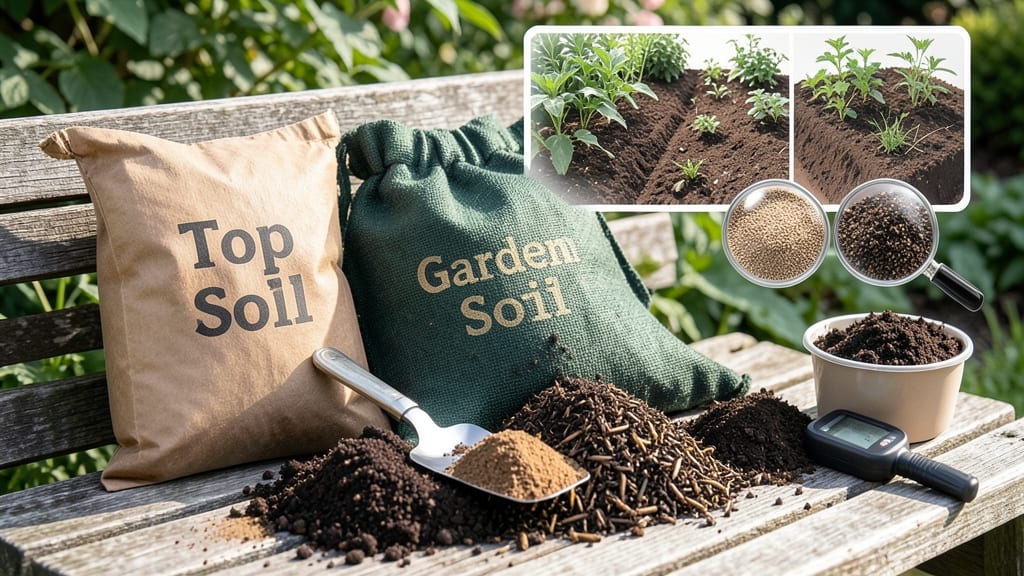
Top soil and garden soil are not the same: top soil is the nutrient-rich uppermost layer of earth, perfect for root establishment, while garden soil combines top soil with organic matter like compost or sand to improve texture and fertility for planting projects.
Top soil is what nature provides—the loose, organic layer teeming with microbes and essential minerals that support deep root systems. 🌱 Meanwhile, garden soil is a customized blend designed for specific gardening needs, often enriched with compost or perlite to balance moisture retention and aeration.
Think of top soil as the foundation and garden soil as the tailored growing medium for your plants' best performance.
For example, if you're laying sod or planting shrubs, top soil gives roots the natural environment they crave. But when filling containers or raised beds, garden soil's balanced composition prevents compaction and ensures consistent moisture—critical for delicate plants like herbs or seedlings.
I always recommend testing your soil first to match the right type to your plants' needs.
💡 In This Article
- Composition Breakdown: Top Soil vs Garden Soil
- When to Use Top Soil vs Garden Soil in Your Garden
Composition breakdown: top soil vs garden soil
The fundamental difference between top soil and garden soil lies in their natural versus engineered composition. Top soil is the earth's uppermost layer—typically 5-10 inches deep—formed over centuries from decomposed organic material and minerals.
It contains 5-10% organic matter by volume, with a natural balance of sand, silt, and clay particles that support microbial ecosystems essential for root development. 🌱 For instance, a typical top soil sample might have 30% sand, 40% silt, and 30% clay, creating ideal porosity for water and oxygen movement.
Garden soil, however, is a human-made blend that intentionally modifies these proportions. By mixing top soil with 20-40% compost or other amendments like perlite and vermiculite, garden soil achieves 15-25% organic matter—double what's found naturally. This boost in organic content enhances nutrient availability while improving drainage.
For example, adding 1 part compost to 2 parts top soil creates a loamy texture perfect for vegetable gardens, where roots need both stability and aeration.
The pH balance also becomes more adjustable, typically ranging from 6.0 to 7.5 in garden soil compared to top soil's more variable 5.5 to 8.0.
Microbial activity reveals another key distinction. Top soil's natural ecosystem contains 10,000 to 100,000 microorganisms per gram, including bacteria and fungi that break down organic matter. Garden soil's enhanced organic content can support up to 1 million microorganisms per gram, accelerating nutrient cycling.
This is why garden soil often shows faster decomposition of plant residues and better nutrient uptake for fast-growing crops like lettuce or radishes. The trade-off? Top soil's slower nutrient release makes it better suited for perennials that establish deep roots over years.
Particle size distribution also differs significantly. Top soil's natural composition often includes larger mineral fragments that create air pockets, while garden soil's amendments break down these particles for finer texture. For example, adding 10% perlite to garden soil can increase porosity by 30%, preventing compaction that suffocates roots.
This structural difference explains why garden soil is preferred for container gardening—where drainage is critical—while top soil excels in ground-level planting where roots need to spread naturally.
Consider the visual contrast: top soil appears darker with visible mineral streaks, while garden soil has a more uniform, crumbly texture from the added organic matter. The scent also differs—top soil carries earthy, mineral notes, while garden soil often smells fresher due to compost's active decomposition.
These sensory differences reflect their distinct roles in supporting plant life. 💫