
Tools
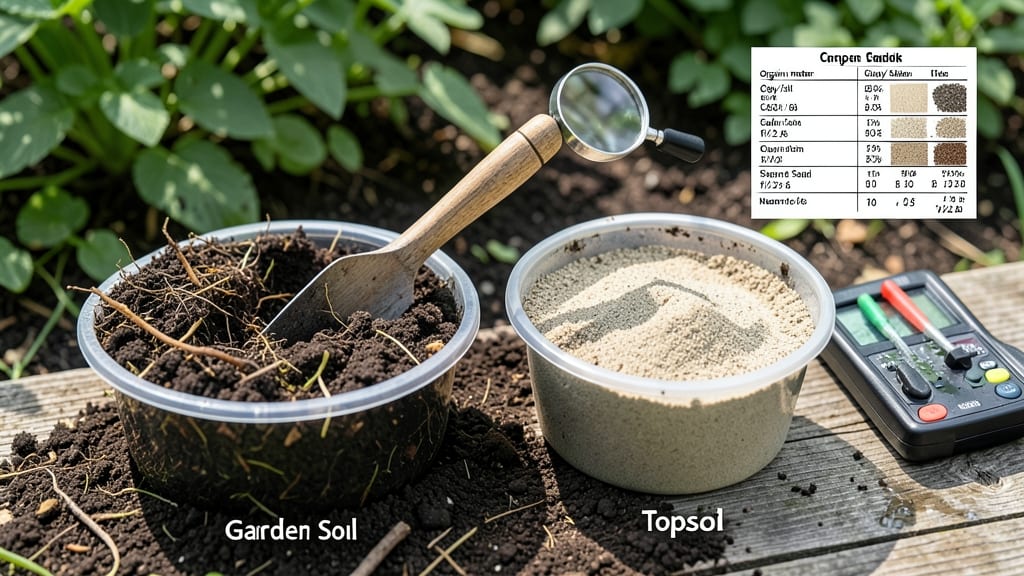
Garden soil is not the same as topsoil: topsoil is the natural, nutrient-rich upper layer of soil found in nature, while garden soil is a customized blend designed for specific planting needs by mixing topsoil with organic matter and other amendments.
Garden soil is essentially topsoil with a boost—think of it as the premium version tailored for plants. 🌱 The key difference lies in their composition: topsoil is what you'd find naturally in fields or forests, packed with minerals and organic material from decomposed plants and animals.
Garden soil, on the other hand, gets enhanced with compost, peat moss, or perlite to improve drainage, aeration, and nutrient levels, making it ideal for containers or vegetable gardens where plants demand extra care.
For example, topsoil is perfect for leveling lawns or filling large garden beds, while garden soil shines in raised beds or potted plants where roots need optimal growing conditions.
I always recommend testing your soil first—many gardeners make the mistake of assuming all soil types work the same, leading to poor plant health or stunted growth.
💡 In This Article
- Topsoil vs Garden Soil Composition Breakdown
- When to Use Topsoil vs Garden Soil for Gardening
Topsoil vs garden soil composition breakdown
Topsoil is nature's original recipe—a layer typically 5-10 inches deep that forms over centuries through decomposition of organic matter and mineral weathering. Its organic content usually sits between 5-15%, with the rest being minerals like sand, silt, and clay.
The texture varies dramatically: sandy topsoil drains quickly but lacks nutrients, while clay-heavy topsoil holds moisture but can suffocate roots. 🌱 What makes it valuable is its natural microbial ecosystem that breaks down organic material into plant-available nutrients.
Garden soil, however, is a human-engineered upgrade. By adding 30-50% compost or other amendments, we transform topsoil into something far more fertile.
For instance, a typical garden soil blend might contain 20% compost, 20% peat moss, and 60% topsoil, creating a loamy texture that improves aeration and water retention.
The pH balance also gets optimized—most garden soils target 6.0-7.0, ideal for most vegetables, while natural topsoil can range from 4.5-8.5 depending on location.
This composition difference directly impacts plant roots. Topsoil's natural structure may leave air pockets that restrict root growth, while garden soil's added organic matter creates a sponge-like environment that encourages deeper root penetration.
Studies show plants in enriched garden soil can grow 20-30% faster than in unamended topsoil because of improved nutrient availability and microbial activity. The trade-off? Garden soil costs 2-3 times more per cubic yard due to the added materials.
Here's where processing makes the difference: topsoil is typically just screened to remove rocks and debris, while garden soil undergoes additional mixing and sometimes pasteurization to kill weeds and pathogens. This explains why garden soil often smells fresher—it contains actively decomposing organic matter that releases beneficial compounds.
For example, worm castings in garden soil can contain 5 times more nitrogen than natural topsoil.
The texture difference becomes obvious when you handle them. Topsoil often feels gritty or sticky depending on its mineral content, while garden soil has a crumbly, almost velvety texture that falls apart easily between fingers.
This physical difference matters because root hairs need direct contact with soil particles to absorb water and nutrients efficiently. 🌿 The added organic matter in garden soil creates more surface area for these microscopic interactions.
Consider this comparison: natural topsoil might contain 0.5-1.5% nitrogen naturally, while garden soil with compost can reach 2-4% nitrogen. The phosphorus and potassium levels also see similar boosts, making garden soil particularly valuable for heavy feeders like tomatoes or corn that deplete nutrients quickly.
For container gardening, this difference can mean the difference between thriving plants and those struggling to access sufficient nutrients.