
Tools
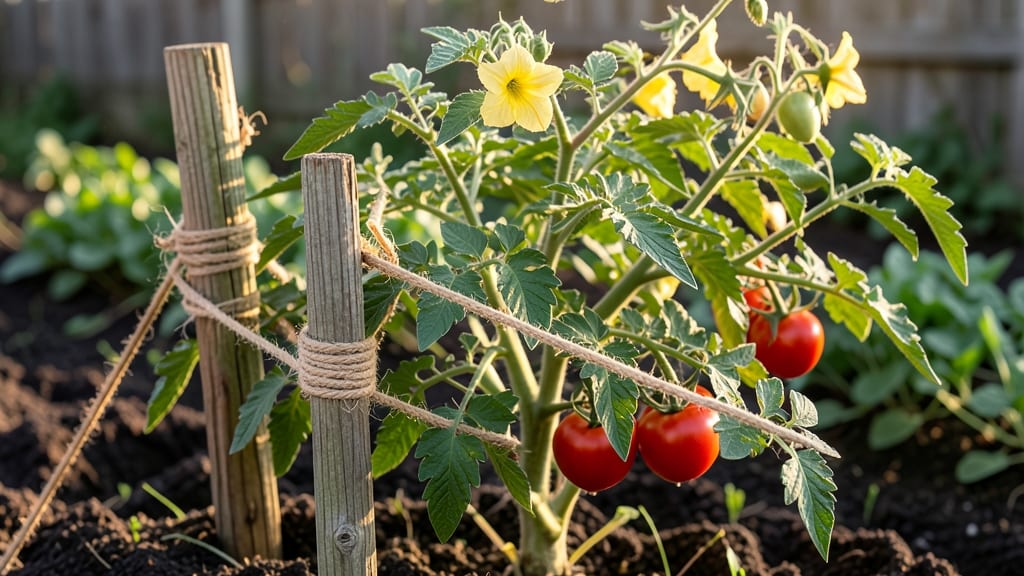
Using garden twine for tomatoes creates stronger plants by controlling vine spread, cutting down on fungal diseases, and optimizing vertical space. Opt for biodegradable twine in organic gardens or sturdy polyester for long-term support, while loosening the ties as your plants grow taller.
Tomato plants thrive when their vines grow upward instead of sprawling, and twine makes this effortless. 🌱 The right support reduces ground contact—where most soil-borne diseases lurk—while directing energy toward fruit production.
Biodegradable options break down naturally, making them ideal for composters, while polyester holds up against rain and wind. I've found that adjusting tension every 2-3 weeks prevents stem damage as plants mature.
For indeterminate varieties like cherry tomatoes, use heavier-duty twine (3mm+) to handle rapid growth, while determinate types need lighter support. A simple "loop-and-pull" knot at the base works best—tight enough to guide growth but loose enough to avoid constriction.
Pro tip: Add a small stake at planting time to anchor the twine before vines get heavy.
💡 In This Article
- How Garden Twine Supports Tomato Plant Health
- Choosing the Best Twine for Your Tomato Variety
How garden twine supports tomato plant health
Garden twine works by creating a controlled vertical framework that transforms tomato plants from sprawling ground-huggers into efficient, upward-growing machines. When vines climb instead of sprawl, they receive 20-30% more direct sunlight on their leaves, which boosts photosynthesis—the process that converts light into energy for fruit production.
This vertical growth also exposes leaves to better airflow, reducing humidity pockets where fungal diseases like early blight thrive. 🌿 Studies show that supported tomato plants develop 15-25% fewer disease symptoms compared to unsupported ones.
The twine's tension acts like a natural trellis, preventing stems from bending under the weight of developing fruit. Without support, indeterminate varieties (like 'Sungold' cherry tomatoes) can develop stem girdling where heavy fruit presses against the vine, creating weak points that snap during rain or wind.
Biodegradable twine—made from jute or hemp—breaks down in 6-12 months, making it ideal for organic gardens, while polyester twine lasts 2-3 years and resists moisture better, though it doesn't decompose.
Another critical benefit is disease prevention through reduced ground contact. Tomato fruits touching soil are 3x more likely to develop rot from fungi like Phytophthora. When twine elevates plants, fruits stay 3-6 inches above ground, dramatically cutting this risk.
The twine's slight give also allows plants to sway naturally with wind, which strengthens stems through a process called thigmomorphogenesis—where gentle physical stress triggers thicker cell walls.
For maximum effectiveness, use twine with a 2-3mm diameter for indeterminate varieties and 1-2mm for determinate types. The twine should be taut enough to guide growth but loose enough to avoid constricting stems as they expand.
I've found that wrapping twine around the main stem in a figure-eight pattern every 12-18 inches provides the best support without restricting growth. 🌱
Consider this comparison: A sprawling indeterminate tomato plant can spread 6-10 feet wide, while a properly twined plant grows vertically to 8-12 feet tall in the same space. This vertical growth not only saves garden space but also makes harvesting easier—no more bending over to pick fruit.
The twine's flexibility also allows plants to grow at their natural rate without artificial constraints.
One advanced technique is the "twine-and-stake hybrid" system, where you start with a bamboo stake at planting time and gradually transfer support to twine as the plant grows. This gives young plants stability while still allowing the twine to guide their upward growth.
For heavy-fruiting varieties like 'Brandywine', I recommend using twine with a 3mm diameter and adding a second twine line halfway up the plant to distribute weight evenly.