
Tools
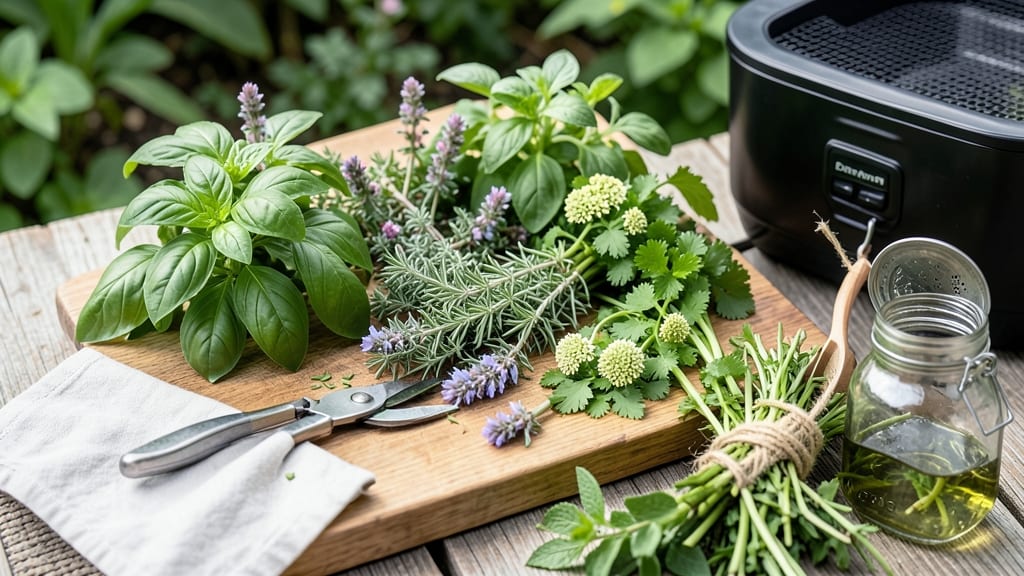
To dry fresh herbs from the garden, harvest leaves before flowering, tie small bundles with twine, and hang upside down in a dry, dark, well-ventilated space for 1-2 weeks. Remove dried leaves and store in airtight containers away from light.
Drying herbs at home preserves their flavor and aroma better than store-bought options, but timing and technique make all the difference. 🌿 The key is harvesting leaves when they're fully mature but before flowers appear—this ensures maximum oil content, which carries the herb's signature taste.
Once bundled, proper airflow prevents mold while darkness protects chlorophyll from breaking down, so your herbs keep their vibrant color and potency. I always use cheesecloth or paper bags for storage to prevent moisture buildup, which can turn dried herbs bitter over time.
For gardeners short on time, alternative methods like using a food dehydrator or low oven heat (below 200°F) work well, though they require closer monitoring to avoid overheating. The best herbs for hanging include basil, oregano, and thyme, while delicate leaves like parsley often crisp in dehydrators.
Remember: patience is critical—rushing the process can leave herbs dull and lifeless, so take your time for the best results.
💡 In This Article
- Optimal Conditions for Drying Garden Herbs
- Step-by-Step Herb Drying Methods Compared
Optimal conditions for drying garden herbs
The science behind drying herbs successfully hinges on three critical factors: humidity levels (30-50% ideal), consistent airflow, and temperature stability (below 90°F). Herbs contain essential oils that evaporate during drying, and these volatile compounds carry their signature flavors.
When humidity exceeds 60%, mold spores thrive on the leaf surfaces, while temperatures above 95°F can degrade chlorophyll, turning leaves yellow and dulling their potency. The goal is to create conditions where moisture leaves the plant tissue gradually without triggering microbial growth.
Darkness plays a surprisingly important role in preserving herb quality. Light exposure, especially sunlight, triggers chlorophyll breakdown (a process called bleaching), which weakens flavor intensity.
This is why I always recommend drying herbs in shaded areas—natural light is fine, but direct sunlight accelerates color fading and can make dried herbs taste bitter. The ideal drying environment mimics a cool, dark pantry or basement where temperature fluctuations are minimal.
For example, a basement with 10-15% humidity and 70°F temperature creates perfect conditions for herbs like rosemary and sage to retain their piney, resinous aromas.
Airflow is equally crucial because stagnant air creates pockets of high humidity near the herb bundles. A gentle breeze (even from a small fan on low) helps moisture escape uniformly. I've found that hanging bundles 6-8 inches apart ensures each leaf gets adequate circulation.
The drying process works best when leaves lose about 75-80% of their water content—this typically takes 1-2 weeks depending on the herb. For instance, hearty herbs like thyme dry faster than delicate ones like cilantro, which can take up to 3 weeks in optimal conditions.
Temperature fluctuations can be your worst enemy. Rapid changes cause condensation to form on the herb surfaces, creating a damp environment that promotes mold. This is why I avoid drying herbs near windows or doors where drafts and temperature swings occur.
The ideal scenario is a space with minimal temperature variation (within 5°F) and low light exposure. For gardeners in humid climates, adding a small dehumidifier (500-1000 BTU) near the drying area can make all the difference in achieving crisp, mold-free herbs.
One common misconception is that faster drying equals better results. In reality, rushing the process—whether through high heat or forced airflow—can create brittle leaves that crumble when touched. The sweet spot is a slow, controlled evaporation that preserves the herb's cellular structure and essential oils.
For example, basil dried too quickly loses its sweet, clove-like notes and becomes harsh. The key is patience: waiting the full 10-14 days ensures herbs maintain their vibrant color, aroma, and flavor profile.
Finally, the type of container used for storage matters just as much as the drying process. Airtight containers like glass jars with silicone seals prevent moisture from seeping back into the herbs, which can cause them to sweat and lose potency.
I always remove dried leaves from their stems and store them in small batches to maintain freshness—larger quantities in single containers can lead to uneven drying within the package. For long-term storage, keep herbs in a cool, dark place (below 70°F) and use them within 6-12 months for peak flavor.