
Tools
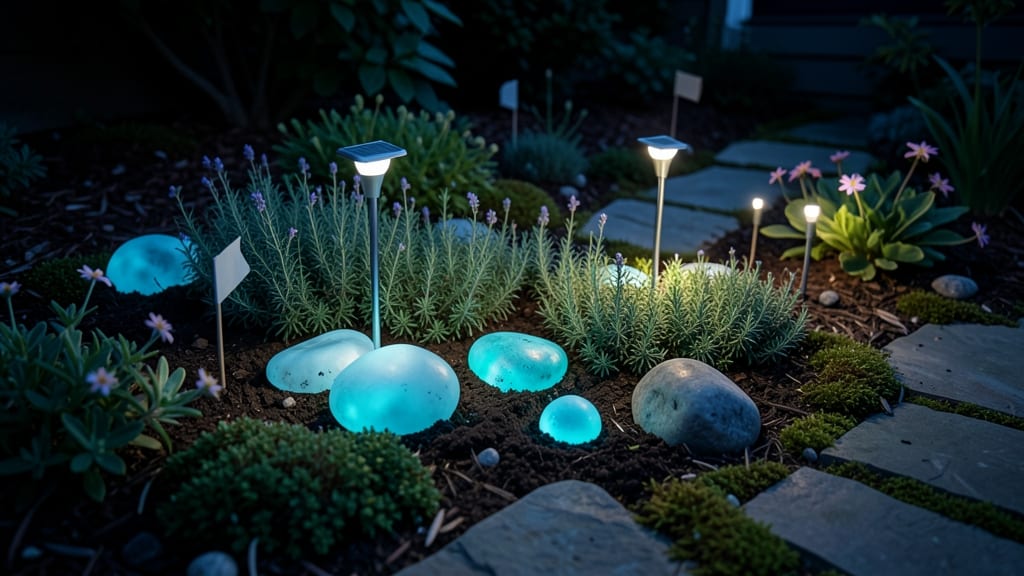
Glow-in-the-dark stones for gardens transform your outdoor space by absorbing sunlight during daylight hours and glowing softly for hours after dark, creating a safer and more inviting nighttime ambiance. Opt for solar-powered or phosphorescent varieties, and strategically place them along walkways, near seating areas, or along garden borders for maximum visual impact.
These luminous stones work like tiny solar panels—during the day, they soak up UV rays and store energy in their chemical composition, then release it as gentle light when darkness falls. 💫 The best types use high-quality phosphorescent pigments that recharge quickly, ensuring consistent glow even after cloudy days.
I’ve found that solar-powered varieties often outperform standard phosphorescent ones, lasting up to 12 hours or more after a full day of sunlight.
For installation, focus on high-traffic areas where visibility matters most, like steps, pathways, or near outdoor furniture. Secure them with landscape adhesive or bury them slightly in sand for a seamless look.
A little maintenance goes a long way—just wipe them down occasionally with a damp cloth to keep the glow bright and the stones looking fresh.
💡 In This Article
- How Solar-Powered Garden Stones Work
- Best Placement and Installation Tips for Garden Glow Stones
How solar-powered garden stones work
Solar-powered garden stones harness the same basic science as glow-in-the-dark paint or stickers, but with a more sophisticated energy storage system. These stones contain a layer of phosphorescent powder (typically strontium aluminate or zinc sulfide) combined with a thin solar panel on the top surface.
When exposed to sunlight, the solar panel converts UV rays into electrical energy, which then excites the phosphorescent molecules. These excited molecules release energy as visible light when darkness falls, creating that signature glow.
The brightness duration depends on two key factors: sunlight exposure and material quality. A stone receiving 6-8 hours of direct sunlight will typically glow for 8-12 hours after dark, while those with only partial sun may last 4-6 hours.
The best solar-powered stones use high-efficiency solar cells paired with long-lasting phosphorescent pigments that recharge quickly—some can even glow for up to 16 hours after a full day of sun. Phosphorescent-only stones (without solar panels) rely entirely on daylight to "charge," making them less consistent in cloudy climates.
Here's where the science gets interesting: the glow isn't continuous but rather a gradual fade. The light output follows an exponential decay curve—brightest immediately after dark, then dimming steadily over hours. This creates a natural, ambient effect rather than harsh lighting.
For comparison, a typical solar-powered garden stone might emit about 0.5-1.5 lumens of light (similar to a nightlight), which is perfect for safety without being overpowering. 🌟
Material composition plays a huge role in performance. Stones with a polycarbonate or acrylic casing protect the internal components better than porous materials, which can degrade faster from moisture. The thickness of the phosphorescent layer also matters—thicker layers store more energy but may take longer to recharge.
I've noticed that premium brands use strontium aluminate-based pigments, which offer brighter, longer-lasting glows compared to older zinc sulfide formulations.
One common misconception is that all glow stones work the same way. Phosphorescent stones (without solar panels) require direct sunlight to "charge" and can take 8-12 hours of daylight to reach full brightness.
Solar-powered stones, however, can recharge even in partial sun, making them far more reliable for gardens with variable sunlight. The trade-off? Solar-powered options are usually 20-30% more expensive but provide significantly better performance in real-world conditions.
For maximum effectiveness, pair your stones with strategic placement. For example, placing them at 12-inch intervals along a pathway creates a continuous line of light that guides visitors safely.
The glow intensity also varies by color—blue and green phosphorescent pigments tend to be brighter than yellow or red, though blue can appear slightly cooler in temperature. 💫