
Blooming
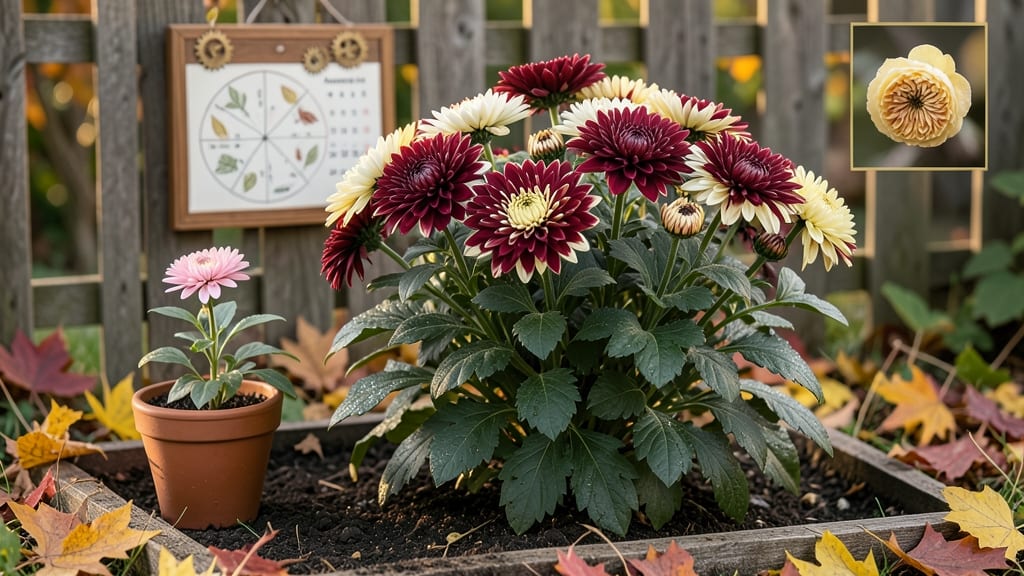
Garden mums last 2 to 4 weeks in full bloom when planted outdoors, but with proper care—deadheading, consistent watering, and morning sun exposure—their vibrant flowers can last 6-8 weeks. Container-grown varieties often bloom for shorter periods but thrive longer with cooler nighttime temperatures.
Garden mums are bred for seasonal color bursts, but their lifespan depends heavily on environmental conditions and maintenance routines. 🌸 The key to extending their bloom time lies in mimicking their natural habitat—cool evenings (50-55°F) and bright, indirect sunlight.
I’ve found that mums planted in late summer often outlast spring-planted ones by 1-2 weeks because they experience fewer heat stress spikes. Container-grown mums, while more portable, need extra attention to drainage and soil moisture to prevent root stress, which can cut their bloom cycle short.
What many gardeners overlook is the role of soil health—mums prefer slightly acidic soil (pH 6.0-6.5) rich in organic matter. Adding compost before planting gives them a nutrient boost that translates directly to longer-lasting blooms.
For container mums, I recommend using a well-draining potting mix with added perlite to prevent waterlogging, which can trigger fungal issues and premature wilting.
💡 In This Article
- Factors That Determine Garden Mum Longevity
- Proven Techniques to Extend Mum Blooms Beyond 4 Weeks
Factors that determine garden mum longevity
Garden mums thrive within a precise temperature range that directly impacts their bloom duration. During the day, they prefer 60-70°F, while cooler nights between 50-55°F trigger longer-lasting flowers through a process called "thermoperiodism."
This natural temperature fluctuation signals the plant to conserve energy and extend its flowering phase. 🌡️ When daytime temperatures exceed 80°F, mums experience heat stress, causing buds to drop prematurely and reducing bloom time by up to 30%.
The amount of sunlight also plays a critical role—mums need 6+ hours of direct sunlight daily to produce vibrant blooms. However, intense afternoon sun in hot climates can scorch petals, shortening their lifespan. In regions with harsh sunlight, partial afternoon shade can extend bloom time by 10-15 days.
Soil pH between 6.0-6.5 is ideal, as mums absorb nutrients more efficiently in slightly acidic conditions, which supports stronger root systems and prolonged flowering.
Seasonal planting timing significantly affects longevity. Fall-planted mums (late summer to early fall) often outlast spring-planted ones because they experience natural cooling trends that align with their ideal temperature range. Spring-planted mums, however, may face early heatwaves that accelerate wilting.
Drought stress is another major factor—even slight water deprivation can cause buds to abort, cutting bloom time by nearly 50%.
Container-grown mums face additional challenges due to limited root space and faster soil drying. Without proper drainage, roots suffocate, leading to wilting within 7-10 days of peak bloom.
The key difference between in-ground and container mums is moisture retention—containers dry out 3-5 times faster than garden beds, requiring daily checks during hot weather. This is why container mums often bloom for shorter periods unless given extra care.
One often-overlooked factor is humidity. Low humidity (40% or below) causes petals to dry out faster, while higher humidity (> 60%) can promote fungal growth. The sweet spot is 50-60% humidity, which balances moisture retention with disease prevention.
In dry climates, morning watering (before 10 AM) helps maintain optimal humidity levels around the plants.
For gardeners in hot climates, strategic placement—such as near reflective surfaces or under light shade cloth—can extend bloom time by creating a microclimate that mimics cooler conditions.
Mulching with 2-3 inches of organic matter also helps regulate soil temperature, reducing stress on the roots and preserving flower vitality for weeks longer.