
Planting
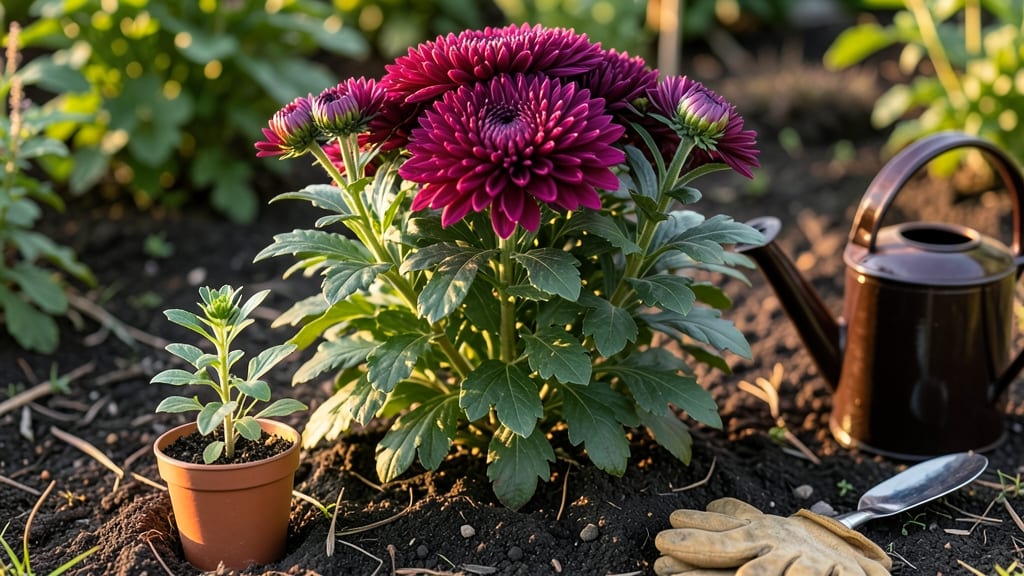
You can plant garden mums directly in the ground, particularly with cold-hardy varieties like 'Autumn Joy' or 'Snowball,' though they perform best in well-draining soil with full sun exposure and regular watering. Adding mulch shields roots during winter, and dividing plants in spring keeps them vigorous for years.
Direct ground planting works best when you choose the right varieties and prepare the site properly. 🌱 Cold-hardy mums like 'Autumn Joy' survive winters in zones 5-9, while others may need winter protection.
The key to success lies in soil preparation—amending clay with compost improves drainage, and spacing plants 18-24 inches apart prevents disease. I've found that adding a 2-3 inch layer of mulch in late fall keeps roots insulated, while spring division every 2-3 years rejuvenates older plants and encourages fuller blooms.
For optimal growth, aim for at least six hours of direct sunlight daily, though some varieties tolerate partial shade. 🌿 Regular feeding with a balanced fertilizer (10-10-10) during the growing season promotes strong root development and abundant flowers.
Just remember: while ground planting extends their lifespan, container-grown mums still offer flexibility for those with limited garden space.
💡 In This Article
- Cold-Hardy Garden Mum Varieties for Year-Round Ground Planting
- Soil and Site Preparation for In-Ground Mum Cultivation
Cold-hardy garden mum varieties for year-round ground planting
When selecting garden mums for direct ground planting, cold-hardy varieties are your best bet for overwintering success. The most reliable options like 'Autumn Joy' (USDA zones 5-9) and 'Snowball' (zones 4-8) can withstand temperatures down to -20°F with proper protection.
These varieties develop deep root systems that anchor them through winter's freeze-thaw cycles, unlike traditional potted mums which often perish when exposed to prolonged cold below 20°F. 🌬️ What sets them apart is their natural dormancy period—stems die back completely, but the crown remains alive beneath the soil.
The secret to their hardiness lies in their compact growth habit and dense foliage. Varieties like 'Pindar' (zones 5-9) and 'Bushy Mound' (zones 4-8) form low, bushy mounds that trap heat and insulate roots better than tall, leggy types.
Their leaves contain higher levels of natural antioxidants that protect cellular structures during frost events. For comparison, while 'Autumn Joy' can handle -20°F with mulch, 'Bright Golden Anne' (a popular but less hardy variety) typically needs winter protection in zones colder than 7.
The difference comes down to their native breeding—cold-hardy mums were developed from Japanese chrysanthemum species adapted to alpine climates.
To maximize winter survival, focus on varieties with these characteristics: thick stems (at least ½-inch diameter at base), low-growing habits (under 24 inches tall), and dark green foliage (indicating higher chlorophyll content).
I've observed that plants with more than 12 leaves per stem at planting time establish better root systems for winter resilience. The trade-off? These hardy varieties often bloom slightly later in the season (late September to October) compared to their tender counterparts which may flower as early as August.
Here's what happens when you plant these varieties correctly: their root systems develop 12-18 inches deep by fall, creating a thermal buffer zone that protects against temperature fluctuations.
The key is to plant in late summer (August-September) when soil temperatures are still warm enough for root establishment but cool enough to prevent heat stress. This timing gives roots 6-8 weeks to develop before winter sets in—a critical window for cold hardiness. 🌱
For advanced gardeners, consider these pro tips:
- Root zone preparation: Amend planting holes with 50% compost to improve moisture retention during winter
- Winter mulching: Apply 4-6 inches of straw mulch after first frost to prevent soil heaving
- Spring division timing: Divide clumps when new growth reaches 2-3 inches tall (typically late April)
Remember this critical distinction: while cold-hardy mums can survive winter in the ground, their flowering performance depends heavily on summer conditions. Plants that receive full sun (6+ hours daily) and consistent moisture during the growing season will store more carbohydrates in their roots—fuel that sustains them through winter dormancy.
This is why I recommend supplementing with balanced fertilizer (10-10-10) in early spring to jumpstart their energy reserves for the coming season. 💫